


If you’ve ever stood in a public restroom, used tampon in hand, wondering what the most responsible thing to do actually is, you’re not alone. Managing your period sustainably isn’t just about which products you buy. It’s also about what happens to them after. Organic cotton tampons are biodegradable but not typically compostable due to blood, which means even the most eco-friendly tampon still needs to be disposed of in the trash, thoughtfully. This guide covers everything from the science behind tampon waste to step-by-step disposal methods, plus smarter product swaps that make the whole process easier on the planet.
Table of Contents
- What makes tampon disposal unsustainable?
- Sustainable tampon choices: what you need to know
- How to dispose of tampons sustainably: step-by-step guide
- Avoiding mistakes and troubleshooting common issues
- Our perspective: sustainable disposal starts with better choices
- Sustainable period solutions for your peace of mind
- Frequently asked questions
Key Takeaways
| Point | Details |
|---|---|
| Choose eco-friendly products | Opt for organic cotton tampons without plastic or switch to reusables to cut waste. |
| Never flush tampons | Flushing harms plumbing and ecosystems; always dispose in the trash. |
| Separate and recycle parts | Dispose of plastic applicators and wrappers according to local recycling guidelines if possible. |
| Small changes matter | Each mindful disposal improves both personal and planet health substantially. |
What makes tampon disposal unsustainable?
Now that you know your choices matter, let’s examine why standard disposal methods create eco challenges.
Most people dispose of tampons without a second thought: flush or bin. But those two seconds of habit can have surprisingly long-term consequences. A single person who menstruates will use roughly 11,000 to 16,000 tampons in their lifetime. Multiply that across the hundreds of millions of people who menstruate globally, and the waste picture becomes significant fast.
The period product environmental impact goes far beyond just throwing something in a trash can. Here’s why standard tampon disposal is such an environmental challenge:
- Plastic applicators are made from polypropylene or polyethylene. These take hundreds of years to break down in landfills and are among the most common items found on beaches during cleanup events.
- Plastic wrappers and overwrap packaging add up quickly. If you use a tampon every four to six hours during your period, that’s a lot of single-use plastic per cycle.
- Flushing tampons is one of the most damaging choices. Tampons don’t dissolve in water. They expand, clog pipes, and contribute to the “fatbergs” that strain municipal sewage systems. Worse, some make it past wastewater treatment and end up in waterways.
- Blood contamination means tampons can’t go in composting systems, even those made from 100% organic cotton. The pathogen risk is real, and most composting facilities are not equipped to handle biohazardous material.
- Conventional cotton tampons are often made with pesticide-heavy cotton and may contain synthetic fragrances or dyes that leach into the environment when the product breaks down.
“Even biodegradable tampons aren’t truly compostable once used. Blood contamination disqualifies them from standard composting, which means landfill disposal is the safest and most responsible option for used tampons.” (Eco-Friendly Period Products)
Understanding this reality isn’t about guilt. It’s about being equipped to make cleaner period product choices going forward. Once you see the full waste footprint, it becomes easier to know where to focus your energy.
Sustainable tampon choices: what you need to know
Understanding what makes products sustainable is the foundation, so let’s look at how to pick the best tampon for you and the planet.
Before we get to disposal steps, the most powerful eco move you can make actually happens at the point of purchase. What a tampon is made of, and how it’s packaged, shapes how much damage it does from the moment it’s manufactured to the moment it ends up in a bin.
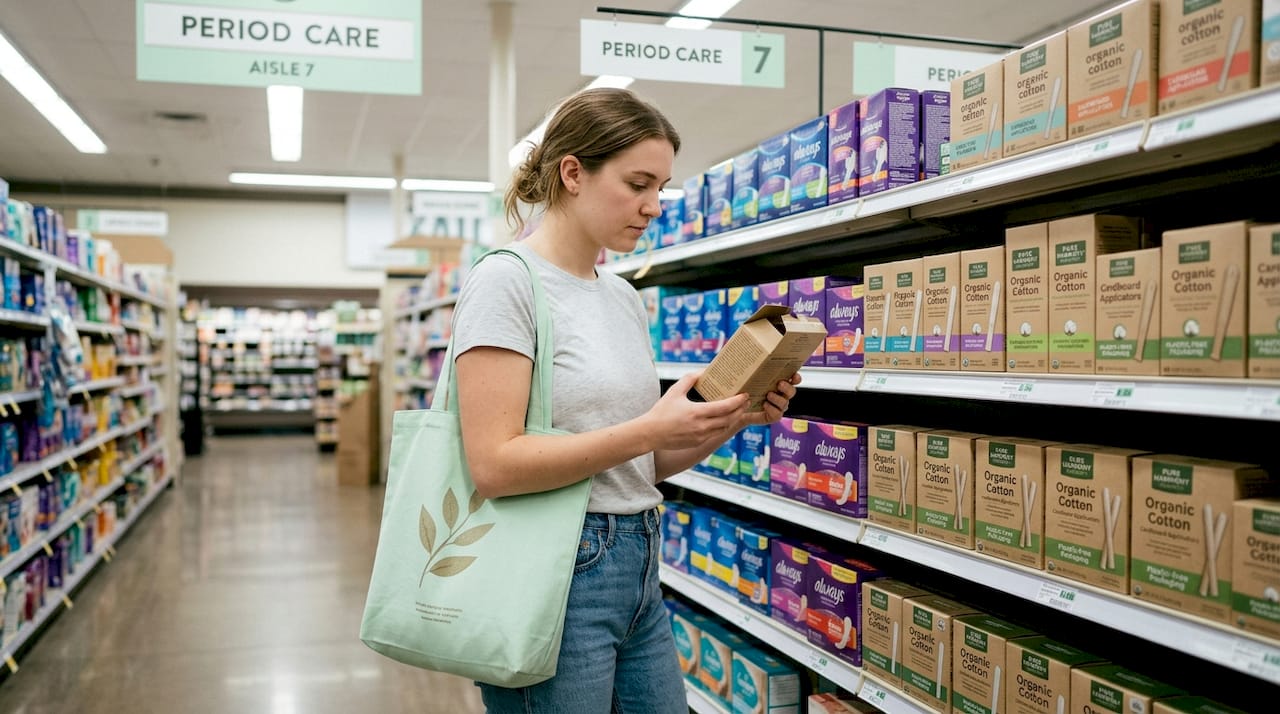
Menstrual cups have the lowest environmental impact according to life cycle analysis studies, outperforming both disposable tampons and pads across categories including carbon footprint, water use, and plastic pollution. If you’re open to reusables, a menstrual cup or reusable period underwear can dramatically reduce your overall period waste.
But reusables aren’t for everyone in every situation. If you prefer tampons, here’s how to choose the most responsible ones:
- Opt for 100% organic cotton tampons without added fragrances, dyes, or bleach. These break down faster in landfill and don’t release toxic byproducts.
- Skip plastic applicators. Cardboard applicators or applicator-free tampons are far better options for the environment.
- Choose minimal, recyclable packaging. Look for brands using recycled cardboard, no plastic windows, and paper-based overwrapping.
- Read the label critically. “Natural” or “eco” labels don’t always mean plastic-free. Use an eco period product checklist to verify claims before buying.
- Watch for greenwashing. Some brands market products as organic when only a portion of the cotton meets that standard. Check for certified organic labels from recognized bodies.
Here’s a quick comparison to help you decide:
| Product type | Plastic components | Biodegradable | Reusable | Best for |
|---|---|---|---|---|
| Conventional tampon + plastic applicator | High | Partially | No | Convenience only |
| Organic tampon + cardboard applicator | Low | Yes | No | Eco-conscious disposable users |
| Applicator-free organic tampon | None | Yes | No | Minimal waste disposable users |
| Menstrual cup | None | No (silicone) | Yes (10+ years) | Lowest long-term impact |
| Reusable cloth pad | None | Yes (cotton) | Yes | Home use comfort |
Pro Tip: If you’re new to applicator-free tampons, give yourself a cycle or two to adjust. Many people find them just as comfortable as applicator versions once they get the hang of insertion. The learning curve is short, and the plastic savings are real.
Choosing the right product is where organic period products can genuinely make a difference, both to your body and the environment. Fewer chemicals in production means less environmental contamination during manufacturing too.
How to dispose of tampons sustainably: step-by-step guide
Now, with your eco-friendly products ready, let’s go step by step through sustainable disposal.
Good choices don’t end at purchase. The way you handle disposal matters too. Here’s exactly what to do, every time.
- Remove the tampon carefully. Pull the tampon out by the string and hold it over the toilet briefly to allow any excess fluid to drip off. This minimizes odor and mess during wrapping.
- Never flush the tampon. Not even organic ones. Not even if the packaging says “flushable.” Flushing always carries environmental risk. Tampons expand in water, clog pipes, and can bypass treatment systems to reach oceans and rivers.
- Wrap it securely. Use the wrapper from your new tampon, a small square of toilet paper, or a biodegradable bag. Wrapping reduces odor, prevents contact with other waste, and makes bin management easier.
- Separate any plastic components. If you use a plastic applicator, check your local recycling guidelines. In many areas, small plastic items under a certain size aren’t accepted in curbside recycling. If it’s not recyclable locally, it goes in the trash, but separately noting its non-biodegradable status reminds you to switch to cardboard or no-applicator options next time.
- Dispose of it in a waste bin. A small lidded bin in your bathroom is ideal. If you’re in a public restroom, use the bin provided. If there isn’t one, carry a small sealable bag to safely transport it until you find a trash receptacle.
- Empty and clean your bathroom bin regularly. Twice a week during your period keeps odor and bacteria at manageable levels.
Pro Tip: Keep a small roll of biodegradable bags in your bathroom cabinet near your tampons. Brands like BioBag make compostable-grade bags that, while they can’t go in compost with used tampons, still break down faster than standard plastic in landfill conditions.
Here’s a clear overview of conventional versus eco-friendly disposal:
| Method | Environmental impact | Recommended? |
|---|---|---|
| Flushing tampon | Very high (sewage, ocean pollution) | Never |
| Unwrapped in open bin | Medium (odor, hygiene risk) | No |
| Wrapped in plastic bag, trash | Medium (extra plastic) | Acceptable if no alternative |
| Wrapped in toilet paper, trash | Low | Yes |
| Wrapped in biodegradable bag, trash | Lowest for disposables | Best practice |
As natural menstrual care tips remind us, sustainable menstruation is a practice, not a single decision. Each disposal is a small action that adds up to meaningful impact over hundreds of cycles.
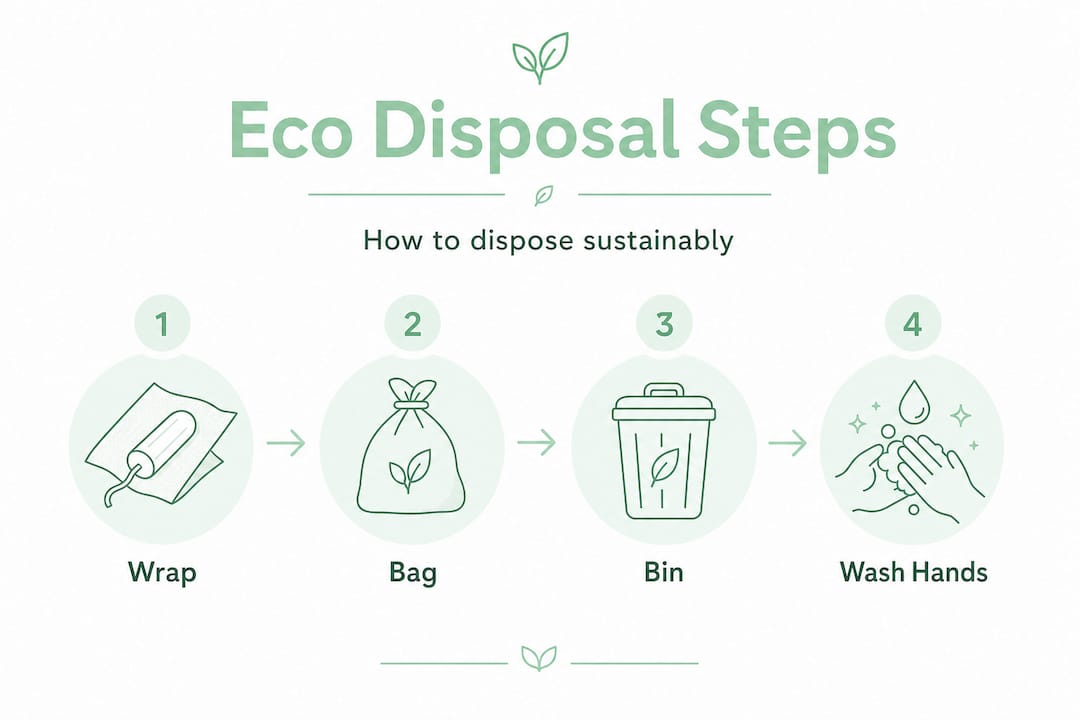
It’s also worth noting that organic cotton tampons are biodegradable but not compostable once used, so the trash is genuinely your best option here. The goal is to reduce all other unnecessary waste around that core unavoidable step.
Avoiding mistakes and troubleshooting common issues
Even with the best practices, mistakes can happen. Let’s make sure you avoid the most common ones.
The single most widespread mistake is flushing. Even people who know better do it occasionally, usually in a rush or out of habit. Here’s why that one habit deserves serious attention: used tampons that enter the sewage system are a documented source of marine pollution. They’ve been found on beaches worldwide and are documented in reports from ocean conservation groups. The damage is real, physical, and lasting.
Here are the other most common mistakes and how to handle them:
- Flushing in desperation: If there’s no bin in a public restroom, wrap the tampon in toilet paper and carry it out in a small zipper bag you keep in your purse. A few small sealable bags take up almost no space and solve this problem entirely.
- Assuming “biodegradable” means compostable: Even if the tampon is biodegradable due to organic cotton, blood contamination makes composting unsafe and inappropriate. Biodegradable and compostable are not the same thing in this context.
- Ignoring odor management: In communal or shared bathrooms, odor is a real concern. Use a small lidded bin with a liner. Adding a few drops of tea tree oil to the liner before placing it in the bin helps neutralize odor naturally without synthetic chemicals.
- Traveling without a plan: When you’re away from home, disposable options multiply and eco habits can slip. Pack a small pouch with biodegradable bags, your preferred organic tampons, and a compact personal bin liner for hotel rooms.
- Leaving plastic applicators loose in bins: Loose plastic in open bins can blow away or be sorted incorrectly. Always bag them separately and check your local guidelines on small plastics recycling.
“Making eco-conscious choices while traveling takes a little prep, but the payoff is never having to compromise your values when you’re away from your usual routine.”
These greener menstrual choices aren’t about being perfect. They’re about being prepared. When you’ve thought through the scenarios in advance, the sustainable option becomes the easy option.
Pro Tip: Before your period starts each month, do a quick “period prep check.” Refill your tampon supply, replace any biodegradable bags you’ve used, and empty your bathroom bin. Five minutes of prep prevents ten rushed, less eco-friendly decisions during your cycle.
Our perspective: sustainable disposal starts with better choices
Here’s something that doesn’t get said enough: the conversation about sustainable tampon disposal is too focused on what happens after the tampon is used, and not enough on what happens before you even open the wrapper.
We’ve spent years talking to eco-conscious women who feel guilty about every piece of period-related waste. And we understand that impulse completely. But guilt tends to paralyze rather than motivate. The more productive framing is this: every single purchase is a vote for the kind of period product industry you want to exist. When you choose sustainable period brands that use organic cotton, plastic-free applicators, and minimal packaging, you’re not just reducing your own footprint. You’re sending a market signal.
That matters more than any individual disposal moment.
Reusables, as life cycle analysis confirms, offer the best long-term path for anyone serious about reducing their period-related environmental impact. A single menstrual cup can replace thousands of tampons over its lifespan. That’s not a small thing. But we also believe that the person using organic, plastic-free tampons and disposing of them correctly is doing something genuinely meaningful. Progress over perfection is the only sustainable approach to sustainability itself.
Your habits also ripple outward. When a friend sees you pull a biodegradable bag out of your purse instead of heading to flush a tampon, that’s a conversation starter. When your roommate notices the biodegradable bags in your bathroom, they ask questions. Normalized eco-conscious behavior is contagious in the best possible way.
Sustainable period solutions for your peace of mind
If you’re ready to put these tips into practice, here’s where to find products that make a difference.
Every step in this guide, choosing better products, avoiding plastic applicators, wrapping and binning properly, becomes much easier when your products are designed with sustainability already built in. That’s exactly what we’ve focused on at Tampon Tribe.
Our organic tampons are made from 100% certified organic cotton with no synthetic fragrances, dyes, or chlorine bleach. We’ve designed out the plastic at every step, from the applicator to the packaging, so you’re not creating unnecessary waste before disposal even becomes a question. If you’ve been thinking about making the switch, our switch to natural tampons page walks you through exactly what to expect, with no pressure and no greenwashing. Just honest, organic products that work and that you can feel good about from purchase to disposal.
Frequently asked questions
Are organic tampons really better for the environment?
Yes, organic cotton tampons are biodegradable and have a lower environmental impact, especially when free of plastic applicators and synthetic packaging. They also avoid the pesticide-heavy cotton farming associated with conventional options.
Can you compost used tampons?
No. Even though organic tampons are biodegradable, blood contamination means they cannot safely go into composting systems. Disposing of used tampons in the trash is the recommended approach.
What’s the most sustainable way to manage your period?
Menstrual cups have the lowest environmental impact of any period product according to life cycle analysis, making them the top choice for overall sustainability. Among disposables, organic tampons without plastic applicators are the best option.
Is it ever okay to flush tampons or wrappers?
No. Flushing tampons or wrappers is harmful to plumbing infrastructure and the environment regardless of what the packaging claims. Always wrap used tampons and dispose of them in a waste bin.
How can I reduce odor when disposing of tampons at home?
Use small biodegradable bags to wrap used tampons before placing them in your bathroom bin, and keep your bin tightly sealed between uses. A few drops of tea tree oil in the bin liner also helps control odor naturally.