


Choosing a period product that genuinely aligns with your values shouldn’t feel like a compromise. Yet millions of women spend years reaching for conventional tampons loaded with synthetic rayon, artificial fragrances, and chlorine bleach, simply because switching to natural alternatives feels unfamiliar or complicated. The truth is, natural tampons work just as well as conventional ones, and the process of using them safely is almost identical once you know what to look for. This guide walks you through everything: what makes a tampon truly natural, what to have on hand before you start, a clear step-by-step usage process, and how to troubleshoot any issues that come up along the way.
Table of Contents
- What makes a tampon “natural”?
- What you’ll need for natural tampon use
- How to use natural tampons: Step-by-step instructions
- Safety, troubleshooting, and common mistakes
- Why switching to natural tampons is simpler than you think
- Find your ideal eco-friendly tampon solution
- Frequently asked questions
Key Takeaways
| Point | Details |
|---|---|
| Choose certified organic | Certified organic cotton tampons reduce exposure to chemicals and are safer for sensitive skin. |
| Minimize plastic waste | Using applicator-free or biodegradable tampons cuts plastic pollution by up to 90%. |
| Follow safe usage steps | Proper insertion and absorbency selection help prevent leaks, irritation, and discomfort. |
| Trust science on safety | Evidence shows natural tampons present no proven health risk from trace metals or materials. |
| Switching is easy | With clear preparation and guidance, switching to natural tampons is simple and rewarding. |
What makes a tampon “natural”?
Most women assume “natural” is just a marketing label. It’s not. There are real, meaningful differences between conventional and natural tampons, and knowing them helps you make a confident choice for both your body and the planet.
The core ingredients matter most. Organic tampons made from 100% certified organic cotton (GOTS or USDA certified) avoid pesticides, chlorine bleach, rayon, and fragrances, reducing irritation risk significantly. Conventional tampons often blend cotton with rayon, a synthetic fiber made from wood pulp that requires heavy chemical processing. That processing introduces residues you’d rather not have anywhere near your body.
Certifications to look for:
- GOTS (Global Organic Textile Standard): Covers the entire supply chain, from field to finished product
- USDA Organic: Focuses on farming practices and pesticide absence
- Fragrance-free and bleach-free: These terms should appear explicitly on the packaging
When it comes to applicators, the environmental difference is stark. Switching to biodegradable or applicator-free tampon types dramatically cuts plastic waste. Applicator-free options are the most sustainable choice because they eliminate one of the biggest single-use plastic contributors of a conventional period entirely.
| Feature | Conventional tampon | Natural tampon |
|---|---|---|
| Core material | Cotton/rayon blend | 100% organic cotton |
| Bleaching method | Chlorine bleach | Unbleached or peroxide-free |
| Fragrances | Often added | None |
| Applicator | Plastic | Biodegradable or none |
| Pesticide exposure risk | Higher | Minimal to none |
| Compostability | No | Yes (many options) |
Pro Tip: If you’re new to applicator-free tampons, practice insertion during a heavier flow day when your body’s natural moisture makes the process easier and more comfortable.
This shift in materials isn’t just an environmental win. It also reflects a broader commitment to natural menstrual care tips that support your body without unnecessary chemical exposure. Think of it as choosing organic produce over conventionally grown food — your body and the earth both benefit from the cleaner option.
What you’ll need for natural tampon use
Understanding the essentials of natural tampons brings us to what you actually need to get started.

Switching doesn’t require a major lifestyle overhaul. A few key items and a little preparation set you up for a smooth, confident transition.
Your starter checklist:
- GOTS or USDA certified 100% organic cotton tampons in your regular absorbency
- A backup absorbency option (one lighter, one heavier than your usual)
- A period tracking app to monitor flow patterns
- Clean, dry hands before every insertion
- Optional: a natural, water-based lubricant for first-time use or days with lighter flow
The guidance is clear: prioritize GOTS-certified 100% organic cotton tampons with biodegradable applicators or no applicator for eco-conscious use, since applicator-free options reduce plastic waste by up to 90%. That’s not a small number. For context, a person who menstruates will use an estimated 11,000 to 16,000 period products in their lifetime, and a significant portion of conventional applicators end up in landfills or oceans.
| Item | Why it matters | Where to find it |
|---|---|---|
| Certified organic tampons | Avoids pesticides and harsh chemicals | Online or health stores |
| Period tracking app | Helps predict heavy vs. light days | App store (free options) |
| Eco-friendly lubricant | Eases insertion during dryness | Natural health retailers |
| Reusable period pouch | Reduces packaging waste on the go | Zero-waste shops |
Stock up before your period starts, not during it. Trying to source certified organic tampons when you’re already mid-cycle adds stress to the transition. Review a solid eco period product checklist before your next cycle so you feel fully prepared. Being organized upfront makes the switch feel effortless rather than experimental.
Also worth noting: organic period products and health are connected in ways that go beyond ingredient lists. When you reduce your body’s exposure to synthetic fibers and chemical residues month after month, the cumulative effect matters, especially given how frequently these products are used over a lifetime.
How to use natural tampons: Step-by-step instructions
With your supplies ready, let’s walk through the practical steps to using natural tampons safely and comfortably.
The actual insertion process mirrors conventional tampon use closely. The difference is in the material and, for applicator-free tampons, in the technique. Follow these steps every time for a safe, comfortable experience.
Step-by-step guide:
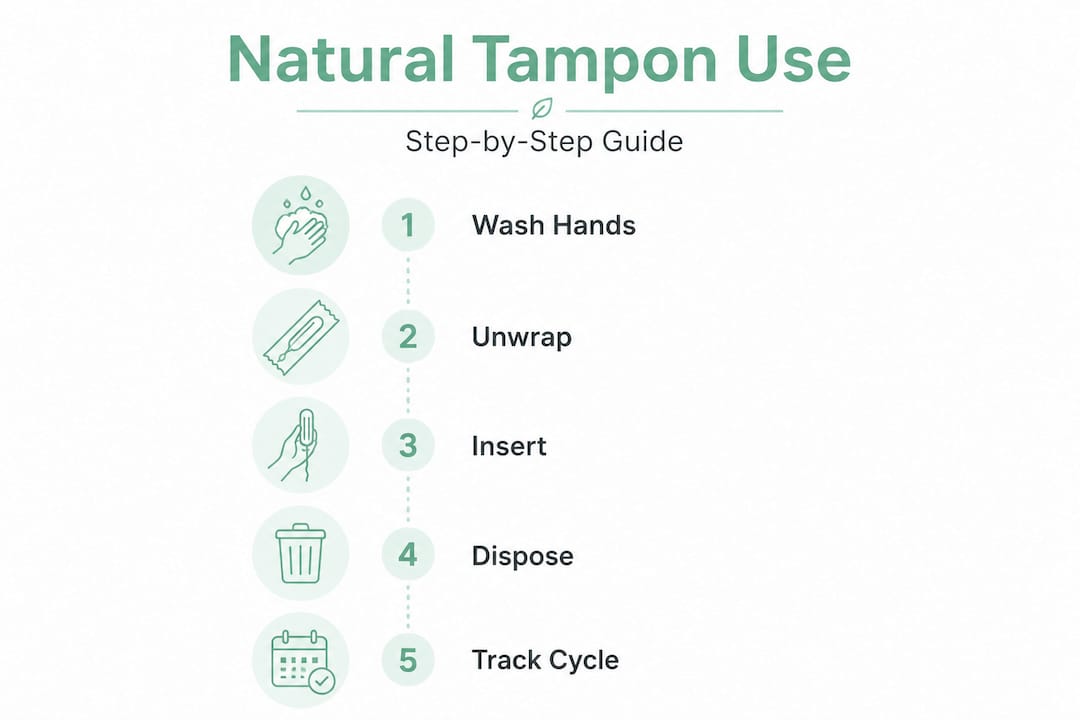
- Wash your hands thoroughly. Use soap and warm water for at least 20 seconds before touching the tampon or your body.
- Choose your absorbency. Match it to your flow. Light absorbency for lighter days, regular or super for heavier flow.
- Get comfortable. Sit on the toilet with knees slightly apart, stand with one foot raised on a step, or squat. Find what feels natural to you.
- For applicator-free tampons: Hold the tampon between your thumb and middle finger. Use your index finger to guide and push the tampon gently upward and backward toward the base of your spine. It should sit comfortably past your vaginal opening.
- For biodegradable applicator tampons: Insert the outer tube at a slight upward angle, then push the inner plunger until the tampon is released. Remove the applicator and dispose of it in the trash or compost, depending on the product’s biodegradability.
- Check for comfort. A well-placed tampon is not felt at all. If you notice pressure or discomfort, the tampon may need to be pushed further in.
- Set a timer. Change your tampon every 4 to 8 hours. Never leave one in longer than 8 hours.
- Remove safely. Relax your pelvic muscles and gently pull the string downward and slightly forward. Wrap in tissue and dispose of in the trash, never flush.
Important safety note: If you experience sudden fever, rash, muscle aches, dizziness, or vomiting while using a tampon, remove it immediately and seek medical attention. These can be symptoms of Toxic Shock Syndrome (TSS), a rare but serious condition.
If insertion feels painful, especially for first-time users, a small amount of natural lubricant on the tip of the tampon can help significantly. Switching to a lighter absorbency also makes first-time insertion easier.
Pro Tip: Keep a short period journal for your first 2 to 3 cycles with natural tampons. Note which absorbency felt right each day. This makes your next cycle easier to plan and reduces leaks as you dial in your personal needs.
Following a chemical-free tampon workflow from the start means building healthy habits around your period care that are safe, consistent, and sustainable.
Safety, troubleshooting, and common mistakes
Now that you’ve learned the process, here’s how to handle challenges and stay safe while using natural tampons.
Even with the best preparation, questions and concerns come up. Here’s how to work through the most common ones.
Common issues and what to do:
- Painful insertion: Relax your muscles consciously before trying again. If it’s still uncomfortable, use lubricant on the tip of the tampon or switch to a smaller absorbency. Check your positioning as well.
- Leaking: You’re likely using an absorbency that’s too light for your flow on that day. Move up one absorbency level or change your tampon more frequently during heavy days.
- Difficulty removing: Squat or bear down gently to make the tampon easier to reach. Never insert a new tampon without removing the previous one.
- String breaks or is tucked in: Wash your hands, relax, and reach in to retrieve it. If you can’t locate it, see a healthcare provider promptly.
- Rash or irritation after switching: This could be a sensitivity to a specific product’s organic cotton brand or something unrelated to the switch. Try a different certified organic brand before ruling out tampons altogether.
On the topic of trace metals: Research has found trace metals, including lead (at higher levels in non-organic tampons) and arsenic (occasionally in organic versions), in some tampon products. Importantly, no proven health risk from these findings has been confirmed per FDA literature review, and absorption through vaginal tissue remains unconfirmed. Still, choosing certified organic options is a reasonable precaution and a well-supported one.
When to see a doctor:
- Persistent discomfort or pain during use
- Fever, rash, or flu-like symptoms while using a tampon
- Difficulty removing a tampon
- Any unusual vaginal discharge or odor after use
The environmental impact of your choice matters too. Switching to applicator-free organic tampons reduces plastic waste by up to 90%, which connects directly to the ocean health impacts that motivate so many women to make this switch in the first place.
Exploring health-conscious menstrual options helps you make well-rounded decisions that go beyond ingredient swaps. And for deeper reading on safety standards and certifications, browsing menstrual products for safety gives you additional context backed by research.
Why switching to natural tampons is simpler than you think
Most guides list the steps and call it done. What they rarely address is the mental barrier that keeps women stuck using products they don’t actually feel good about.
The fear of switching usually comes down to three things: discomfort, effectiveness, and cost. Here’s the reality on each.
Discomfort is almost never about the organic cotton. It’s about technique and absorbency matching. The cotton itself is softer than rayon blends, not rougher. Most women who try a natural tampon and find it uncomfortable are using the wrong absorbency for their flow that day, or are tensing during insertion out of nervousness. Once technique improves over one or two cycles, the experience is indistinguishable from, and often smoother than, conventional use.
Effectiveness is a genuine concern because no one wants to leak. Certified organic cotton is highly absorbent. When you match absorbency correctly to your flow (which takes one to two cycles to dial in), leaking is no more likely than with conventional tampons. A period journal is surprisingly powerful here. Two cycles of notes will tell you exactly which absorbency you need on each day of your period.
Cost is real, but the framing matters. Choosing natural tampons is similar to choosing organic food. The upfront cost per unit is slightly higher, but the cumulative health and environmental benefit justifies it clearly. Subscription options from brands like Tampon Tribe make the cost more predictable and often lower the per-unit price meaningfully.
The most underestimated benefit of switching is the sense of alignment it creates. Choosing eco-friendly menstruation choices is an act of consistency: you’re applying the same eco-conscious values to period care that you already apply to food, skincare, and clothing. That consistency matters to many women more than they initially expect.
Pro Tip: Try at least two different certified organic brands before deciding what works for you. Sizing, cotton density, and string design vary between brands and those differences affect comfort in real ways.
Find your ideal eco-friendly tampon solution
Making the switch to natural tampons is one of the most straightforward sustainable lifestyle changes available to you, and it’s one that directly benefits your health every single cycle.
At Tampon Tribe, we’ve made it easy to switch to natural tampons with zero plastic packaging, GOTS-certified organic cotton, and options for every flow. Whether you’re just exploring or ready to commit to a full subscription, our organic cotton tampons are designed to perform without compromise. You get the absorbency you need and the clean ingredients your body deserves, all in packaging that won’t end up in the ocean. Ready to try? You can buy organic tampons directly from us and start your first eco-friendly cycle today.
Frequently asked questions
Are natural tampons actually safer for my body?
Natural tampons made from 100% certified organic cotton reduce your exposure to pesticides, chlorine bleach, and synthetic fragrances, which lowers irritation risk. Research has found trace metals in some tampons, but no confirmed health risk from this has been established by FDA review.
Can natural tampons leak more than conventional ones?
No. If you experience leaking, it’s typically an absorbency mismatch rather than a product failure. Switching absorbency when leaking is recommended, and organic cotton performs on par with conventional options when matched correctly to your flow.
How do I dispose of natural tampons to minimize environmental impact?
Compost or dispose of biodegradable applicators according to product instructions, and wrap used tampons in tissue before placing in the trash. Applicator-free tampons reduce plastic waste by up to 90% and are the most sustainable disposal option.
Is it normal to feel discomfort when using natural tampons for the first time?
Mild discomfort is common and usually related to insertion technique or incorrect absorbency. A small amount of natural lubricant helps ease this, and you should discontinue use and contact a doctor if you experience pain, fever, or unusual symptoms.