


Walking into a store or scrolling through an online shop in search of a truly eco-friendly tampon can feel overwhelming. Every brand seems to promise something green, natural, or sustainable, yet the ingredient lists are vague, the certifications are confusing, and the packaging claims often contradict what’s actually inside. The truth is that not all eco-friendly tampons are created equal, and the differences matter both for your body and for the planet. This guide cuts through the noise by breaking down exactly what qualifies a tampon as eco-friendly, comparing the main types available, and helping you find the best match for your flow, your skin, and your sustainability values.
Table of Contents
- What makes a tampon eco-friendly?
- Types of eco-friendly tampons explained
- Comparison of eco-friendly tampon options
- How to choose the best eco-friendly tampon for you
- Our take: What most eco-friendly tampon guides miss
- Explore top eco-friendly tampon options with Tampon Tribe
- Frequently asked questions
Key Takeaways
| Point | Details |
|---|---|
| Key eco criteria | Look for organic cotton, plastic-free design, and third-party certifications for true eco-friendliness. |
| Multiple options exist | Eco-friendly choices range from organic cotton to biodegradable and reusable types to suit different needs. |
| No added safety risk | Eco-friendly tampons are as safe as conventional ones if used correctly and changed regularly. |
| Mindful habits matter | Building low-waste period habits is just as important as choosing green products. |
What makes a tampon eco-friendly?
The word “eco-friendly” gets thrown around so freely that it has almost lost meaning. To evaluate tampons honestly, you need to look at a few specific things: the materials used, how those materials are sourced, how the product is packaged, and what happens to it after you throw it away.
Here are the core criteria that separate genuinely sustainable tampons from the greenwashed alternatives:
- Materials: The tampon itself should be made from 100% organic cotton, free from synthetic fibers, rayon, or chlorine bleaching. Rayon is derived from wood pulp treated with chemicals, and the bleaching process can leave behind trace residues.
- Biodegradability: True eco-friendly tampons break down naturally. If the core is organic cotton and there’s no plastic in the string, wrapper, or applicator, it can biodegrade in a landfill or compost environment.
- Packaging: Look for recycled cardboard boxes, compostable wrappers, and zero plastic in the outer packaging. The menstrual products’ environmental impact goes far beyond just the tampon itself.
- Certifications: Independent third-party certifications like GOTS (Global Organic Textile Standard) or OEKO-TEX confirm that the cotton was grown and processed without harmful chemicals.
- Manufacturing: Low water use, no synthetic fragrances, no dyes, and ethical labor practices all factor into a product’s true environmental footprint. The broader period products’ environmental effects include everything from cotton farming to factory emissions.
A common concern women raise when switching is whether organic or eco-friendly tampons are safer in terms of toxic shock syndrome (TSS). The short answer is yes, they are safe. TSS risk depends on absorbency level and how frequently you change your tampon, not on whether the cotton is organic or conventional. A 1994 study even found that Natracare organic tampons produced no TSST-1 toxin, the compound linked to TSS. The rule of thumb remains: change every four to eight hours, use the lowest absorbency for your flow, and never sleep with one in longer than recommended.
Pro Tip: Full ingredient transparency is your best friend. If a brand won’t list every material in their tampon, string, and wrapper, that’s a red flag worth taking seriously.
With these criteria established, let’s walk through the main types you’ll find on the market.

Types of eco-friendly tampons explained
Once you know what to look for, the options become much clearer. Here’s a breakdown of the main categories:
- 100% organic cotton tampons: These are the most straightforward option. Made entirely from GOTS-certified or similarly certified cotton, they contain no synthetic fibers, no dyes, and no fragrances. They’re ideal for sensitive skin and are the most widely available eco-friendly type. The organic period product benefits extend beyond the environment to include reduced exposure to pesticide residues and synthetic additives.
- Biodegradable tampons: These overlap significantly with organic cotton options, but the key distinction is that every component, including the string and wrapper, is also biodegradable. No hidden plastic means the whole product can break down naturally.
- Plastic-free tampons: Some tampons use a cardboard applicator instead of plastic, or skip the applicator altogether. This significantly reduces single-use plastic waste per cycle.
- Reusable tampon applicators: Brands like Dame offer a stainless steel, reusable applicator designed to be used with standard tampons. This approach cuts down on applicator waste dramatically over time.
- Natural fiber blends: A smaller category, these combine organic cotton with other natural materials like bamboo. They can be highly absorbent, but check that the blend is still fully biodegradable and free of synthetic treatments.
What to watch out for: a tampon marketed as “natural” isn’t automatically safe or sustainable. Plastic is often hidden in the string braid, the individual wrapper, or the applicator tip. Always read the full product description. And for health-conscious menstrual choices, checking the ingredient list is just as important as checking the packaging design.
As confirmed by tampon safety data, eco-friendly materials carry no added TSS risk compared to conventional tampons, provided you follow correct usage guidelines.
Pro Tip: Brands that publish third-party certification numbers and list every ingredient, including the string and wrapper material, are the ones worth trusting with your body and your values.
Comparison of eco-friendly tampon options
Now that each type is clear, here’s how they compare side by side on the factors that matter most:
| Type | Main material | Compostable | Plastic-free | Applicator | Certifications | Best for |
|---|---|---|---|---|---|---|
| 100% organic cotton | Organic cotton | Yes | Varies | Cardboard or none | GOTS, OEKO-TEX | Sensitive skin, daily use |
| Biodegradable | Organic cotton | Yes | Yes | Cardboard or none | GOTS | Zero waste goals |
| Plastic-free | Organic cotton | Usually | Yes | Cardboard or none | Varies | Reducing plastic waste |
| Reusable applicator | Any tampon | No (applicator) | Yes (applicator) | Reusable steel | None for applicator | Long-term cost savings |
| Natural fiber blend | Cotton + bamboo | Varies | Varies | Cardboard or none | GOTS, OEKO-TEX | Heavy flow, high absorbency |
Absorbency ranges vary by brand, but most reputable eco-friendly companies now offer light, regular, super, and super-plus options. That means heavy-flow days are fully covered.
“A 1994 study found that Natracare organic tampons produced no TSST-1, the toxin associated with toxic shock syndrome. TSS risk is tied to absorbency and wear time, not tampon materials. Change every four to eight hours and choose the lowest absorbency your flow requires.”
Here’s a quick summary to help you narrow down your best match:
- Best for sensitive skin: 100% organic cotton, unscented, no dye
- Most sustainable overall: Fully biodegradable with compostable wrapper and no plastic string
- Best for reducing plastic: Plastic-free with cardboard applicator or applicator-free
- Most cost-effective long-term: Reusable applicator paired with organic tampon inserts
- Most widely available: 100% organic cotton tampons from certified brands
If you want to take the guesswork out of shopping each month, organic tampon subscriptions let you customize your absorbency mix and get certified organic tampons delivered on your schedule.
How to choose the best eco-friendly tampon for you
Comparisons are useful, but the right tampon is personal. Here’s a prioritized framework for making your decision:
- Start with your flow. Match your absorbency to your actual need. Using a super tampon on a light day increases TSS risk and wastes more material. Using too low an absorbency means more frequent changes and more products overall.
- Consider your skin sensitivity. If you experience irritation, itching, or unusual discharge with conventional tampons, switching to natural tampons made from 100% organic cotton is a logical first step. Fragrance-free, dye-free, and chemical-free options are the gentlest choice.
- Define your sustainability goal. Are you focused on eliminating plastic, reducing landfill waste, or choosing certified organic farming? Each goal points to a slightly different product type. If zero plastic is the priority, go for a plastic-free, applicator-free option. If compostability is the goal, choose fully biodegradable with no synthetic string.
- Set a realistic budget. Eco-friendly tampons typically cost a little more than conventional ones, but subscriptions and bulk buying reduce the per-unit cost. Weigh the health and sustainability impacts against the price difference. Most women find the switch worthwhile.
- Verify trustworthiness. Look for independent certifications like GOTS or OEKO-TEX, full ingredient lists, and honest brand communication. A brand that discloses its sourcing and manufacturing is one you can trust.
On the safety side, eco-friendly tampon research consistently shows that organic tampons carry no higher TSS risk than conventional ones. What matters is proper use: the right absorbency for your flow and a consistent change routine every four to eight hours.
Pro Tip: If you’re new to organic tampons and have sensitive skin or known allergies, start with a 100% organic cotton, unscented, applicator-free option in your regular absorbency. Give it one full cycle before drawing conclusions.
Our take: What most eco-friendly tampon guides miss
Most articles in this space get caught up in certification checklists and ingredient comparisons. Those things matter, but they’re not the whole picture. What guides rarely talk about is habit.
You could buy the most certified, most biodegradable tampon on the market and still create unnecessary waste if you’re using the wrong absorbency, changing too infrequently, or not disposing of products thoughtfully. The real lever for reducing your period’s environmental footprint is building consistent, informed habits alongside your product choices.
Greenwashing is also rampant in this category. Terms like “natural,” “pure,” and “gentle” have no regulatory definition. They can appear on a product that still contains a plastic string or a synthetic wrapper. If a brand isn’t naming every component and sharing its certifications publicly, treat the marketing claims with skepticism.
Understanding how period products affect the environment at every stage, from cotton farming to disposal, gives you a much stronger foundation for making real choices. The best tampon isn’t necessarily the one with the most eco buzzwords on the box. It’s the one you use correctly, dispose of responsibly, and feel genuinely confident about.
Explore top eco-friendly tampon options with Tampon Tribe
Ready to make a switch that feels good for your body and the planet? Tampon Tribe’s organic cotton tampons are 100% certified organic, plastic-free, and fully biodegradable, with zero synthetic additives and totally green packaging.
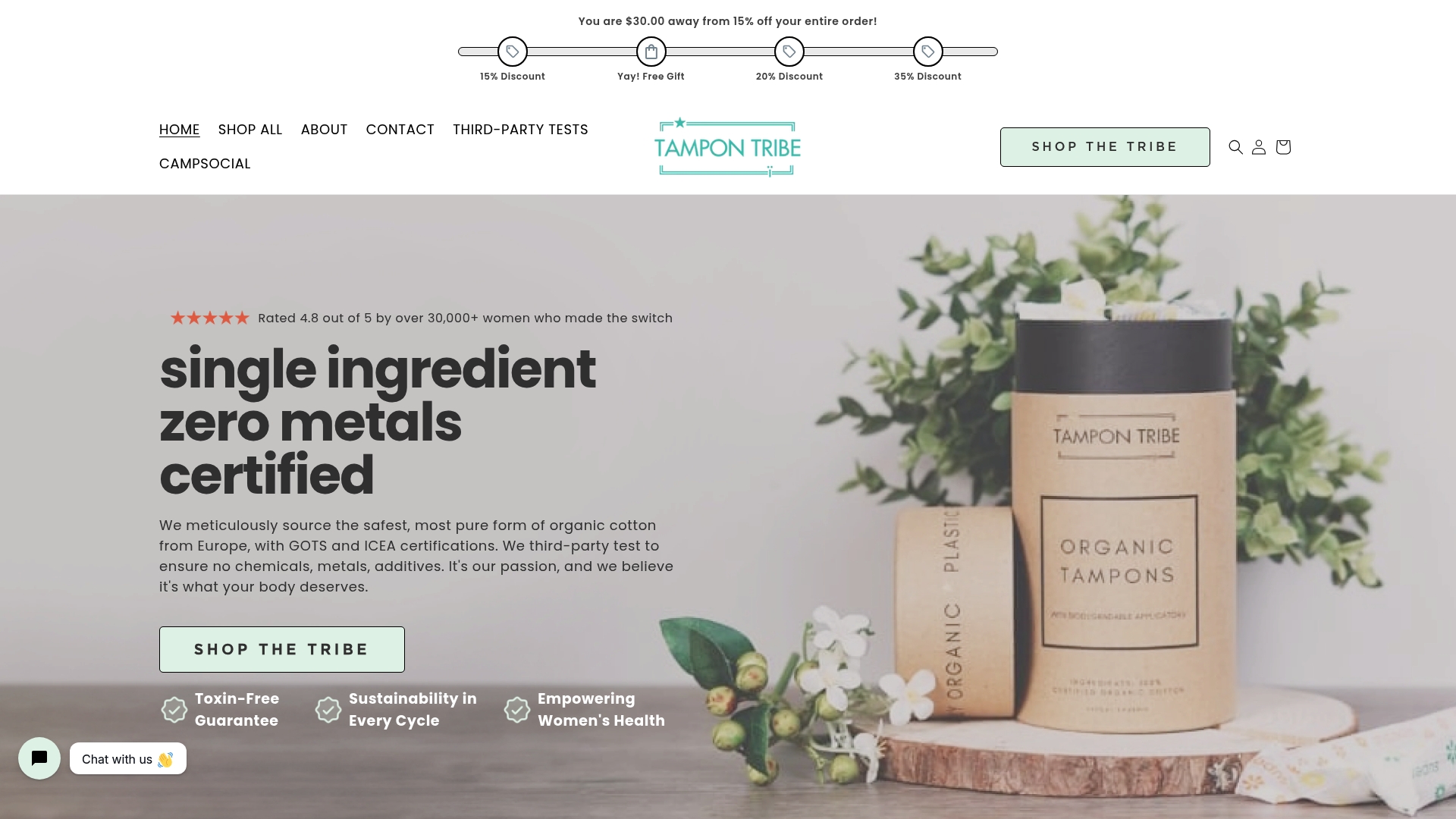
Beyond tampons, you can also shop organic panty liners for lighter days or in-between protection. And if you want the easiest possible route to a sustainable period routine, subscription tampon boxes let you customize your absorbency mix and get your essentials delivered automatically. No more last-minute pharmacy runs, and no more compromising on what goes into your body.
Frequently asked questions
Are eco-friendly tampons as safe as traditional tampons?
Yes, eco-friendly tampons are just as safe as conventional ones when used correctly. TSS risk is tied to absorbency level and how often you change your tampon, not to whether the cotton is organic.
Which type of eco-friendly tampon breaks down fastest?
Tampons made from 100% organic cotton with no plastic applicator, string, or wrapper biodegrade most quickly, particularly when composted under the right conditions.
Can eco-friendly tampons help reduce period waste?
Absolutely. Choosing biodegradable or reusable options cuts down significantly on plastic and landfill waste compared to conventional tampon products over a lifetime of periods.
Do eco-friendly tampons work for heavy flows?
Yes. Most reputable eco-friendly brands, including Tampon Tribe, offer multiple absorbency levels that match mainstream options, making them a practical choice for heavy flow days as well as lighter ones.