


Billions of period products get thrown away every year, and most of us never stop to think about where they end up. The global waste from periods adds up to over 200,000 tonnes annually, and that number keeps climbing. Yet the conversation around sustainable periods often stays surface level, focusing only on packaging while ignoring the deeper issues of materials, chemicals, and resource use. This guide breaks down the full picture so you can understand what actually matters and make choices that work for you, your body, and the planet.
Table of Contents
- The hidden components of disposable period products
- How period product waste accumulates and pollutes
- The lifecycle: Resource use and emissions of period products
- Sustainable alternatives: What really makes a difference?
- Why environmental choices around period products aren’t as simple as they seem
- Sustainable options for your period
- Frequently asked questions
Key Takeaways
| Point | Details |
|---|---|
| Plastics are the problem | Disposable sanitary products are mostly plastic, taking centuries to decompose and polluting the earth. |
| Reusables win on impact | Menstrual cups and reusable pads generate far less waste and resource use over time. |
| Production has a footprint | Even organic or sustainable options can use significant resources, so all choices come with trade-offs. |
| Small changes matter | Switching even a few cycles a year to reusables or organic alternatives helps reduce your environmental footprint. |
The hidden components of disposable period products
Let’s start by looking inside the products we use every month. Most conventional pads and tampons look simple, but their ingredient list tells a very different story.
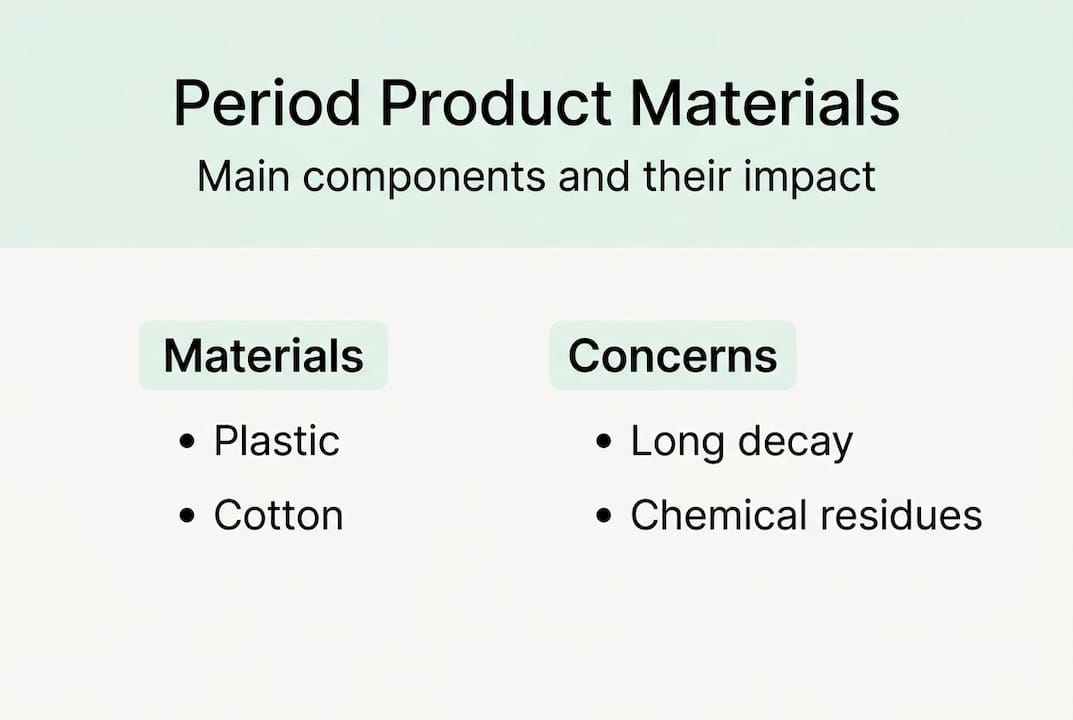
Disposable period products are up to 90% plastics and bleached wood pulp. That means a single pad can contain polyethylene backings, polypropylene covers, and adhesive strips, all materials derived from fossil fuels. Tampons aren’t much cleaner. Many include synthetic fibers, plastic applicators, and string coatings that never break down.
Beyond plastics, the bleaching process used on wood pulp and cotton introduces chemical residues into the final product. Chlorine bleaching can leave traces of dioxins, while other manufacturing steps add a cocktail of additives. Research has identified phthalates, organophosphate esters (OPEs), and alkylphenols (APs) in disposable products, and these compounds can leach into soil and water during disposal.
Here’s a quick breakdown of what’s typically inside a conventional disposable pad:
| Component | Material | Environmental concern |
|---|---|---|
| Top layer | Polypropylene | Non-biodegradable plastic |
| Absorbent core | Bleached wood pulp | Chemical residues, deforestation |
| Leak-proof back | Polyethylene film | Fossil fuel derived, microplastics |
| Adhesive strips | Synthetic adhesives | Chemical leaching |
| Packaging | Mixed plastics | Single-use waste |
The lifecycle of these products makes things worse. Raw material extraction, manufacturing, transportation, use, and disposal each carry their own environmental costs. By the time a pad reaches a landfill, it has already burned through energy, water, and chemical inputs at every step.
Key concerns with conventional disposables include:
- Plastic content that persists in the environment for centuries
- Chemical additives that leach into soil and waterways
- Bleached pulp that introduces dioxin-related compounds
- Fossil fuel dependence throughout production
If you’re looking for a cleaner starting point, organic teen pads skip the synthetic materials and bleaching chemicals entirely. And if you want a deeper look at what goes into these products, the period product FAQs cover a lot of the most common questions. The BBC’s coverage on sustainable period products is also worth reading for a broader view.
How period product waste accumulates and pollutes
Once these products are thrown away, the impact is just beginning. The scale of period product waste is genuinely staggering.
20 billion period products are discarded every year in the US alone, totaling around 240,000 tonnes of waste. Most of that ends up in landfill. But a significant portion gets flushed, which is where things get especially messy.
Flushed pads and tampons are a leading cause of sewer blockages. They don’t dissolve. They cling to pipes, combine with other debris, and form blockages that cost cities millions to clear each year. Those that make it past the sewage system often end up in rivers and oceans, where they break apart into microplastics.
“Plastics from period products don’t disappear. They fragment into smaller and smaller particles that enter the food chain, affecting marine life and eventually humans.”
Here’s how the decomposition timelines compare:
| Product type | Time to decompose | Biodegradable? |
|---|---|---|
| Conventional pad | 500 to 800 years | No |
| Plastic applicator tampon | 500+ years | No |
| Organic cotton tampon | 6 months | Yes |
| Menstrual cup (silicone) | Very slow | No (but reused for years) |
| Reusable cloth pad | Several years | Mostly yes |
Non-biodegradable plastics take 500 to 800 years to decompose, and during that time they release microplastics into surrounding soil and water. These particles have been found in fish, drinking water, and even human blood.
The pollution chain looks like this:
- Products are discarded in landfill or flushed
- Plastics fragment into microplastics over decades
- Chemicals leach into groundwater and soil
- Marine animals ingest microplastics
- Microplastics enter the human food chain
A detailed lifecycle assessment study confirms that the chemical load from disposables compounds over time, making cumulative exposure a serious concern. Switching to menstrual cups sidesteps almost all of these issues since a single cup replaces thousands of disposables over its lifespan.
The lifecycle: Resource use and emissions of period products
Beyond waste, what about all the energy, water, and chemicals used from start to finish? The full lifecycle of a period product starts long before it reaches the shelf.
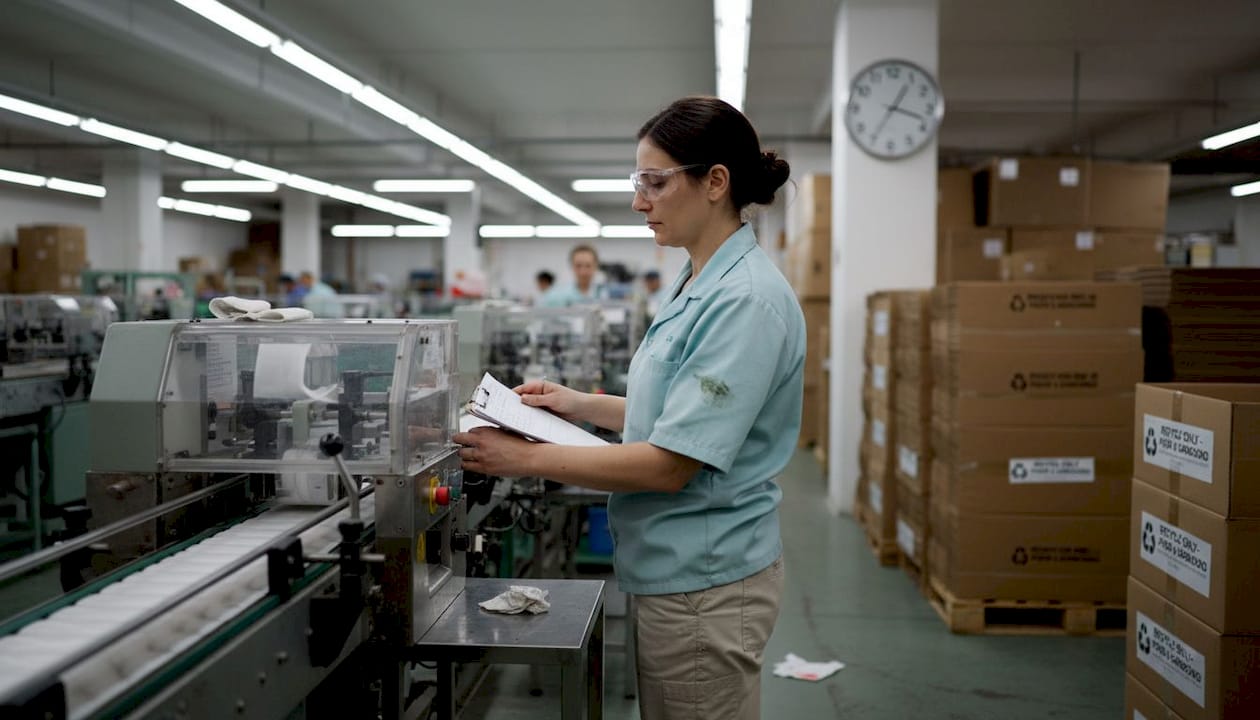
Conventional plastics used in pads and tampons come from fossil fuels. Extracting, refining, and processing those materials generates greenhouse gas emissions at every stage. Cotton farming, used in both conventional and organic tampons, requires significant water inputs and, in conventional farming, heavy pesticide use.
Production is resource-intensive, relying on fossil fuels, pesticides, and large volumes of water. Disposable pads and tampons consistently rank highest for global warming potential and resource depletion across lifecycle assessments.
Here’s where the biggest impacts occur:
- Raw material extraction: Fossil fuels for plastics, water for cotton
- Manufacturing: Energy use, chemical processing, bleaching
- Packaging: Often multilayer plastic that’s hard to recycle
- Transportation: Emissions from global supply chains
- Disposal: Landfill methane, chemical leaching, microplastic release
Reusable products aren’t completely impact-free either. Washing reusable pads or menstrual cups uses water and energy, and the environmental benefit depends on how you wash them. Cold water washing and air drying keep the footprint low. Hot machine washing with a tumble dryer narrows the gap between reusables and disposables.
Additives in single-use products contribute more to pollution than reusables across almost every measured category, according to recent chemical pollutant research. That’s a strong argument for reducing single-use products wherever possible.
Pro Tip: If you use disposables part-time, switching to organic pantyliners for lighter days and plastic-free organic pads for heavier ones can meaningfully reduce your chemical and plastic exposure without a complete overhaul of your routine.
Sustainable alternatives: What really makes a difference?
If disposables are so damaging, what options actually improve things for both you and the planet? The good news is that the alternatives are better than most people expect, and the evidence behind them is solid.
Reusable cups, pads, and period underwear have the lowest lifecycle impacts across the board, with menstrual cups coming out on top. A single cup can last up to 10 years, replacing thousands of disposable products over its lifetime. Even organic disposables outperform conventional ones, though they can carry higher land and water use depending on cotton farming practices.
Here’s how the main options stack up:
- Menstrual cups: Lowest overall impact, long lifespan, zero waste during use
- Reusable cloth pads: Low impact, biodegradable, washing method matters
- Period underwear: Convenient, low waste, but some contain synthetic fibers
- Organic cotton tampons: Better than conventional, biodegradable, no plastic applicator needed
- Organic disposable pads: Fewer chemicals, but still single-use
Reusables can be less accessible in some settings, and washing method genuinely influences the actual environmental benefit. That’s worth acknowledging honestly. Access, cost, and personal health needs all play a role in what’s realistic for any given person.
Pro Tip: You don’t have to go fully reusable overnight. Start by swapping one product type, like replacing conventional tampons with a natural menstrual cup or trying reusable organic pads for a few days each cycle. Small, consistent changes add up faster than you’d think.
A sustainable period products analysis found that even partial switches to reusable or organic products can significantly reduce your personal environmental footprint over time. You don’t need a perfect solution to make a real difference.
Why environmental choices around period products aren’t as simple as they seem
Here’s the uncomfortable truth: the data on sustainable period products is genuinely complicated, and anyone telling you there’s one clear answer is oversimplifying. We’ve seen that firsthand.
Organic pads can use more land and water than conventional ones in certain farming systems. Reusable products depend heavily on how you wash them. Edge cases exist where organic options carry higher environmental costs in specific categories, even while being better overall. That nuance matters.
What we believe is this: the goal isn’t perfection. It’s progress. Switching isn’t always affordable or accessible for everyone, and eco-guilt doesn’t help anyone. The best product for the planet is also shaped by your local water supply, your health needs, your budget, and your lifestyle.
Understanding the real trade-offs means you can make informed choices instead of just following trends. Any step toward reducing plastic and chemical exposure is a step worth taking, whether that’s switching one product, choosing organic over conventional, or simply disposing of products properly instead of flushing them.
Sustainable options for your period
Ready to make more sustainable choices? Here’s how you can start.
At Tampon Tribe, we’ve built our entire product line around the idea that your period shouldn’t cost the planet. From reusable organic pads that replace hundreds of single-use products to menstrual cups that last up to a decade, every option we carry is designed to reduce plastic waste and keep harmful chemicals away from your body.
If you’re not ready to go fully reusable, our organic cotton tampons are a cleaner, biodegradable alternative to conventional options, with zero plastic packaging. Every product ships in totally green packaging, because sustainability shouldn’t stop at the product itself. Start where you are, and we’ll meet you there.
Frequently asked questions
How long does it take for period products to decompose?
Most disposable pads and tampons take 500 to 800 years to break down because of their plastic content. Organic cotton tampons without plastic applicators decompose in roughly six months.
Are reusable period products better for the environment?
Yes. Reusable products have lower overall lifecycle impacts compared to disposables, with menstrual cups ranking best across most environmental categories.
What harmful chemicals are in disposable menstrual products?
Disposable pads and tampons often contain phthalates, OPEs, and APs alongside bleaching chemicals and plastic additives, all of which can leach into soil and water during disposal.
How can I reduce the impact of my period products?
Switching even part-time to reusable or organic alternatives reduces impact significantly, and always disposing of used products in the bin rather than flushing them prevents sewer and ocean pollution.