


Most people assume switching to ‘organic’ or ‘biodegradable’ period products automatically means doing right by the planet. The reality is far more complicated. Disposable sanitary pads are made of up to 90% plastics and bleached wood pulp, and even products marketed as ‘natural’ can contain hidden chemicals, generate significant greenhouse gases, and end up in landfills for centuries. This guide breaks down the real environmental footprint of common menstrual products, from materials and production to disposal and chemical contamination, so you can make choices that genuinely reduce your impact.
Table of Contents
- What makes menstrual products environmentally impactful?
- Single-use vs. reusable: How do the footprints compare?
- The chemical dilemma: Plastics, PFAS, and green alternatives
- Choosing and using period products for the lowest impact
- Our take: What most period product advice gets wrong
- Where to find safer, sustainable menstrual products
- Frequently asked questions
Key Takeaways
| Point | Details |
|---|---|
| Menstrual cups lead | Menstrual cups deliver the lowest lifetime environmental impact when used consistently. |
| Disposables drive pollution | Single-use pads and tampons create most plastic waste, greenhouse gases, and chemical runoff. |
| PFAS-free options matter | Choosing certified PFAS-free products helps reduce toxic chemical exposure and environmental contamination. |
| Reusables win with proper care | Reusable pads and underwear are only greener if used and washed efficiently and for long enough. |
What makes menstrual products environmentally impactful?
Not all period products are created equal, and understanding why starts with the materials inside them. Most conventional disposable products are built from a mix of synthetic plastics, bleached wood pulp, and chemical additives. The term plastic here refers to petroleum-derived polymers like polyethylene and polypropylene, which are found in the leak-proof backing of pads and the outer coating of many tampons. These materials do not break down in landfills for hundreds of years.
Organic cotton means cotton grown without synthetic pesticides or fertilizers. It can be a meaningful improvement for soil health and reducing chemical runoff, but it doesn’t automatically mean a product is plastic-free or low-impact. Biodegradable is another term worth scrutinizing: a product can only biodegrade under very specific conditions, like high heat and active composting, which most home compost bins or landfills don’t provide.
Here are the main components of typical disposable period products and their fate in waste streams:
- Plastic leak-proof backing: ends up in landfills or waterways, does not biodegrade
- Bleached wood pulp or rayon core: can break down over time, but bleaching produces harmful dioxins
- Synthetic fragrance and dyes: leach into water and soil
- Adhesive strips: petroleum-based, non-biodegradable
- Individual plastic wrappers: single-use, almost universally landfilled
Beyond visible waste, there are invisible impacts. Production of disposable products contributes to greenhouse gas emissions through energy-intensive manufacturing, chemical processing, and global shipping. According to a life cycle assessment, disposable pads cause plastic waste, greenhouse gas release, and resource depletion simultaneously. Chemicals like PFAS (per- and polyfluoroalkyl substances, a class of synthetic chemicals that don’t break down) and plasticizers have been detected in both disposable and some reusable products. You can read more about what’s actually in these products on the Tampon Tribe FAQs page.
Keep in mind: Even products labeled ‘eco-friendly’ may still contain plastic components or harmful chemical residues. Always look beyond the label.
Single-use vs. reusable: How do the footprints compare?
Once you understand what period products are made of, the next logical question is: which type actually has the smallest environmental footprint? Science gives us a clearer answer here than most marketing does.
The gold standard for this comparison is a life cycle assessment (LCA), a method that measures environmental impact across every stage of a product’s life, from raw material extraction to manufacturing, use, and disposal. Multiple LCAs point in the same direction: reusables win, with menstrual cups leading the pack by a wide margin. Menstrual cups break even with disposables after just one month of use, and they can last up to 10 years.
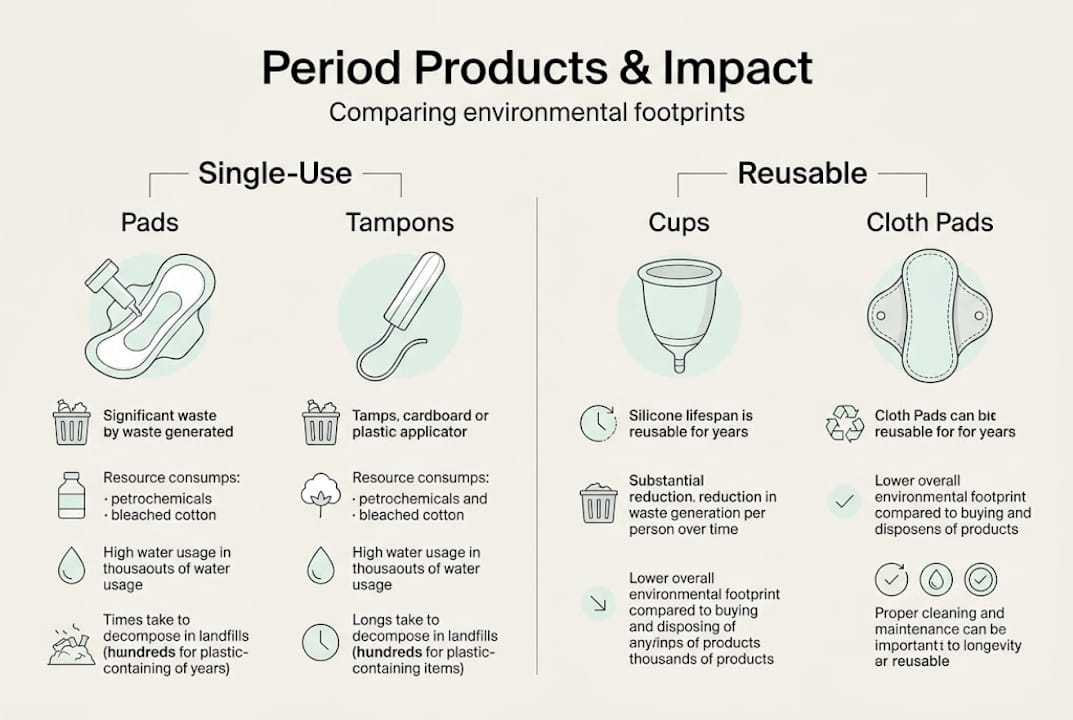
To put real numbers on it, here’s how common products compare:
| Product | Approx. lifespan | Annual waste | Carbon footprint vs. disposable pads |
|---|---|---|---|
| Disposable pads | Single use | ~150 pads/year | Baseline (highest) |
| Disposable tampons | Single use | ~240 units/year | Slightly lower than pads |
| Menstrual cup | Up to 10 years | Near zero | Up to 99% lower |
| Reusable cloth pads | 3 to 5 years | Minimal | 60 to 80% lower |
| Period underwear | 2 to 3 years | Minimal | 60 to 75% lower |
The scale of the single-use problem is staggering. In the US alone, 20 billion disposables are discarded every year. That’s pads, tampons, and applicators filling landfills and washing into waterways constantly.
When evaluating reusables, three factors matter most:
- Break-even point: The number of uses needed before a reusable’s production impact is offset by avoiding disposables. Cups reach this in about one menstrual cycle.
- Washing habits: How you clean reusables affects water and energy use. Cold or warm water washing uses far less energy than hot cycles.
- Product lifespan: Using a silicone cup for 5 to 10 years is dramatically better than replacing a cloth pad every 18 months because it wasn’t cared for properly.
If you’re curious about trying a reusable option, silicone-free menstrual cups are one of the most studied and environmentally validated choices available.
The chemical dilemma: Plastics, PFAS, and green alternatives
Carbon and waste numbers are only part of the environmental picture. Chemical pollution from period products is a growing concern that rarely gets enough attention, even in sustainability circles.
PFAS are a family of over 12,000 synthetic chemicals used in manufacturing for their non-stick and moisture-resistant properties. They’re called ‘forever chemicals’ because they accumulate in the environment and in living tissue without ever fully breaking down. Research shows that PFAS appear in about 30% of reusable menstrual products including underwear, pads, and cups, even though there are products proven to work perfectly well without them.
Plasticizers are another category of concern. These are chemicals added to plastics to make them soft and flexible, and they’re found in the synthetic components of many disposable products. Single-use products release significantly higher amounts of plastic additives to the environment compared to reusable alternatives, contributing to soil and water contamination over time.
Here’s a quick reference by product type and chemical concern:
| Product type | PFAS risk | Plastic additive risk | Notes |
|---|---|---|---|
| Conventional disposable pads | Low to moderate | High | Plastic backing, adhesives |
| Organic cotton tampons | Low | Low | Depends on applicator material |
| Reusable period underwear | Moderate (30%) | Low | Some brands tested PFAS-positive |
| Silicone menstrual cups | Low | Very low | Medical-grade silicone preferred |
| Reusable cloth pads | Low | Very low | Cotton construction, minimal risk |
Beyond the product itself, certifications are the most reliable way to verify a brand’s claims. Look for GOTS (Global Organic Textile Standard), OEKO-TEX Standard 100, or explicit third-party PFAS testing disclosure. A brand that refuses to share this data is a red flag.
Pro Tip: Search a brand’s website for a specific statement like ‘no PFAS detected’ along with a named testing lab or certification. Vague claims like ‘non-toxic’ or ‘natural’ without documentation are marketing language, not verified safety standards. PFAS-free organic panty liners are a good starting point if you want to minimize chemical exposure while still using disposable-style products on lighter days.
Choosing and using period products for the lowest impact
You now have the evidence. Here’s how to turn it into action with a clear, practical framework for making better period choices that actually move the needle.
Step-by-step checklist for choosing greener products:
- Check the core material first: Look for certified organic cotton, medical-grade silicone, or natural rubber. Avoid products with vague synthetic ingredient lists.
- Look for credible certifications: GOTS, OEKO-TEX 100, or explicit PFAS-free testing disclosure should be present, not just marketing slogans.
- Prioritize reusables where you can: Even switching one product type, like replacing disposable tampons with a cup, creates measurable impact over a year.
- Consider the full lifecycle: A reusable product with a high-carbon production process still wins long-term if used for its intended lifespan.
- Watch for greenwashing signals: Words like ‘biodegradable,’ ‘eco,’ and ‘natural’ mean nothing without certifications. Ask what they mean specifically.
To maximize the lifespan of your reusable products and minimize contamination:
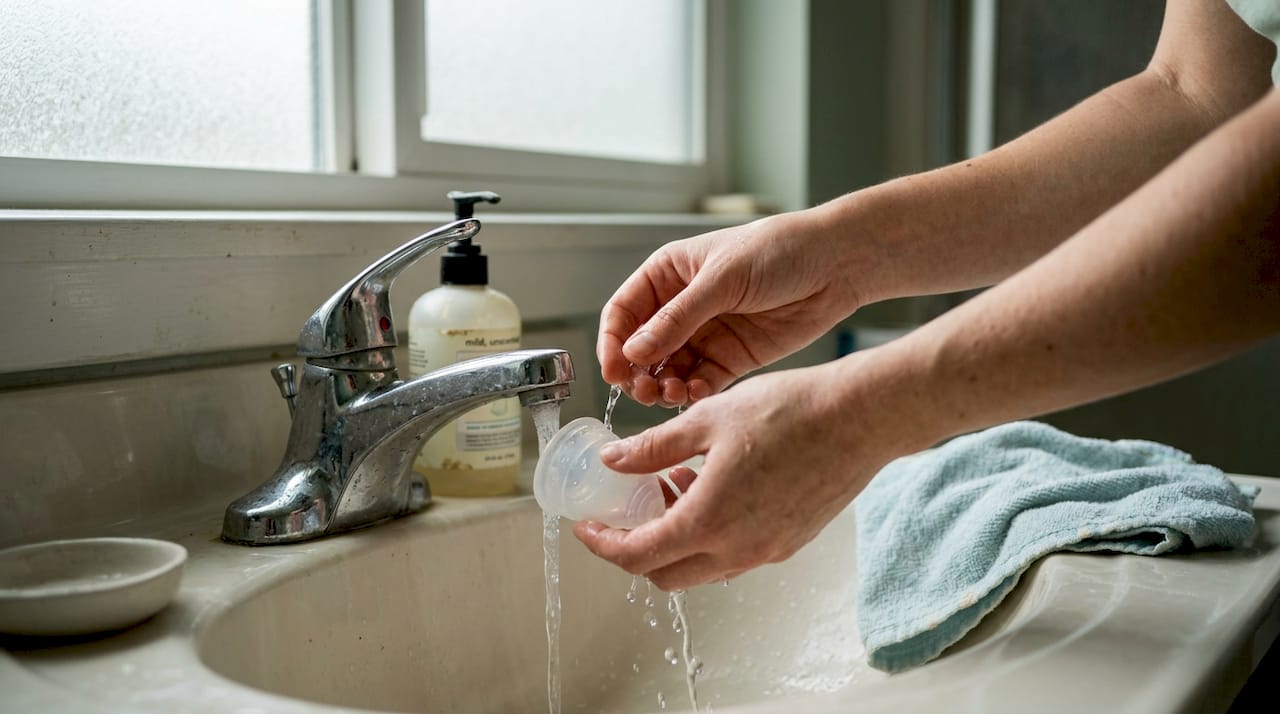
- Wash cups and reusable pads in cool or warm water rather than boiling repeatedly, which can degrade silicone and fabrics faster
- Use fragrance-free, gentle soap to avoid introducing new chemicals and to preserve fabric integrity
- Store products in breathable cotton bags, not airtight containers that trap moisture and encourage bacteria
Pro Tip: The most sustainable wash routine for reusable pads is a cold rinse immediately after use, then a warm machine wash with other laundry. This uses minimal extra water and energy while keeping products clean and lasting longer.
While bamboo alternatives are gaining popularity, keep in mind that bamboo-based pads have lower impacts than conventional disposables but still carry upstream production and transportation footprints worth considering. And reusables are clearly superior overall, provided you use them long enough to reach the break-even point and wash them with minimal resource use. You can explore reusable organic pads as a practical starting point if cups feel like too big a shift right now.
Our take: What most period product advice gets wrong
Here’s the honest truth: most eco-guides tell you to ‘switch to reusables’ and call it done. That advice isn’t wrong, but it skips the harder conversation.
Buying a reusable product from a brand that won’t disclose its materials or chemical testing isn’t a win for your health or the planet. We’ve seen quality menstrual cups marketed as green while containing trace PFAS that no one tested for because no one asked. Certification and transparency aren’t optional extras. They’re the whole point.
Sustainability also isn’t an all-or-nothing switch. Some people find cups uncomfortable. Some have heavy flow days where a backup disposable is genuinely necessary. The goal isn’t purity. It’s reducing harm incrementally and consistently. Combining a cup with organic tampons for backup, and replacing conventional pads with certified organic reusables over time, does far more real-world good than waiting for the ‘perfect’ zero-waste period.
Brands have a responsibility here too. Disclosing PFAS testing, applicator materials, and packaging composition shouldn’t be a differentiator. It should be the baseline.
Where to find safer, sustainable menstrual products
Now that you know what to look for, the next step is finding products that actually meet the bar.
At Tampon Tribe, every product is built around the principle that safer for your body and safer for the planet aren’t competing goals. You’ll find organic cotton tampons made without synthetic materials or fragrances, alongside menstrual cups and reusable organic pads for those ready to make the shift to low-waste options. Every product comes with zero plastic packaging, because the commitment to reducing your period’s footprint shouldn’t stop at the product itself.
Frequently asked questions
Which menstrual product has the lowest environmental impact?
Menstrual cups outperform all other period products across carbon, waste, water, and resource measures, according to multiple life cycle assessments. They break even with disposables after just one month of use.
Do organic cotton pads and tampons reduce environmental harm?
Organic options typically reduce plastic pollution and chemical runoff, but organic disposables sometimes carry higher water and land use impacts due to farming requirements, so the net benefit depends on the full lifecycle.
How do I avoid PFAS and toxic chemicals in period products?
Look for products with verified third-party PFAS testing or certifications like OEKO-TEX 100. Around 30% of reusables test positive for PFAS, so don’t assume a reusable label automatically means chemical-free.
Is reusable underwear or pads always greener than disposables?
Reusables are almost always greener, but only when used for sufficient cycles to offset production impact and washed efficiently to minimize water and energy use.