


Finding a menstrual product that genuinely protects your body and the planet is harder than it should be. Greenwashing is everywhere, ingredient lists are vague, and the sheer number of options can make even the most informed shopper second-guess herself. The good news is that science is catching up, and we now have real data to guide smarter choices. This article breaks down the top health-conscious menstrual options, from menstrual cups to organic tampons, using research and clear criteria so you can make decisions rooted in facts, not marketing.
Table of Contents
- What makes a menstrual product health-conscious?
- Menstrual cups: The gold standard for health and sustainability
- Organic and reusable pads: Greener alternatives with caveats
- Organic cotton tampons: Safer, but not perfect
- Choosing the right option for your body and lifestyle
- The overlooked truth: It’s not just the product, but your process
- Health-conscious period care you can trust
- Frequently asked questions
Key Takeaways
| Point | Details |
|---|---|
| Menstrual cups lead | Menstrual cups offer the lowest environmental impact and best health safety among period products. |
| Scrutinize ingredients | Even organic and reusable options can contain chemicals, so always seek certifications and check materials. |
| Pad and tampon trade-offs | Organic pads and tampons are safer than conventional but can still involve chemicals and more waste. |
| Personal fit matters | Your flow, anatomy, and lifestyle should guide your final period product choice. |
| Reevaluate regularly | Routinely review your menstrual product use and adapt as your body and needs change. |
What makes a menstrual product health-conscious?
Not every product labeled “natural” or “eco-friendly” earns that title. A truly health-conscious menstrual product passes three tests: it is safe for your body, transparent about its ingredients, and honest about its environmental footprint.
Conventional menstrual products carry several red flags worth knowing:
- Synthetic fragrances and dyes that can irritate sensitive tissue
- Chlorine bleaching byproducts like dioxins in non-certified products
- Single-use plastics in applicators, wrappers, and pad backings
- Undisclosed chemical additives that manufacturers are not required to list
Certifications matter more than marketing copy. Look for GOTS (Global Organic Textile Standard) and TCF (Totally Chlorine Free) labels, which require strict standards for both raw materials and processing. Transparency in production, meaning brands that openly share their ingredient lists and manufacturing practices, is a strong signal of trustworthiness.
Disposal and reusability are also part of the equation. Disposable pads and tampons generate 240,000 tonnes of waste per year in the US alone, while reusable options like cups dramatically cut that number over time. But reusable does not automatically mean chemical-free. Studies detect concerning chemicals in both conventional and some organic or reusable menstrual products, which is why third-party certification is non-negotiable.
You can start by exploring organic cotton pads and checking menstrual product FAQs to understand what questions to ask before you buy.
Pro Tip: Always read beyond the front label. Flip the package over and look for certifications printed in small text, or check the brand’s website for a full ingredient disclosure before purchasing.
Menstrual cups: The gold standard for health and sustainability
Now that we know what matters most, let’s dive into the first and most recommended option: menstrual cups.
A menstrual cup is a bell-shaped silicone device that collects flow internally rather than absorbing it. You insert it, wear it for up to 12 hours, empty and rinse it, then reinsert. One cup can last up to 10 years, making the cost per cycle remarkably low over time.
From a health standpoint, cups have a strong track record. They are least disruptive to the vaginal microbiome compared to tampons and pads, and they carry a low risk of Toxic Shock Syndrome (TSS). Because they collect rather than absorb, they do not dry out vaginal tissue or alter its natural pH balance.
For heavy flow days, cups have a practical edge too. They hold more than super-absorbency tampons, which means fewer changes and less anxiety about leaking during long meetings or workouts.
Pros of menstrual cups:
- Medical-grade silicone with no chemical exposure risk
- Lowest environmental impact of any menstrual product
- Cost-effective over years of use
- Holds more volume than most tampons
Cons of menstrual cups:
- Learning curve of 2 to 3 cycles to find the right fit and insertion technique
- Not ideal for some IUD users or those with anatomical variations
- Requires access to clean water for rinsing
- May feel intimidating for first-time users
“Prioritize menstrual cups for optimal health (no absorption or chemicals, microbiome-friendly) and environment (lowest impact).”
Browse the full menstrual cup guide to find the right size and style for your body.
Pro Tip: Cups come in different firmness levels and sizes. If you have a lower cervix or lighter flow, a smaller, softer cup will likely feel more comfortable. Do not assume one size fits all.
Organic and reusable pads: Greener alternatives with caveats
For those who want a sustainable option without internal products, organic and reusable pads are worth considering.

An organic pad uses cotton grown without synthetic pesticides, while a reusable pad is typically made from layered organic cotton or bamboo fabric that you wash and reuse. Both are meaningful upgrades from conventional disposable pads, which often contain synthetic polymers, plastic backings, and fragrance chemicals.
On absorbency, organic pads score 78% for absorbency in independent testing, though they score lower (around 58%) for wet feeling, meaning some users notice more moisture against the skin. Leaking on heavier days is possible if you are not changing frequently enough.
| Feature | Organic reusable pads | Conventional pads |
|---|---|---|
| Chemical exposure | Lower (certified options) | Higher (fragrances, dioxins) |
| Plastic content | None (plastic-free options) | High (backing, wrappers) |
| Waste generated | Minimal over time | Significant, single-use |
| Absorbency | Good (varies by brand) | Consistent |
| Cost over time | Lower | Higher |
The caveats are real, though. Reusable items can leach chemicals through washing, especially if dyes or synthetic materials are used in construction. Organic cotton farming also has higher land and water use than some alternatives, so the environmental math is not always simple.
Pros: Less waste, plastic-free options available, adjustable fit with snaps, no applicator needed. Cons: Requires laundering, potential for chemical leaching in non-certified products, wet feeling for some users.
Check out reusable organic cotton pads for everyday use, or organic teen pads for lighter flow needs.
Organic cotton tampons: Safer, but not perfect
If you prefer tampons for comfort or convenience, organic options offer important improvements, though it is wise to understand their limits.
Organic tampons use cotton certified free from synthetic pesticides and are often bleached with hydrogen peroxide rather than chlorine, reducing dioxin exposure. They skip the synthetic fragrances and dyes found in many conventional tampons, which makes them gentler on sensitive tissue.
But “organic” does not mean “chemical-free.” Organic tampons may still contain phthalates, PFAS, and other trace contaminants depending on processing and packaging. TSS risk remains if a tampon is left in too long, regardless of whether it is organic or conventional. The string and wrapper materials are also worth checking, since not all brands use certified materials throughout.
| Feature | Organic tampons | Conventional tampons |
|---|---|---|
| Pesticide residue | Minimal (certified cotton) | Possible |
| Fragrance/dyes | None (most brands) | Often present |
| PFAS/phthalates | Trace possible | More likely |
| TSS risk | Present (time-dependent) | Present |
| Biodegradability | Higher | Lower |
From a microbiome perspective, cups are much less disruptive than tampons overall, but organic tampons remain a far better choice than conventional ones for daily comfort and reduced chemical exposure.
Pros: Familiar form factor, less irritation, biodegradable cotton core, easier transition for tampon users. Cons: Still single-use, not fully chemical-free, TSS risk if worn too long, wrapper materials vary.
Explore certified organic cotton tampons to see which absorbency levels match your flow.
Choosing the right option for your body and lifestyle
With all factors laid out, the final step is matching the right option to your unique needs.
No single product wins for every person in every situation. Your flow volume, anatomy, activity level, access to laundry facilities, and sensitivity all shape which option will serve you best. Here is a simple framework to narrow it down:
- How heavy is your flow? Heavy flow benefits most from a menstrual cup or high-absorbency organic tampon.
- Do you prefer internal or external products? Cups and tampons work internally; pads stay external.
- Do you have any sensitivities or medical devices? Cups can be unsuitable for IUD users and those with certain anatomical variations.
- What is your access to clean water and laundry? Reusable options require reliable washing facilities.
- What is your budget? Cups and reusable pads cost more upfront but save money over time.
- Are you traveling or highly active? Cups are often the most convenient for long travel days or athletic activities.
You can also find personalized period answers to help address specific concerns about fit, flow, and product compatibility.
Situational needs matter too. If you are swimming, a cup or tampon is more practical than a pad. If you are at home with easy laundry access, reusable pads are a low-effort sustainable swap.
Pro Tip: You do not have to commit to just one product. Many women use a cup as their primary option and keep a reusable pad as backup, which maximizes both comfort and protection without adding waste.
The overlooked truth: It’s not just the product, but your process
Here is something most period product comparisons skip entirely: the best product on the market will still let you down if your habits around it are inconsistent.
A menstrual cup left in longer than 12 hours loses its safety advantage. A reusable pad washed with harsh detergents can leach more chemicals than a disposable. An organic tampon worn past the recommended time still carries TSS risk. Even certified, clean products require intentional use to deliver their full benefit.
We also think there is real freedom in letting your needs evolve. Your body at 22 is not your body at 32. Hormonal changes, postpartum recovery, or a new fitness routine can all shift what works best. Switching products is not inconsistency. It is self-awareness.
The most health-conscious approach is not finding one perfect product and sticking with it forever. It is staying curious, checking certifications periodically (standards update), and being willing to adapt. As we see it: sustainability and health are journeys, not endpoints. Prioritize what you can control: your knowledge and habits.
Health-conscious period care you can trust
At Tampon Tribe, every product in our lineup is chosen with the exact priorities covered in this article in mind: minimal chemical exposure, transparent sourcing, and real environmental accountability.
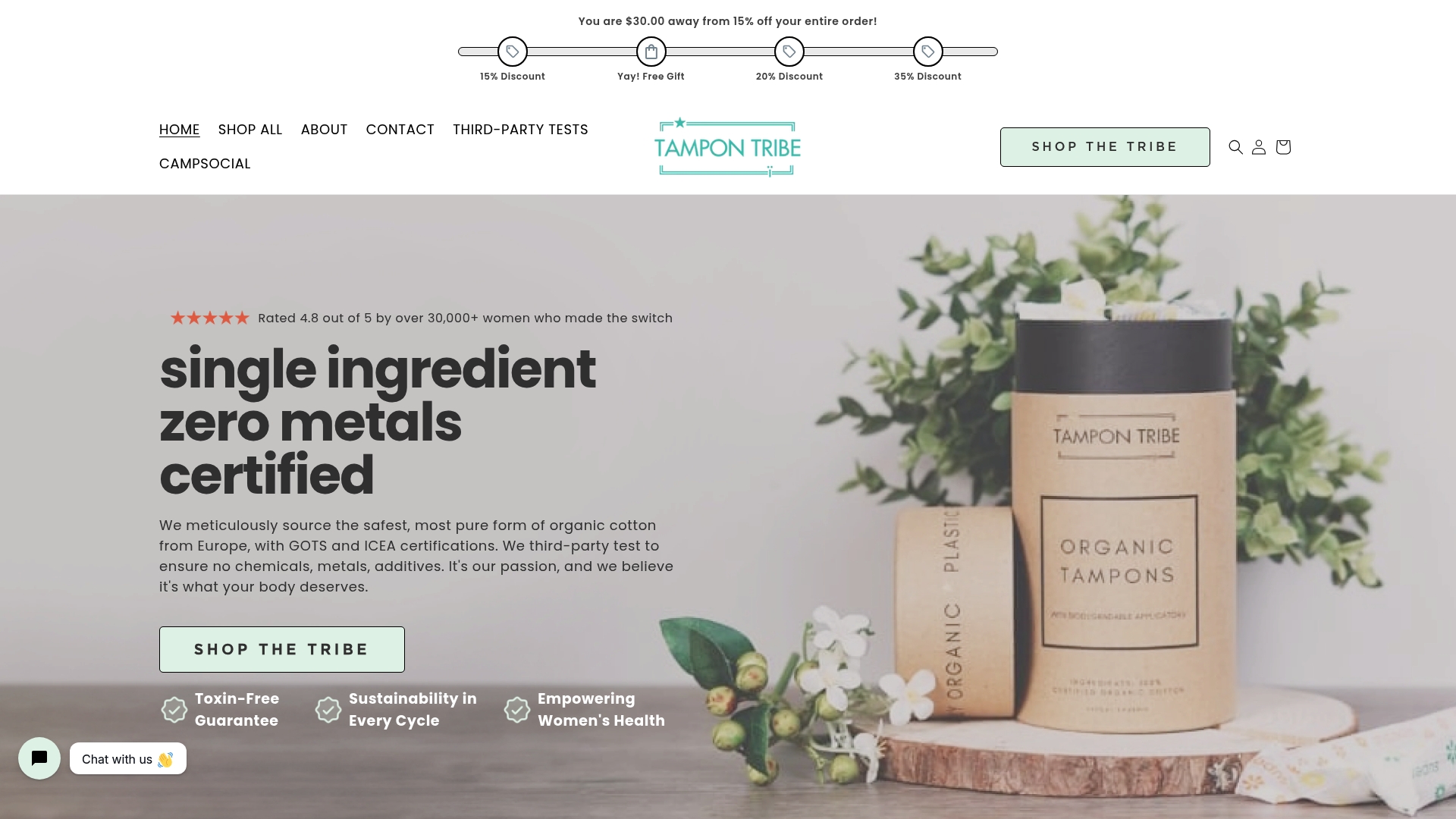
Whether you are ready to try organic tampons, make the switch to menstrual cups, or explore reusable organic pads, you will find options that are vetted for the health and sustainability standards that matter to you. Zero plastic packaging, certified organic materials, and a community that genuinely cares about your wellbeing and the planet. Your empowered period care journey starts here.
Frequently asked questions
Are menstrual cups safe for everyone?
Menstrual cups are safe for most users, but cups can be unsuitable for IUD users and some anatomical variations. Always confirm with your healthcare provider before switching.
Do organic pads and tampons truly avoid all chemicals?
Not entirely. Studies detect chemicals like phthalates and PFAS in both conventional and some organic products, so always check for third-party certifications like GOTS or TCF.
Which menstrual product is best for heavy flow?
Menstrual cups are typically the best choice for heavy flow days because they hold more than super-absorbency tampons, meaning fewer changes and less risk of leaking.
How environmentally friendly are reusable pads compared to disposables?
Reusable pads significantly outperform disposables on waste metrics, though reusable items can leach chemicals through laundering. Overall, they remain a greener choice than single-use options.
What certifications should I look for in health-conscious menstrual products?
Prioritize GOTS and TCF certifications. These certifications require rigorous standards for both raw material inputs and processing, reducing the risk of hidden chemical exposure.