


Most women spend decades using menstrual products without ever reading the ingredients list. That’s partly because there often isn’t one. Conventional tampons and pads aren’t required to disclose every component, which means synthetic dyes, fragrances, and chemical processing byproducts can go unnoticed. At the same time, interest in organic alternatives has surged, with many women asking whether switching is worth it or just clever marketing. This article breaks down what organic period products actually are, what the science says about their health effects, and why their environmental advantages are harder to argue with than their medical ones.
Table of Contents
- What are organic menstrual products and how do they differ?
- Health impact: Benefits and limitations of organic menstrual products
- Environmental and sustainability advantages of organic period products
- Navigating choices: How to select and use the best organic menstrual products
- Our take: What most guides miss about organic period products
- Ready to try organic period care?
- Frequently asked questions
Key Takeaways
| Point | Details |
|---|---|
| Fewer chemical additives | Organic menstrual products avoid pesticides, fragrances, and dyes for gentler care. |
| No proof of superior safety | There’s no clinical evidence that organic options prevent TSS or all chemical exposures. |
| Still contain some metals | All pads and tampons tested have trace heavy metals, so change products regularly. |
| Supporting sustainability | Organic products reduce plastic waste and encourage eco-friendly period care. |
| Choose based on needs | Pick certified, fragrance-free, and well-suited products for your flow and comfort. |
What are organic menstrual products and how do they differ?
The word “organic” gets used loosely in wellness spaces, so it’s worth being precise. In the context of menstrual products, organic means the cotton used is grown without synthetic pesticides, herbicides, or genetically modified seeds, and the final product avoids synthetic fragrances, dyes, and chlorine bleach processing. Certifications like GOTS (Global Organic Textile Standard) and FDA oversight provide third-party confirmation that a product meets specific standards.
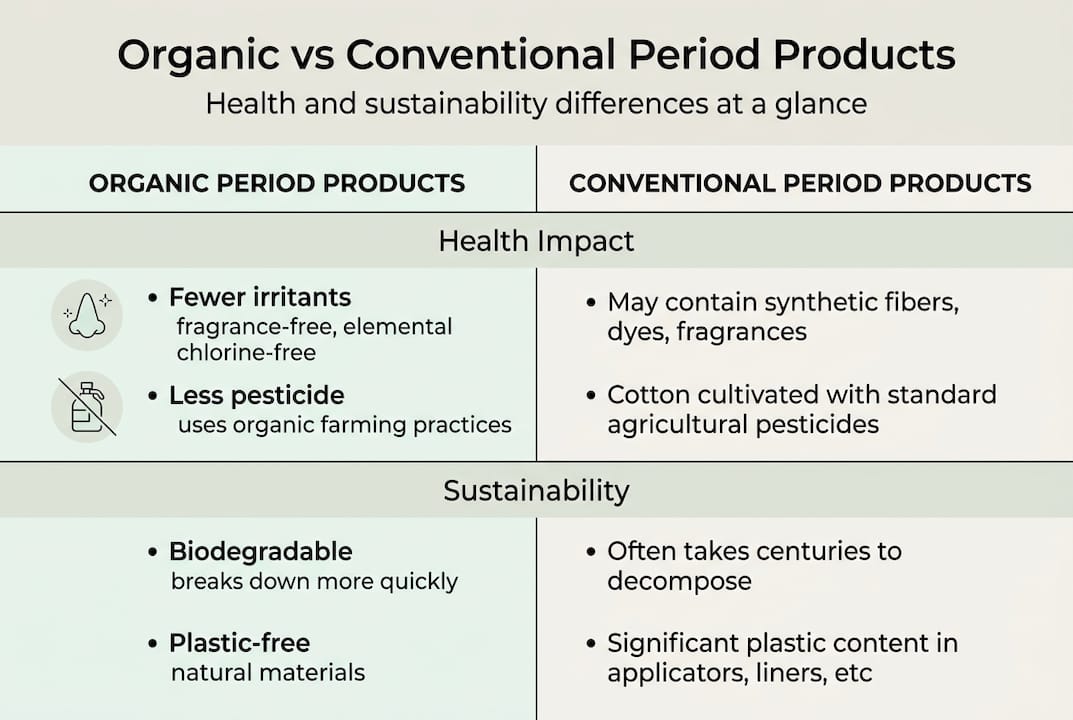
Conventional tampons and pads are often made from a blend of cotton and rayon, a synthetic fiber derived from wood pulp. They may be whitened using chlorine-based processes, which can leave trace byproducts. Fragrances and dyes are added for aesthetics. Organic cotton pads and organic pantyliners skip all of that, using cotton that’s certified from field to finished product.
Here’s a quick comparison to make the differences concrete:
| Feature | Organic products | Conventional products |
|---|---|---|
| Core material | Certified organic cotton | Cotton/rayon blend |
| Bleaching process | Hydrogen peroxide or unbleached | Chlorine-based (may leave dioxins) |
| Fragrances/dyes | None | Often added |
| Plastic content | Minimal to none | Can be up to 90% plastic |
| Certifications | GOTS, OEKO-TEX | FDA regulated only |
The impact of chemicals in period products is a growing area of concern. Organic menstrual products reduce exposure to synthetic pesticides, chlorine bleach byproducts like dioxins, fragrances, dyes, and rayon fibers that appear in many conventional options. Common chemicals found in conventional products that are typically absent in organic versions include:
- Dioxins from chlorine bleaching
- Synthetic fragrances linked to irritation
- Pesticide residues from non-organic cotton farming
- Rayon fibers that may shed inside the body
- Phthalates used in plastic components
Looking for a GOTS certification label is the most reliable way to verify that a product is genuinely organic from start to finish. The FDA regulates menstrual products as medical devices but doesn’t require full ingredient disclosure, which is why third-party certifications matter more than you might expect.
Health impact: Benefits and limitations of organic menstrual products
Now that we see what makes organic products different, let’s examine whether those differences truly matter for your health.
The clearest, most evidence-backed benefit is reduced exposure to irritants. Women with sensitive skin or conditions like vulvodynia often report fewer reactions when switching to fragrance-free, dye-free organic products. That’s not a small thing. Synthetic fragrances are among the most common contact allergens, and the vaginal mucosa is highly absorptive tissue.
However, it’s important to be honest about the limits of the current evidence. No definitive clinical evidence shows organic products are healthier overall or reduce TSS risk, since both types are FDA-regulated similarly and TSS depends on absorbency and usage duration, not organic status. Choosing organic tampons won’t protect you from toxic shock syndrome if you leave one in too long.
One finding that surprises many people is that heavy metals show up in both organic and conventional products. Research shows toxic metals including lead, arsenic, and cadmium detected in both organic and non-organic tampons and pads, with lead higher in non-organic versions and arsenic sometimes higher in organic ones. Absorption through vaginal tissue is possible, but the health impact of these low-level exposures is still unclear and needs more research.
Here’s a snapshot of contaminant data from published research:
| Contaminant | Found in organic? | Found in conventional? | Notable detail |
|---|---|---|---|
| Lead | Yes | Yes (higher) | Neurotoxin at high doses |
| Arsenic | Yes (sometimes higher) | Yes | Carcinogen |
| Cadmium | Yes | Yes | Kidney toxin |
| Phthalates | Yes | Yes (up to 42,193 ng/g in some pads) | Endocrine disruption concerns |
The phthalate figure is striking. Up to 42,193 ng/g of phthalates have been measured in some conventional sanitary pads, a concentration that raises real questions about long-term exposure.
Pro Tip: Regardless of which product you choose, prioritize fragrance-free options and change products every 4 to 8 hours. Consistent hygiene habits reduce risk more reliably than any single product claim.
Environmental and sustainability advantages of organic period products
While health effects are important, sustainability is another major reason women turn to organic menstrual products.
Conventional pads are largely made of plastic. Some contain up to 90% plastic, which means billions of used pads end up in landfills and waterways every year, taking centuries to break down. Organic cotton, by contrast, is biodegradable. Products made without plastic components can decompose, dramatically reducing landfill burden.
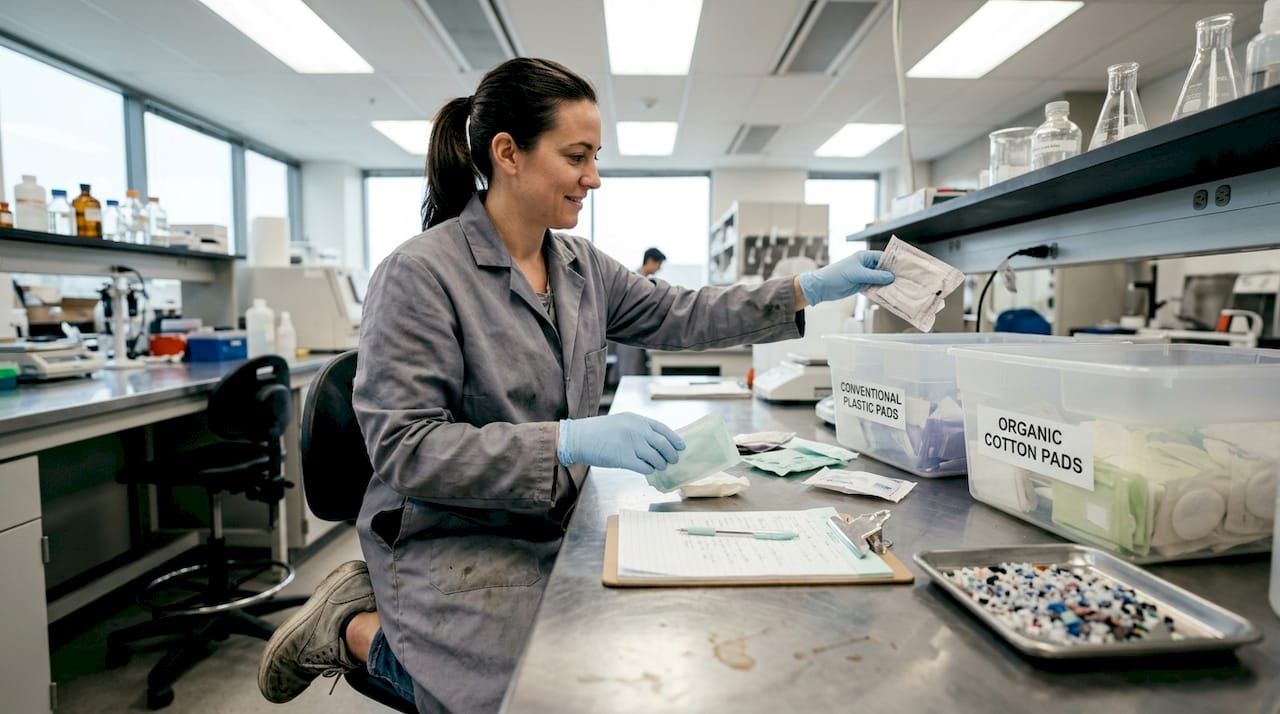
Organic cotton farming itself also carries environmental advantages. It avoids synthetic pesticides and herbicides, which protects soil health and reduces chemical runoff into water systems. Some organic cotton operations use significantly less water than conventional farming, though this varies by region and irrigation method.
Here are the key environmental advantages of switching to organic period products:
- Biodegradable materials that break down after disposal
- No plastic applicators in many organic tampon options
- Reduced pesticide load on farming land and nearby ecosystems
- Eco-friendly packaging that avoids single-use plastic
- Lower chemical processing reduces industrial waste
“Organic products support sustainability: organic cotton uses fewer chemicals, and biodegradable materials reduce plastic waste compared to conventional pads, which can contain up to 90% plastic.” This shift matters not just for landfills but for ocean health, which is why brands like Tampon Tribe rally behind messaging like “Save the Turtles!”
If you want to go further, plastic-free organic pads are a strong starting point. And reusable options like organic cloth pads or menstrual cups can reduce your total waste even more significantly over time.
Pro Tip: Reusable organic pads or menstrual cups can cut your lifetime period waste by hundreds of products. Even alternating reusables with disposables makes a measurable difference.
Navigating choices: How to select and use the best organic menstrual products
With a clear view of the benefits and limits, here’s how to confidently choose and maximize the use of organic menstrual products.
The market has expanded significantly, which is great for options but tricky for decision-making. Greenwashing is real. A product labeled “natural” or “pure” is not the same as certified organic. Here’s a practical framework for choosing well:
- Check for third-party certification. Look for GOTS or OEKO-TEX labels. These require independent auditing and are harder to fake than in-house claims.
- Read the ingredients or material list. A genuinely organic product will list 100% certified organic cotton and nothing else suspicious.
- Avoid synthetic fragrances. Even in organic-branded products, added scents can irritate sensitive tissue.
- Choose biodegradable packaging. The product’s sustainability profile extends to how it’s wrapped and shipped.
- Rotate product types based on your flow. Heavy days may call for a higher-absorbency tampon or pad, while lighter days work well with organic pads for teens or pantyliners.
- Change frequently. No certification replaces good hygiene. Every 4 to 8 hours is the standard recommendation.
Reusable options like period cups and reusable pads may minimize the environmental and chemical load of disposables, but check that they’re free from PFAS and plastics before committing.
Pro Tip: Mix and match products based on your activity, flow, and comfort. A menstrual cup during active days, organic pads overnight, and pantyliners for light spotting is a practical, low-waste rotation that covers every scenario.
Our take: What most guides miss about organic period products
After covering the facts, let’s step back to share what we believe matters most, and what few guides highlight honestly.
The organic label is a starting point, not a finish line. Too many conversations about period health get stuck on the certification question and never move to the behaviors that actually protect you. Changing your tampon every six hours matters more than whether it’s organic. Avoiding fragranced products matters more than whether the cotton was grown without pesticides.
We also think it’s worth naming the limits of current research directly. The heavy metals data is genuinely concerning, but it applies to all period products, organic included. That’s not a reason to panic. It’s a reason to stay curious and keep pressure on manufacturers to be more transparent.
Real empowerment here isn’t about finding the one perfect product. It’s about making flexible, informed decisions based on credible evidence rather than marketing language. Explore safe organic tampons with verified certifications, ask questions, and don’t let a label substitute for actual knowledge.
Ready to try organic period care?
If you’re ready to make the switch or expand your period care options, here are top-rated choices to explore.
Tampon Tribe offers a full range of certified organic period products, all designed with both your health and the planet in mind. Whether you’re new to organic options or looking to complete your sustainable routine, there’s something for every flow and preference.
Start with organic tampons made from 100% certified organic cotton with zero plastic packaging. For younger users or lighter days, organic teen pads offer a gentle, chemical-free option. And if you’re ready to go reusable, menstrual cups are a durable, low-waste choice that can last for years. Every product ships in totally green packaging, because sustainability shouldn’t stop at the product itself.
Frequently asked questions
Are organic menstrual products safer for sensitive skin?
Yes, organic options typically avoid synthetic fragrances and dyes, which are common irritants. Women with sensitive skin often find that certified organic cotton products cause fewer reactions than conventional alternatives.
Do organic tampons eliminate the risk of toxic shock syndrome (TSS)?
No, all tampons carry a TSS risk regardless of whether they’re organic. Prevention depends on how often you change your tampon and the absorbency level you use, not the organic status of the product.
Do organic pads and tampons contain harmful chemicals?
Organic products reduce exposure to pesticides and synthetic additives, but heavy metals like lead and arsenic have been detected in both organic and conventional period products. The health impact of these low-level exposures is still being studied.
How can I tell if a menstrual product is truly organic?
Look for third-party certifications like GOTS or OEKO-TEX and confirm the ingredients list shows 100% certified organic cotton. Marketing terms like “natural” or “pure” are not the same as certified organic.
Are reusable menstrual products also a sustainable choice?
Yes, reusable pads and cups significantly reduce waste over time. Just check for PFAS and plastics in the materials before purchasing, as some reusable products still contain synthetic components.
Recommended
- Best Plastic Free Certified Organic Cotton Pads Online – Tampon Tribe
- Best Plastic Free Certified Organic Cotton Pads Online – Tampon Tribe
- Certified Organic Cotton Pads | Sustainable Period Care - Plastic Free – Tampon Tribe
- Certified Organic Cotton Pads | Sustainable Period Care - Plastic Free – Tampon Tribe