


Picking period products sounds simple until you’re standing in the aisle staring at twenty options, half of them stamped with vague words like “natural” or “green” that mean almost nothing without verified certifications. If you’ve been trying to reduce plastic waste and avoid harsh chemicals, the options can feel overwhelming fast. The good news: a clear, actionable checklist makes this so much easier. This guide breaks down exactly what to look for, which products actually deliver on eco promises, and how to build a period kit that works for your body and the planet.
Table of Contents
- What makes a period product eco-friendly?
- Checklist: Sustainable period product types
- Head-to-head: Comparing eco period product impact
- Your period product checklist for eco-friendly periods
- A fresh perspective: Progress over perfection for plastic-free periods
- Eco-forward period shopping made simple
- Frequently asked questions
Key Takeaways
| Point | Details |
|---|---|
| Certifications matter most | Always check for GOTS or ICEA labels to ensure period products are genuinely organic and plastic-free. |
| Reusables save waste and money | Switching to reusable cups, underwear, or cloth pads dramatically reduces waste and can save you around $1,300 over a decade. |
| Organic disposables bridge the eco gap | When reusables aren’t feasible, organic disposables offer a healthier, lower-waste alternative to conventional products. |
| Start small for big change | Gradually replacing your period kit, one product at a time, is effective and more sustainable than an all-at-once switch. |
What makes a period product eco-friendly?
Not every product wearing an “organic” label deserves the name. True eco-friendliness covers three layers: what the product is made of, how it’s packaged, and what footprint it leaves behind from production to disposal.
Here’s what genuinely matters when evaluating a period product:
- Materials: 100% organic cotton, processed with totally chlorine-free (TCF) bleaching. No synthetic fragrances, dyes, or chemical finishes.
- Packaging: Biodegradable, compostable, or zero-plastic packaging. Conventional plastic wrapping on a pad wrapper can take centuries to break down.
- Certifications: GOTS and ICEA certifications verify 100% organic cotton, TCF bleaching, and biodegradable packaging. These are the gold standards to look for.
- Life cycle impact: Research shows bamboo and plant-based disposable pads carry 1.1 to 2.3 times lower environmental impacts than conventional plastic pads across their entire life cycle.
- Health benefits: Organic cotton products skip the irritants. They’re gentler on sensitive skin and reduce the risk of contact reactions common with synthetic materials.
The certification piece is non-negotiable. Without GOTS or ICEA on the label, a product claiming “organic” may still contain synthetic fibers, chlorine processing residues, or conventional plastic packaging.
Pro Tip: Flip the pack over and read the ingredient list. If a brand won’t disclose what’s in their product, that’s your answer.
When you choose eco-friendly period choices, you’re not just reducing waste. You’re supporting farms that use less water, reducing chemical runoff into waterways, and lowering the energy footprint connected to conventional manufacturing. Understanding period products’ environmental impact is the first step to making informed swaps.

Checklist: Sustainable period product types
With the criteria clear, here’s how the major categories of sustainable period products stack up, and how to pick the right ones for your life.
1. Reusable menstrual cups Medical-grade silicone cups can last up to 10 years with proper care. They generate virtually zero waste during use and offer fast cost savings. Lifetime savings reach roughly $1,300 over 10 years compared to disposables, with most products breaking even after just one to three months.
2. Period underwear Absorbent, washable, and increasingly available in organic cotton options. Great for light days or as backup. Check that the absorbent lining is made without PFAS chemicals, a group of synthetic substances linked to health concerns.
3. Reusable cloth pads Soft, customizable, and zero-waste with regular washing. The main consideration is laundry access and willingness to handwash on heavier days.
4. Organic disposable pads and tampons For situations where reusables aren’t practical, GOTS or ICEA certified organic disposables are a genuinely strong alternative. They avoid synthetic chemicals, use plastic-free or bamboo-based materials, and biodegrade far faster than conventional options.
Research confirms reusable options like cups rank as most sustainable overall, with underwear and cloth pads close behind. But expert consensus also acknowledges that edge cases like travel, heavy flow, or limited laundry access make certified organic disposables the smarter call.
Here’s a quick checklist for each type:
- Cups: medical-grade silicone, no BPA, reputable brand with size options
- Period underwear: organic cotton outer, PFAS-free lining, leak-proof tested
- Cloth pads: organic cotton or bamboo, secure fastening, washable at home
- Organic disposables: GOTS or ICEA certified, plastic-free packaging, fragrance-free
Pro Tip: Build a mixed kit. Keep a certified organic tampon or pad stash for travel and unexpected days, and lean on reusables at home. You’ll cover every scenario without sacrificing your values. Explore safer period products and the full range of organic period product benefits to find your ideal combination.
Head-to-head: Comparing eco period product impact
Numbers help. Here’s how the main options compare across the metrics that matter most for plastic waste, cost, and real-world usability.
| Product type | Plastic waste | Avg. cost over 10 years | Maintenance needed | Best situation |
|---|---|---|---|---|
| Menstrual cup | Near zero | $30-$50 total | Sterilize each cycle | Home use, low flow to heavy |
| Period underwear | Very low | $150-$300 | Wash after each use | Light days, backup |
| Cloth pads | Very low | $100-$250 | Hand or machine wash | Home, predictable schedule |
| Organic disposables | Low (no plastic packaging) | $400-$600 | None | Travel, heavy flow, privacy |
| Conventional pads/tampons | Very high | $500-$800 | None | Not recommended |
Conventional pads are shockingly plastic-heavy. Each pad contains plastic equivalent to about four plastic grocery bags, and pads can be up to 90% plastic overall. Across all menstrual product users in the UK alone, that adds up to 28,000 tonnes of menstrual waste every single year.
Key takeaways from the comparison:
- Reusable cups deliver the biggest impact reduction per person over time
- Organic disposables beat conventional products on every metric, including cost over time
- Period underwear is ideal as a complement rather than a standalone solution for heavier days
- The menstrual products environmental impact of even small switches compounds significantly across years
The table makes clear there’s no single “right” answer for every person and every cycle. A layered approach almost always wins.
Your period product checklist for eco-friendly periods
Here’s a ready checklist you can screenshot or print for your next restock. Run through it every time you buy period products.
Certifications to check:
- [ ] GOTS certified (textiles)
- [ ] ICEA certified (organic processing)
- [ ] No chlorine bleaching or chemical fragrances listed
- [ ] Full ingredient or material disclosure on packaging
Materials to avoid:
- [ ] Synthetic non-woven plastics (common in conventional pad top layers)
- [ ] Fragrances or deodorizing chemicals
- [ ] Rayon without verification of processing method
- [ ] PFAS in absorbent underwear linings
Kit essentials:
- [ ] One reusable menstrual cup (medical-grade silicone)
- [ ] Two to three pairs of organic period underwear
- [ ] A pack of GOTS-certified organic tampons or pads for travel backup
Organic period health benefits are well-documented. In one study, 99% of women using Organyc organic pads reported reduced irritation. Conventional products rarely disclose their ingredients at all, so switching removes a layer of chemical uncertainty that many people don’t realize they’re living with.
Pro Tip: Make one swap per cycle instead of overhauling everything at once. Start with organic tampons this month. Add period underwear next. Small, consistent changes add up to a genuinely different routine within a few cycles.
Bonus move: share this checklist with a friend or housemate. When more people in your circle make the switch, the collective impact on plastic waste grows fast. Community action on something as regular as a monthly period adds up to real change.
A fresh perspective: Progress over perfection for plastic-free periods
Here’s something most eco content won’t say plainly: nobody has a zero-waste period every single cycle. Travel happens. Unexpected periods happen. Heavy flow days happen when you left your cup at home. Cultural or privacy concerns mean reusables aren’t always realistic for everyone.
The obsession with finding the “most sustainable” single product can actually slow people down. If the bar feels impossibly high, it’s easy to do nothing at all. One consistent swap matters more than a perfect system you abandon after two months.
Organic disposable options exist precisely to bridge this gap. They’re not a compromise. They’re a genuinely responsible choice for the moments when reusables don’t fit your life. Framing it as failure to use an organic tampon on a work trip misses the point entirely.
We believe the real win is making sustainability workable, not punishing. Realistic eco period solutions look different for a 16-year-old just starting her period than for a 38-year-old who’s been using a cup for years. Both paths are valid. Progress over perfection is the only framework that keeps people engaged long enough to make lasting change.
Eco-forward period shopping made simple
You’ve got the checklist. Now the easiest next step is shopping from a source where the work is already done for you.
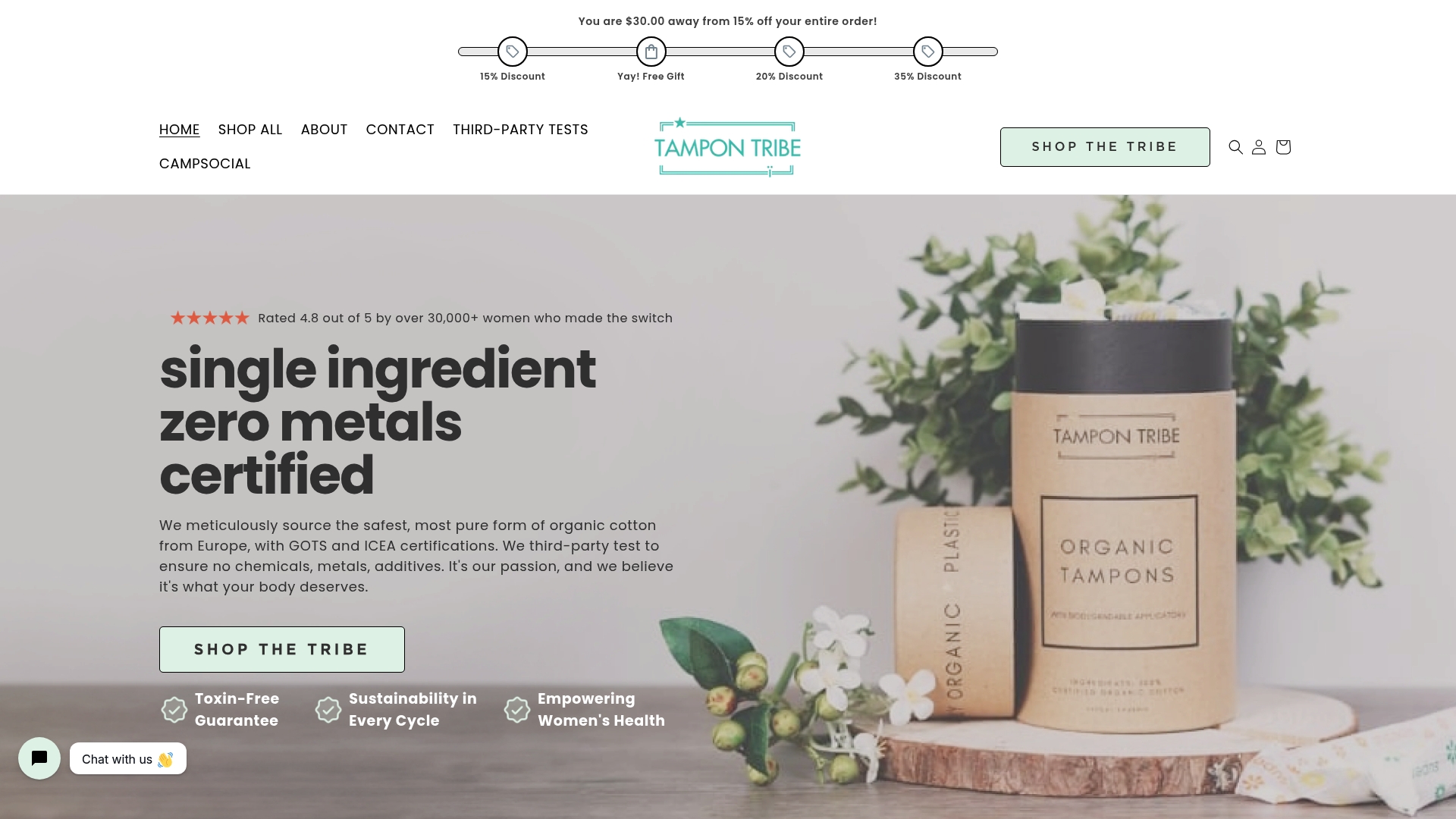
Tampon Tribe carries certified organic and reusable period solutions that tick every box on the checklist above. From organic cotton panty liners with zero-plastic packaging to menstrual cups built to last a decade, and even reusable cotton pads for home use, every product is verified, transparently sourced, and designed for real life. No greenwashing, no mystery ingredients, and no plastic packaging to throw away. Browse the full range and start building the kit that fits your cycle, your lifestyle, and your values.
Frequently asked questions
Which period product is the most eco-friendly?
Reusable menstrual cups are considered the most eco-friendly by experts due to their 10-year lifespan and near-zero waste when used as directed. Medical-grade silicone cups top the list for plastic waste reduction among all menstrual product types.
How do I know if a pad or tampon is really organic?
Look for GOTS or ICEA certifications on the packaging. These verify 100% organic cotton, no chlorine bleaching, and biodegradable packaging. A brand that can’t name its certifications likely doesn’t have them.
What are the health benefits of using organic period products?
Certified organic pads and tampons reduce irritation, skip synthetic fragrances, and are safer for sensitive skin. In a notable study, 99% of women reported less irritation after switching to organic pads.
Are there situations where reusable products aren’t the best option?
Yes. If you travel frequently, have limited laundry access, or experience heavy unpredictable flow, certified organic disposables are the smarter eco choice compared to conventional plastic-heavy alternatives.
How much plastic waste do disposable pads and tampons generate?
Conventional pads can be up to 90% plastic, with each pad equivalent to about four plastic grocery bags. The UK alone generates 28,000 tonnes of menstrual waste per year from these products.
Recommended
- How menstrual products impact the environment: greener choices – Tampon Tribe
- How period products affect the environment: what you need to know – Tampon Tribe
- Sustainable Menstruation: Eco-Friendly Choices for Healthier Cycles – Tampon Tribe
- Top health-conscious menstrual options for safer periods – Tampon Tribe