


Period products are one of the most overlooked sources of personal waste. Over a lifetime of menstruation, a single person can generate up to 200 kg of menstrual waste from disposables alone. That’s a staggering number for something we rarely talk about. The good news? Sustainable menstruation is no longer a niche concept reserved for zero-waste enthusiasts. It’s a practical, accessible shift that benefits your health, your wallet, and the planet. This guide walks you through what sustainable menstruation actually means, which products hold up under scrutiny, and how to find what genuinely works for your body and lifestyle.
Table of Contents
- What does sustainable menstruation mean?
- Environmental impact: Comparing menstrual products
- Why choose reusable and organic products?
- Risks, realities, and finding what works for you
- Perspective: What most guides miss about sustainable menstruation
- Explore sustainable menstrual products
- Frequently asked questions
Key Takeaways
| Point | Details |
|---|---|
| Sustainable menstruation defined | Eco-friendly period care means reducing waste and choosing safe materials. |
| Reusable products reduce waste | Using menstrual cups or cloth pads can cut period waste by up to 91 percent. |
| Organic options are safer | Organic and chemical-free products reduce health risks and support sustainability. |
| Compare before you switch | No single product fits everyone, so evaluate your needs and lifestyle. |
| Every step counts | Small changes toward sustainable options make a big positive impact over time. |
What does sustainable menstruation mean?
At its core, sustainable menstruation refers to using environmentally friendly and responsible menstrual products, such as reusable cloth pads, menstrual cups, period underwear, and biodegradable disposables, to reduce the waste generated by non-biodegradable options. It’s not just about swapping one product for another. It’s a broader shift in how we think about our cycles and their footprint.
Conventional pads and tampons are mostly made from plastic, bleached cotton, and synthetic fibers. Most end up in landfills or, worse, in waterways. A single conventional pad can contain the equivalent of four plastic bags. That waste adds up fast when you consider that most people use between 5,000 and 16,000 period products in their lifetime.
“The average menstruating person uses roughly 11,000 disposable menstrual products in their lifetime. Most of these are not recyclable or compostable.”
Sustainable alternatives tackle this problem from different angles:
- Reusable cloth pads: Washable, long-lasting, and free from synthetic materials when made well
- Menstrual cups: Silicone or rubber cups that collect flow and can last up to 10 years
- Period underwear: Absorbent underwear designed to replace or supplement other products
- Organic disposable tampons and pads: Made without synthetic pesticides, chlorine bleach, or plastic applicators
- Biodegradable disposables: Break down faster than conventional products, reducing landfill impact
The menstrual products’ environmental impact goes beyond just waste. Manufacturing conventional products uses significant water, energy, and chemicals. Choosing sustainable options reduces your exposure to those inputs too. Understanding how period products affect the environment is the first step toward making a switch that actually sticks.
Environmental impact: Comparing menstrual products
Not all sustainable products are created equal, and the data backs that up. Life cycle assessments (LCAs) measure the full environmental cost of a product, from raw material extraction through disposal. The results are eye-opening.
Bamboo-based sanitary pads have measurably lower environmental impacts than conventional plastic and bleached pulp pads across categories like global warming potential and acidification. They’re a solid step up from standard disposables, even if they’re not the most sustainable option overall.
Menstrual cups, however, consistently come out on top. LCAs show that cups have the lowest environmental impact across global warming, resource use, and other categories, outperforming period underwear, reusable pads, and all disposables. One cup can replace years of monthly purchases.
| Product | Avg. lifespan | Waste per year | Carbon footprint (relative) |
|---|---|---|---|
| Conventional pad/tampon | Single use | ~150 units | High |
| Bamboo/biodegradable pad | Single use | ~150 units | Medium |
| Reusable cloth pad | 3 to 5 years | Near zero | Low |
| Menstrual cup | Up to 10 years | Near zero | Lowest |
| Period underwear | 2 to 5 years | Near zero | Low to medium |
Reusable options typically “break even” environmentally after just 6 to 15 uses, meaning they’ve already offset the energy and water used to produce them. After that point, every use is a net positive compared to buying disposables.
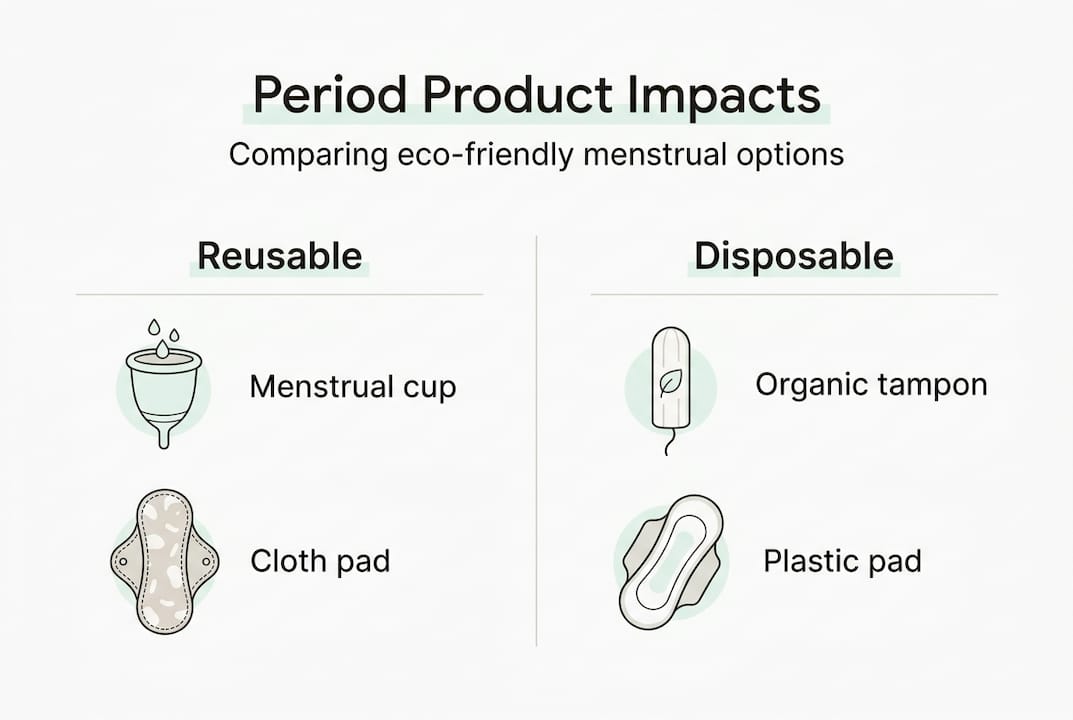
That said, context-dependent LCA results remind us that factors like water use for washing reusables, local energy grids, and product sourcing all influence the final footprint. The environmental effects of period products are real and measurable, but the “best” choice depends on your specific situation.
Why choose reusable and organic products?
The environmental case is strong, but the personal benefits are just as compelling. Let’s break down what switching actually means for you.
Waste reduction is dramatic. Reusable products like cups reduce waste by up to 91% compared to disposables, and the average person uses between 5,000 and 16,000 disposables over their lifetime. Cutting that number down is one of the most impactful personal environmental choices you can make.
The savings are real. Reusable products are cost-effective over time despite higher upfront costs. A menstrual cup that costs $30 to $40 can replace years of monthly tampon or pad purchases that easily add up to $100 or more per year.
Health benefits matter too. Organic products are made without synthetic pesticides, chlorine bleach, or added fragrances. That means less potential exposure to chemicals near sensitive tissue. If you’re curious about what’s actually in your products, exploring organic period products and health is a great place to start.
Here’s a practical breakdown of how to start switching:
- Start with one product swap. Replace your most-used product first, whether that’s tampons or pads.
- Try organic disposables as a bridge. They’re familiar in use but cleaner in composition.
- Experiment with a reusable option. A vegan menstrual cup is a low-maintenance, long-term investment.
- Read the beginner’s guide. The menstrual cup usage guide takes the guesswork out of the learning curve.
- Give yourself a few cycles. Most people need 2 to 3 cycles to feel fully comfortable with a new product.
Pro Tip: Keep one organic disposable option on hand during your transition. Having a backup reduces anxiety and makes the switch feel less all-or-nothing.
Risks, realities, and finding what works for you
Sustainable menstruation isn’t without its complications. Being honest about the limitations helps you make smarter choices rather than just swapping one problem for another.
First, not all reusables are as clean as they seem. Some reusable products contain plastic additives like phthalates, which pose potential dermal exposure risks and can be released into the environment during washing. The “reusable” label doesn’t automatically mean safe or truly sustainable. Always check what a product is actually made from before buying.
Second, hygiene is non-negotiable. Menstrual cups and cloth pads require thorough cleaning between uses. Skipping proper care can increase the risk of bacterial infections or irritation. Follow the manufacturer’s care instructions closely.
Third, access and comfort are real barriers. Not everyone has reliable access to clean water for washing reusables. Some people find cups uncomfortable or difficult to insert and remove. Period underwear may not provide enough absorbency for heavier flow days. These aren’t failures. They’re just factors.
Here’s what to look for when evaluating any sustainable product:
- Material transparency: Does the brand disclose all materials? Look for certifications like GOTS (Global Organic Textile Standard) or OEKO-TEX.
- No hidden plastics: Check for polyester, nylon, or undisclosed synthetic coatings.
- Appropriate absorbency: Match the product to your actual flow, not just the marketing.
- Comfort fit: What works for a friend may not work for you. Body shape and flow vary widely.
Exploring health-conscious menstrual options can help you sort through the noise and find products that genuinely align with your values and physical needs.
Pro Tip: When trying a menstrual cup for the first time, practice insertion and removal on a non-period day. It removes the pressure and helps you get comfortable with the mechanics before you need it most.
Perspective: What most guides miss about sustainable menstruation
Most articles about sustainable menstruation present it as a checklist. Switch to a cup. Buy organic. Done. But that framing misses something important: this is a deeply personal and context-dependent journey, not a one-size-fits-all prescription.
We’ve seen people feel guilty for not going fully zero-waste immediately. That guilt is counterproductive. The truth is that switching from conventional bleached tampons to organic period products is a meaningful step, even if you never touch a menstrual cup. Progress matters more than perfection.
Sustainability isn’t a binary. It’s a spectrum. Every swap you make, no matter how small, reduces harm. A person who switches to organic disposables and sticks with them for 20 years has made a far bigger impact than someone who tried a menstrual cup once, hated it, and went back to conventional products out of frustration.
The most lasting changes come from trial, error, and honest self-assessment. Give yourself permission to find what actually works for your body, your lifestyle, and your access to resources. That’s what sustainable menstruation really looks like in practice.
Explore sustainable menstrual products
Ready to take the next step? Tampon Tribe makes it straightforward to find products that match your values without sacrificing comfort or convenience.
From reusable organic cotton pads to organic cotton tampons made without chlorine bleach, synthetic fragrances, or plastic applicators, every product is designed with your health and the planet in mind. Not sure where to begin? The switch to natural tampons page walks you through your options clearly and without overwhelm. Small swaps add up. Starting with one product change is all it takes to begin a more sustainable cycle.
Frequently asked questions
What makes a menstrual product ‘sustainable’?
Sustainable menstrual products are designed to minimize environmental impact through reusability, biodegradability, or organic materials that avoid harmful chemical inputs during production and disposal.
Are reusable menstrual products safe to use?
Yes, reusable products are safe when cleaned and cared for properly, but following hygiene guidelines is essential to prevent bacterial infections or irritation.
Do sustainable options cost more than disposables?
Reusable options have a higher upfront cost, but they save money over time because a single product replaces years of monthly disposable purchases.
What are the possible risks of sustainable period products?
Some reusables contain phthalates and other chemical additives, and improper cleaning can raise infection risk, so always verify materials and follow care instructions carefully.
Recommended
- Top health-conscious menstrual options for safer periods – Tampon Tribe
- How menstrual products impact the environment: greener choices – Tampon Tribe
- How period products affect the environment: what you need to know – Tampon Tribe
- How organic period products impact health & sustainability – Tampon Tribe