


Disposable tampons and pads create roughly 200,000 tons of waste every year, and if you’re tired of that cycle, a menstrual cup might be the switch you’ve been putting off. The hesitation is real. Folding, inserting, and removing a silicone cup sounds intimidating when you’ve never done it before. But the learning curve is shorter than most people expect, and the payoff, for your body, your wallet, and the planet, is significant. This guide walks you through every step, from prep to troubleshooting, so you can make the switch with confidence and zero guesswork.
Table of Contents
- What you need to get started
- Step-by-step menstrual cup insertion
- Removing, cleaning, and reusing your cup
- Troubleshooting, leaks, and advanced tips
- The truth about switching to menstrual cups: what most guides miss
- Explore more sustainable period solutions
- Frequently asked questions
Key Takeaways
| Point | Details |
|---|---|
| Proper preparation | Sterilizing and cleaning your menstrual cup before first use is crucial for safety and comfort. |
| Stepwise insertion | Using the right fold and angle makes insertion easier, and checking the seal prevents leaks. |
| Easy removal and care | Relax, break the seal, and wash your cup thoroughly after each use for longevity. |
| Troubleshooting leaks | Most leaks are caused by incorrect placement or seal issues that improve with practice. |
| Sustainable period care | Menstrual cups can last up to 10–15 years, dramatically reducing waste and cost. |
What you need to get started
Before your first use, gathering the right supplies makes everything smoother. You don’t need much, but what you do need matters.
Essential items to have on hand:
- A menstrual cup sized for your flow and anatomy
- Mild, unscented soap (fragrance can degrade silicone and irritate tissue)
- Access to boiling water for sterilization
- A clean, dry storage pouch
- Patience, especially for your first cycle
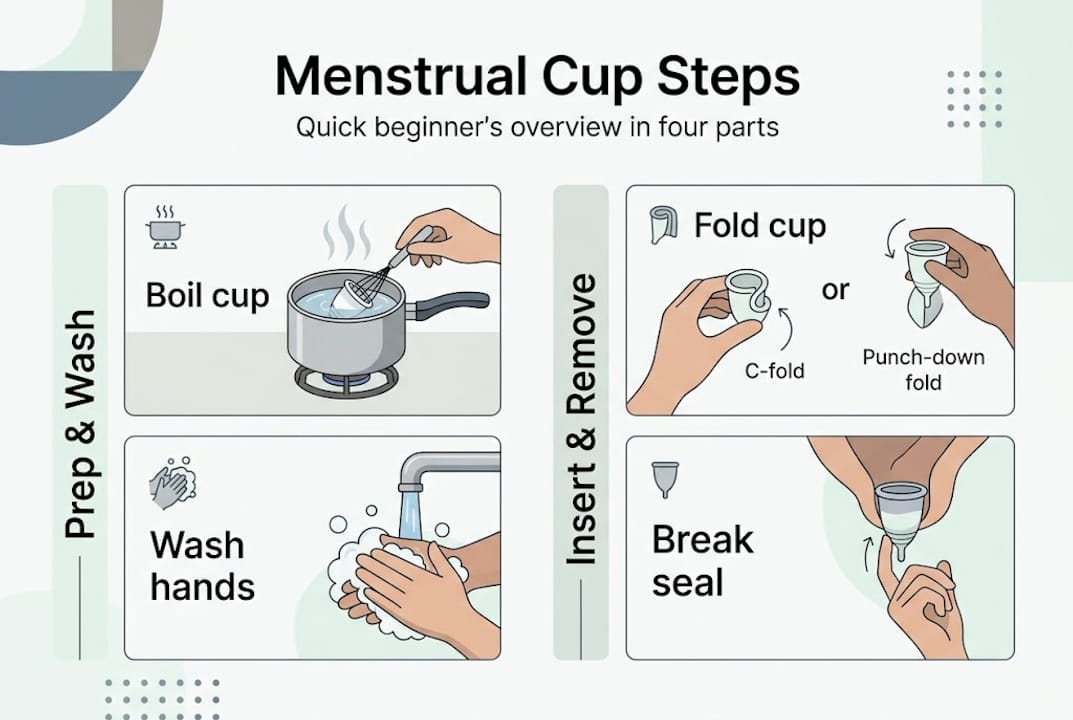
Sterilization is non-negotiable. Wash with mild unscented soap and boil your cup for 5 to 10 minutes before the first use and at the end of every cycle. This removes bacteria and keeps the silicone in good condition. Skipping this step is the most common beginner mistake.
Timing your first attempt matters too. Starting on a lighter flow day gives you more room to practice without the pressure of heavy flow. It also reduces anxiety, which directly affects how easily your pelvic muscles relax during insertion.
IUD users, take note. If you have an intrauterine device, talk to your healthcare provider before using a menstrual cup. There is a documented risk of increased IUD expulsion, and your provider can advise on technique adjustments or whether to proceed.
One of the biggest reasons people make this switch is longevity. A quality cup lasts 10 to 15 years, which means one purchase replaces thousands of disposable products. That’s a meaningful reduction in plastic waste. If you’re exploring your options, silicon free menstrual cups are worth comparing before you buy.
Menstrual cup vs. disposables at a glance:
| Feature | Menstrual cup | Disposable tampons/pads |
|---|---|---|
| Lifespan | 10 to 15 years | Single use |
| Plastic waste | Near zero | High |
| Cost over 5 years | Low (one purchase) | $150 to $300+ |
| Wear time | Up to 12 hours | 4 to 8 hours |
| Chemical exposure | None (medical grade) | Possible (bleach, fragrances) |
For a broader look at sustainable period care, menstrual hygiene basics can help you understand your full range of options.
Pro Tip: Run a quick “boil test” before your first cycle. Boil the cup, let it cool, and do a dry run with insertion and removal so the first real use feels familiar.
Step-by-step menstrual cup insertion
Now that the essentials are ready, here’s exactly how to insert the cup for maximum comfort and reliability.
Step-by-step insertion process:
- Wash your hands thoroughly with soap and water.
- Choose your fold (see table below) and hold the cup firmly.
- Find a comfortable position: sitting on the toilet, squatting, or standing with one foot raised.
- Relax your pelvic floor muscles. Tension makes insertion harder.
- Insert the folded cup angled toward your tailbone, not straight up.
- Once inside, let the cup open fully by rotating it slightly or running a finger around the rim.
- Tug the stem gently. If there’s resistance, the seal is good.
Common insertion folds include the C-fold, punch-down fold, and 7-fold. Each works differently depending on your anatomy and comfort level.
Insertion fold comparison:
| Fold name | How it works | Best for |
|---|---|---|
| C-fold (U-fold) | Cup folded in half to form a C shape | Beginners, wider openings |
| Punch-down fold | One side pushed inward to create a narrow point | Smaller openings, easier insertion |
| 7-fold | One side folded diagonally to form a 7 | Firm cups, quick opening |
Placement is different from a tampon. The cup sits lower in the vaginal canal, with the stem just inside the entrance. If the stem pokes or causes irritation, trim it gradually with clean scissors until it’s comfortable. Never remove the entire stem until you’re confident locating the base.
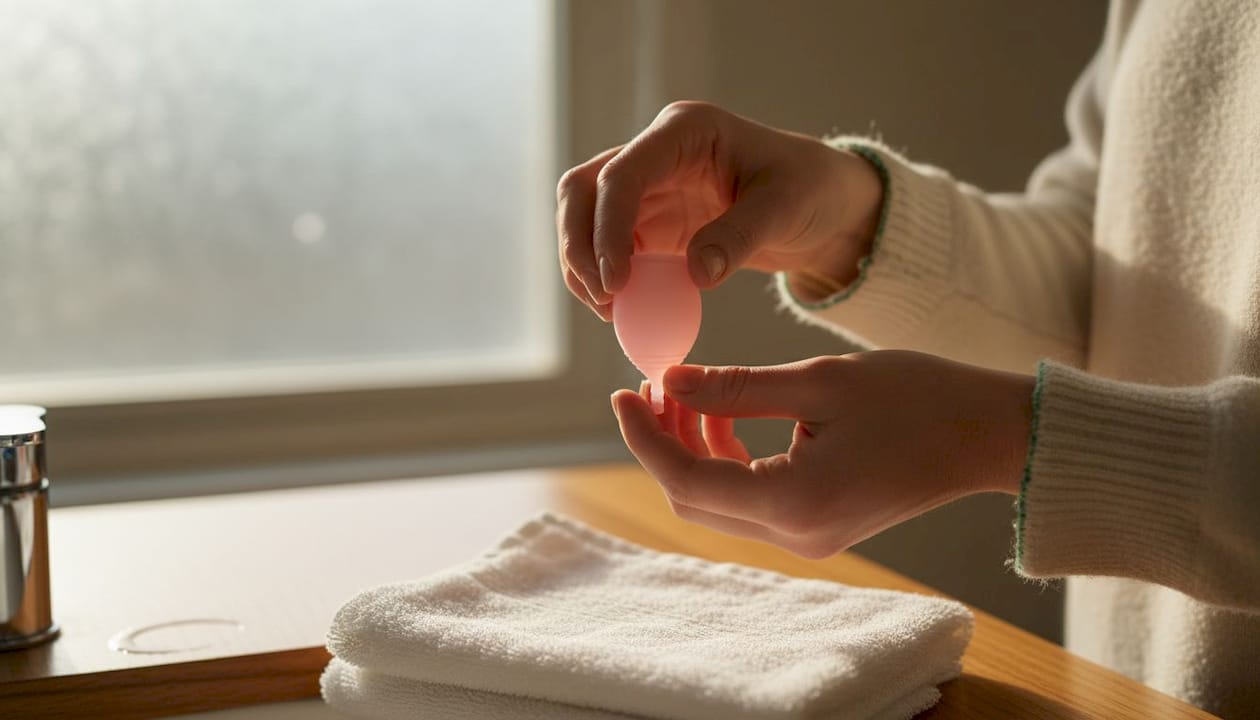
Most cups hold 25 to 32ml of fluid, which is significantly more than a standard tampon. That capacity, combined with a safe 12-hour wear window, means fewer interruptions to your day.
If you’re still figuring out which size or style suits you, choosing a menstrual cup that matches your flow and cervix height makes a big difference in comfort.
Pro Tip: Try your first insertion in the shower. Warm water relaxes muscles, cleanup is easy, and there’s no pressure to get it perfect on the first try.
Removing, cleaning, and reusing your cup
Once inserted, you’ll need to know how to remove, clean, and confidently reuse your menstrual cup.
Step-by-step removal:
- Wash your hands before touching the cup.
- Relax your pelvic muscles completely. Bear down slightly if needed.
- Pinch the base of the cup firmly to break the suction seal.
- Gently wiggle the cup side to side while pulling downward.
- Keep the cup upright as it exits to avoid spilling.
- Rinse immediately with cold water (hot water can set stains).
- Wash with mild soap, rinse well, and reinsert or store.
Pinching the base to break the seal before pulling is the single most important removal step. Pulling by the stem alone without releasing the seal can cause discomfort and makes removal harder.
Hygiene dos and don’ts between cycles:
- Do boil the cup at the end of your cycle before storing
- Do store in a breathable cotton pouch, never an airtight container
- Do inspect for tears or discoloration before each use
- Don’t use scented soaps, dish soap, or antibacterial cleaners
- Don’t share your cup with anyone
- Don’t store in direct sunlight or extreme heat
For between-cycle cleaning when a sink isn’t available, unscented menstrual cup wipes or a quick cold water rinse work fine until you can wash properly.
Safety note: TSS is extremely rare with proper cup hygiene, and menstrual cups carry no increased infection risk compared to tampons. The cup cannot get lost inside your body. The vaginal canal is a closed space, and the cervix acts as a natural barrier. If you have an IUD and notice unusual cramping or feel the IUD strings are shorter than normal, contact your provider promptly.
For more detailed answers to period care questions, including hygiene specifics, the FAQ section covers common concerns clearly.
Troubleshooting, leaks, and advanced tips
Despite best efforts, most beginners face some small challenges. Here’s how to troubleshoot the most common ones.
Common issues and what’s actually causing them:
- Leaking around the cup: The seal didn’t form fully. Run a finger around the rim after insertion to check for folds or gaps.
- Cup feels uncomfortable or low: The cup may have slipped or not opened completely. Remove, refold, and reinsert.
- Stem is poking: Trim it gradually. A well-placed cup should be undetectable.
- Cup is difficult to reach: Bear down with your pelvic muscles to move it lower before pinching.
- Leaking when full: You may need to empty more frequently on heavy days. Most cups need emptying every 6 to 8 hours on heavier flow days.
- Strong pelvic muscles causing collapse: Try a firmer cup or a different fold that opens more easily.
Leaks are most often caused by an incomplete seal, a cup that’s too full, incorrect positioning, cervix shift during the day, or strong pelvic floor muscles. None of these are permanent problems. Practice genuinely resolves most of them within one to two cycles.
Here’s something most guides won’t tell you: your cervix position changes throughout your cycle and can shift during the day. If your cup leaks in the afternoon but not the morning, this is likely why. Checking position midday and adjusting your empty schedule solves it for most people.
Statistically, leakage rates are similar or lower than pads and tampons when the cup is used correctly, according to a Lancet study. That’s reassuring for anyone worried about reliability.
For IUD users experiencing unusual cramping, spotting outside your cycle, or strings that feel shorter, see your provider. These can be early signs of IUD displacement and are worth checking promptly.
Pro Tip: Keep a backup liner for the first two cycles while you’re learning. It removes the anxiety of leaks and lets you focus on getting the technique right without stress.
For ongoing helpful menstrual hygiene tips, including how to manage your cup at work or while traveling, the Tampon Tribe blog has practical, real-world guidance.
The truth about switching to menstrual cups: what most guides miss
Every how-to article gives you the steps. Very few tell you what the first two cycles actually feel like.
Here’s the honest version: it’s awkward at first. Insertion takes longer than expected, removal feels uncertain, and there’s a real chance you’ll have a small leak before you find your rhythm. That’s completely normal, and it doesn’t mean the cup is wrong for you.
The mistake most first-timers make is giving up after one difficult cycle. The learning curve is real, but it’s also short. By cycle three, most people report that using a cup feels faster and easier than their old routine.
What no guide can give you is the right mindset. Treat the first cycle as practice, not performance. Every body is different, and finding the right fold, position, and empty schedule is a personal process. There’s no universal “correct” experience.
The sustainability payoff is worth the adjustment. And the community of people who’ve made this switch, including the resources at honest period product advice, is genuinely supportive. You’re not figuring this out alone.
Explore more sustainable period solutions
Ready to take the next step in your eco-friendly period journey? Tampon Tribe makes it easy to find the right fit for your body and your values.
Whether you’re ready to try shop menstrual cups for the first time or want to build out a full sustainable period kit, Tampon Tribe has options that are organic, plastic-free, and designed with your health in mind. Pair a cup with organic teen pads for backup on lighter days, or explore organic cotton tampons as a flexible alternative. Every product is free from chemicals, fragrances, and unnecessary plastic. Browse the full range and find what works best for you.
Frequently asked questions
Can a menstrual cup leak or cause discomfort?
Leaks are usually caused by an incomplete seal or incorrect positioning rather than a cup defect. With practice, leakage rates are similar or lower than pads and tampons.
Is using a menstrual cup safe for teens and first-timers?
Yes, menstrual cups are safe for most users including teens when used with proper hygiene. Starting on a lighter flow day helps beginners practice with less pressure.
How do I know my menstrual cup is inserted correctly?
You should feel no discomfort, and the cup should sit low in the vaginal canal. Tugging the stem for resistance confirms the seal is secure and placement is correct.
Can using a menstrual cup increase the risk if I have an IUD?
Menstrual cup use may slightly increase IUD expulsion risk, with studies noting an odds ratio of 3.81 for expulsion. Consult your healthcare provider before using a cup if you have an IUD.