


Switching to tampons doesn’t automatically make your period greener. Many conventional tampons contain hidden plastics in their applicators, wrappers, and even the tampons themselves, quietly contributing to the more than 45 billion menstrual products disposed of globally each year. The good news? A new generation of zero plastic tampons is changing what sustainable menstrual care actually looks like, and understanding the difference can make your next period decision a genuinely planet-friendly one.
Table of Contents
- What is a zero plastic tampon?
- How do zero plastic tampons help the planet?
- Are zero plastic tampons safer or healthier?
- How zero plastic tampons compare to other sustainable period options
- How to make the switch: Practical tips for eco-friendly periods
- What most period product guides won’t tell you: Sustainability is personal
- Ready to switch? Shop zero plastic and sustainable period products
- Frequently asked questions
Key Takeaways
| Point | Details |
|---|---|
| True zero plastic | Zero plastic tampons contain no fossil-fuel or bioplastics in any component for the lowest waste footprint. |
| Environmental impact | Switching can help cut landfill waste, water use, and CO2 emissions versus conventional tampons. |
| Health benefits | You avoid fragrances and synthetics that may cause irritation, though clinical safety is similar to conventional. |
| Disposable vs. reusable | Reusable options are greenest, but zero plastic tampons are a strong disposable choice for eco-conscious users. |
| Adapt to your lifestyle | The best sustainable switch is one you can stick with—each step counts toward a healthier planet. |
What is a zero plastic tampon?
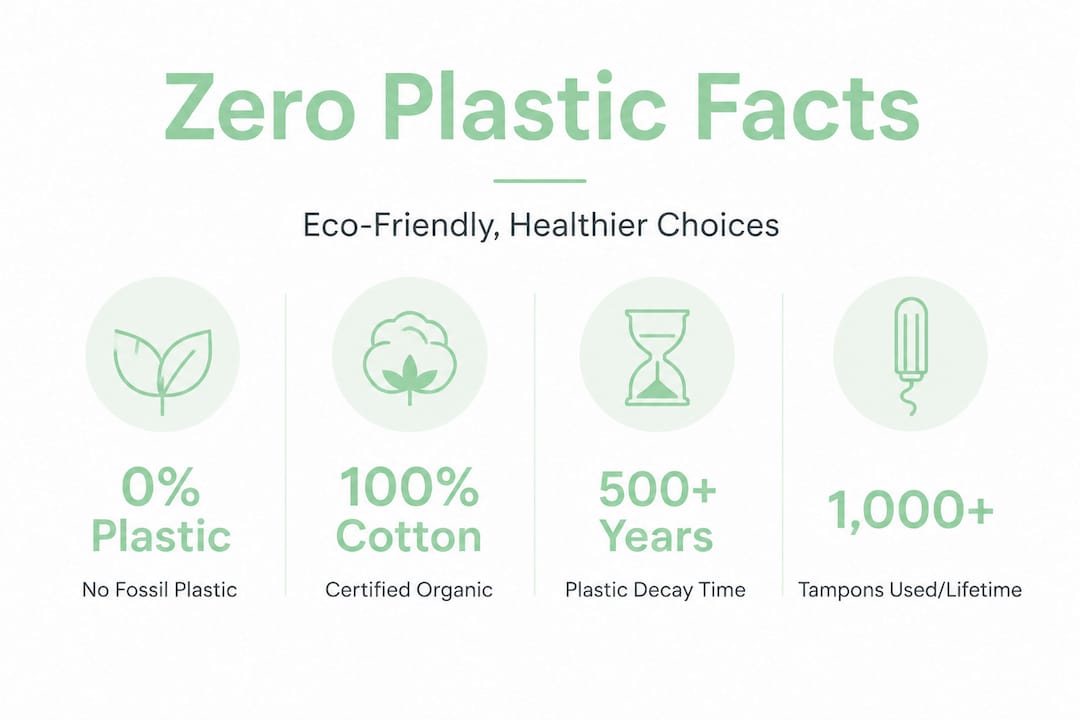
Most people hear “plastic-free” and assume they’re covered. The reality is more complicated. Conventional tampons are wrapped in plastic film, housed in plastic applicators, and packaged in boxes lined with synthetic materials. A zero plastic tampon eliminates all of those components, including fossil-fuel plastics and bioplastics, from the tampon itself, the applicator, and the outer wrapper.
Here’s where greenwashing gets sneaky. Many brands slap a “natural” or “eco” label on products that only swap out one or two plastic elements. A product might use a bioplastic applicator made from sugarcane or corn starch, which sounds environmentally responsible but actually isn’t truly zero plastic. Bioplastics often require specific industrial composting conditions to break down and won’t degrade naturally in a landfill or ocean. If you toss a bioplastic applicator in your home compost bin, nothing meaningful happens.
What actually qualifies as a zero plastic tampon:
- 100% GOTS-certified organic cotton in the tampon itself (no synthetic fibers)
- A cardboard or no applicator at all
- Paper or compostable, plant-fiber wrappers (no film plastics)
- Packaging made from recycled or FSC-certified cardboard
- No dyes, fragrances, or synthetic coatings anywhere in the product
The GOTS certification (Global Organic Textile Standard) is one of the most reliable markers to look for. It covers the entire production chain, from the cotton field to the finished product, and prohibits harmful chemicals and synthetic additives. When shopping for eco-friendly tampons, GOTS certification is one of the clearest signals you’re getting what the label promises.
Pro Tip: Don’t be fooled by terms like “plant-based applicator” or “biodegradable.” These don’t automatically mean zero plastic. Read the full ingredient and material list before buying.
How do zero plastic tampons help the planet?
The environmental case for zero plastic tampons is genuinely compelling. Consider the numbers. A person who menstruates uses an average of 11,000 to 17,000 tampons in a lifetime. Multiply that by millions of users and you start to see the scale of the problem. Conventional plastic applicators alone contribute to staggering landfill volumes, and when they enter waterways, they persist for centuries.
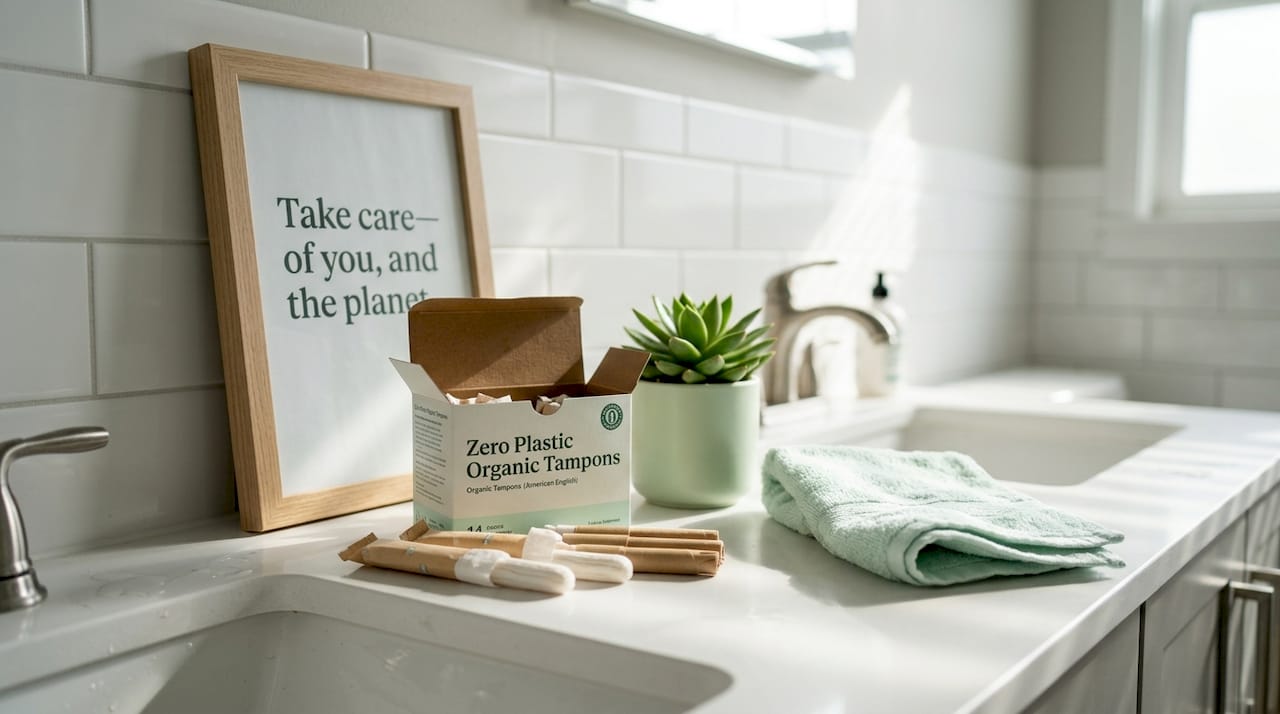
A closer look at environmental impact data shows just how different organic and zero plastic tampons are from their conventional counterparts:
| Environmental metric | Conventional cotton tampon | GOTS organic cotton tampon |
|---|---|---|
| Water use | Baseline | 71% less |
| Energy use | Baseline | 62% less |
| CO2 equivalent | Baseline | 46% less |
| Synthetic pesticides | Present | None |
| Plastic waste per unit | Applicator + wrapper | Zero |
These figures aren’t estimates. GOTS organic cotton tampons use 71% less water, 62% less energy, and 46% less CO2e compared to conventional options, and help reduce the billions of plastic applicators entering landfills each year.
“The average person uses around 11,000 disposable menstrual products in their lifetime. Choosing zero plastic options is one of the most direct ways to reduce your personal plastic footprint.”
Organic cotton also matters for what it avoids. Conventional cotton farming is one of the most pesticide-intensive agricultural industries in the world. Those chemical residues don’t disappear once the cotton is processed. They show up in waterways, soil, and the workers who harvest the crop. Switching to zero plastic, organic tampons reduces demand for chemical-heavy cotton, which creates ripple effects far beyond your bathroom trash can.
When you frame it this way, a single period product choice doesn’t feel small at all.
Are zero plastic tampons safer or healthier?
The health question is one of the most common we hear, and the answer is more nuanced than either side of the debate usually acknowledges. Let’s clear up some confusion.
Conventional tampons and potential irritants:
- Synthetic fragrances, which are a known irritant for sensitive tissue
- Chlorine-bleached cotton, which can contain trace dioxin residues
- Glyphosate residues from non-organic cotton farming
- Rayon (a synthetic fiber) blended into many conventional tampons
- Plastic film wrappers that introduce unnecessary chemical contact
Now, to be fair: trace levels of these contaminants in conventional tampons are generally very low, and current research does not definitively prove that conventional tampons cause specific health conditions. Regulatory agencies consider the exposure levels to be within safe limits for most people.
However, “within safe limits” is not the same as “optimal.” For people with vulvar sensitivities, endometriosis, or recurring infections, reducing any unnecessary chemical exposure is a reasonable precaution. Many people who switch to organic zero plastic tampons report noticeable reductions in irritation, odor, and discomfort, even if science hasn’t yet fully explained why.
What zero plastic tampons offer your body:
- No synthetic fragrance near delicate mucous membranes
- No chlorine bleaching byproducts
- No rayon, only soft, breathable organic cotton
- No dyes or finishes that could disrupt vaginal pH
- Peace of mind from transparent, readable ingredient lists
Pro Tip: If you experience recurring irritation during your period, try switching to zero plastic, fragrance-free organic tampons for two to three cycles before drawing conclusions. Many people see improvement within the first cycle.
Ingredient transparency is worth emphasizing here. When a product lists “100% organic cotton” and nothing else, you know exactly what’s going in your body. That kind of clarity is rare in conventional menstrual care, and it matters for informed decision-making. Looking for healthier menstrual products doesn’t mean you have to compromise comfort or effectiveness.
How zero plastic tampons compare to other sustainable period options
Zero plastic tampons aren’t the only sustainable game in town, and it’s worth being honest about where they sit in the broader sustainability picture. Here’s a practical comparison:
| Product | Climate impact | Comfort level | Upfront cost | Practical for travel |
|---|---|---|---|---|
| Menstrual cup | Lowest | High (learning curve) | Higher | Yes |
| Period underwear | Very low | High | Moderate to high | Yes |
| Reusable cloth pads | Very low | High (home-based) | Moderate | Less convenient |
| Zero plastic tampons | Low (disposable) | High | Moderate | Yes |
| Conventional tampons | Highest | High | Low | Yes |
Lifecycle assessments consistently show that disposable tampons and pads have higher climate impacts than menstrual cups or period underwear, though organic disposables still outperform conventional options significantly. The best choice ultimately depends on individual access, comfort, and lifestyle.
Here’s what that means in practice:
- If you can use reusables, go for it. A menstrual cup used over ten years creates a fraction of the waste of any disposable option.
- If reusables aren’t realistic for you right now, zero plastic tampons are the strongest disposable alternative available.
- If you travel frequently, zero plastic tampons combine the portability of conventional tampons with a dramatically lower environmental footprint.
- If you use a mix, combining a reusable option for home use with zero plastic tampons for travel or convenience days is a smart, effective strategy.
Cultural comfort, water access for rinsing reusables, physical ability, and period flow all play real roles in which product is actually usable for any given person. An eco period product checklist can help you think through what combination works best for your specific situation. There’s no single right answer, but zero plastic tampons offer a meaningful, accessible entry point for most people.
Exploring health-conscious menstrual options beyond tampons is also worth doing if you’re ready to expand your sustainability toolkit.
How to make the switch: Practical tips for eco-friendly periods
Making the switch to zero plastic tampons is simpler than most people expect. The main barriers are habit and unfamiliarity, not any real practical difficulty. Here’s how to approach it step by step:
- Read the ingredient list first. Look for “100% GOTS-certified organic cotton” with no added fibers, fragrances, or finishes. If the label doesn’t list materials, that’s a red flag.
- Choose your applicator preference. Cardboard applicators are a significant upgrade over plastic. Applicator-free designs reduce the most waste overall, though they do require some practice to insert comfortably. Most people adapt within one to two cycles.
- Test different absorbency levels. Flow varies through a cycle and between people. Order a mixed absorbency pack if possible so you’re not stuck with the wrong size.
- Don’t try to overhaul everything at once. Start with tampons, then expand to other products if and when it feels right. Small, consistent changes add up.
- Consider a subscription. An organic tampon subscription removes the monthly decision fatigue and often comes with a discount. It also ensures you never run out and have to fall back on conventional options in a pinch.
- Dispose correctly. Even zero plastic tampons should go in the trash, not the toilet. Wrapping them in the paper wrapper before disposal keeps things tidy.
Check out these natural menstrual care tips for more guidance on building a sustainable period routine that fits your life rather than fighting against it.
Pro Tip: If you’re nervous about applicator-free tampons, wash your hands thoroughly, find a comfortable position (one foot on the toilet works well for many people), and take a slow breath before inserting. It gets much easier after the first try.
What most period product guides won’t tell you: Sustainability is personal
Here’s something we genuinely believe, and don’t say lightly: eco-perfectionism is counterproductive. The narrative around sustainable periods sometimes creates a hierarchy where menstrual cups are the virtuous choice and tampons of any kind feel like a compromise. That framing is both inaccurate and unhelpful.
Period product choices are shaped by bodies, budgets, cultures, work environments, health conditions, and dozens of other real-world factors. A person managing endometriosis pain, a college student in shared dorms, a runner, a person without reliable hot water for rinsing reusables—these are not people who are failing at sustainability. They’re people making real decisions with real constraints.
Zero plastic tampons exist precisely at that intersection. They’re a meaningful, tangible reduction in plastic and chemical exposure that works within the rhythms of everyday life. Understanding how period products affect the environment doesn’t require you to overhaul your entire routine overnight.
The goal was never perfection. The goal is direction. Every single person who switches from a conventional plastic-wrapped tampon to a zero plastic, organic version is making a real contribution. Multiply that by thousands of cycles and thousands of people, and the collective impact is genuinely significant.
Eco-guilt is a poor motivator. Empowerment is far more effective. If zero plastic tampons are the most sustainable option that actually fits your life right now, that’s worth celebrating, not apologizing for.
Ready to switch? Shop zero plastic and sustainable period products
You now have the knowledge to make one of the most impactful small changes in your monthly routine.
Tampon Tribe makes it easy to put this into practice. Every product in our line is made with GOTS-certified organic cotton, zero plastic packaging, and full ingredient transparency—no guesswork required. Whether you’re ready to switch to natural tampons for the first time or you want to stock up on your go-to organic cotton tampons, we have the options to fit your flow, your lifestyle, and your values. For maximum convenience and savings, our organic tampon subscriptions deliver exactly what you need, right when you need it, with zero plastic touching your door. Your period doesn’t have to cost the planet anything.
Frequently asked questions
How can I tell if a tampon is truly zero plastic?
Look for ingredient lists showing only 100% organic cotton and a cardboard or no applicator. Be cautious of products labeled “plastic-free” that still use bio-based plastics, since these do not meet the zero plastic standard.
Are zero plastic tampons flushable or compostable?
No. Even without plastic, tampons should always go in the trash, never the toilet. Most are not suitable for home composting because of their absorbent structure, which requires industrial processing to break down.
Do zero plastic tampons cost more than regular ones?
Yes, slightly. Higher quality organic cotton and sustainable packaging do add a small premium per box, but organic tampon subscriptions typically bring the per-unit cost down and make the switch easier to sustain long term.
What is better: reusable period products or zero plastic tampons?
Reusable products like menstrual cups and period underwear have the lowest overall environmental impact, but zero plastic tampons are a genuinely strong choice for anyone who needs or prefers a disposable option.
Is there any learning curve for using zero plastic tampons?
Cardboard applicator tampons feel almost identical to plastic applicator versions. Applicator-free designs do take some practice to insert comfortably, but most users find the adjustment takes only one or two cycles.