


Most people assume period products are just period products, all roughly the same. But the average person uses up to 17,000 pads or tampons over a lifetime, and most of those products are wrapped in plastic, treated with synthetic chemicals, and destined for a landfill where they will sit for over 400 years. The brands you choose to buy from make a very real difference, not just for the planet, but for your own body. This article breaks down the environmental and health stakes, shows you what the research actually says, and helps you find the sustainable match that fits your life.
Table of Contents
- The environmental cost of conventional period products
- The health case: What’s really in disposable period products?
- How sustainable period brands make a difference
- Real-life considerations: Finding your sustainable match
- What most eco guides miss about sustainable period care
- Ready to choose a better period? Find your eco-friendly match
- Frequently asked questions
Key Takeaways
| Point | Details |
|---|---|
| Massive waste reduction | Switching to reusables or organic period products slashes plastic waste and landfill pollution. |
| Avoid harmful chemicals | Sustainable period brands don’t use toxic chemicals or artificial fragrances found in many disposables. |
| Save money long term | Reusable options cost more upfront but pay off after just a few cycles, making them economical. |
| Choose what works for you | Hybrid or step-by-step changes are impactful; every eco-friendly swap genuinely helps. |
The environmental cost of conventional period products
The scale of menstrual waste is genuinely hard to wrap your head around. In the UK alone, disposable pads and tampons produce over 28,000 tonnes of waste every single year. Globally, the numbers are staggering. Every pad you buy is roughly 90% plastic. The thin film backing, the leak-proof layer, the applicator, even the packaging wrapper are all plastic components that will outlive everyone reading this article by centuries.
The plastic in conventional period products takes well over 400 years to break down. During that time, it fragments into microplastics that enter waterways, soil, and food chains. Period products are one of the most common items found on coastal cleanups across Europe and North America. That “Save the Turtles” messaging is not just a slogan. Plastic applicators and pad wrappers are literally washing up on beaches.
“Every menstrual product you use is a small decision that adds up. Over a lifetime, those decisions equal 17,000 individual pieces of waste or a fraction of that, depending on what you choose.”
Here is a look at how different products stack up:
| Product type | Avg. items per year | Plastic content | Decomposition time |
|---|---|---|---|
| Conventional pad | 120 to 150 | High (up to 90%) | 400 to 800 years |
| Plastic applicator tampon | 120 to 150 | Medium (applicator) | 400 to 500 years |
| Cardboard applicator tampon | 120 to 150 | Low | 6 months (applicator) |
| Menstrual cup | 1 (lasts 10 yrs) | None (silicone) | Minimal |
| Reusable cloth pad | 6 to 10 (lasts years) | None | Biodegradable |
| Bamboo/plant-based pad | 120 to 150 | None | Weeks to months |
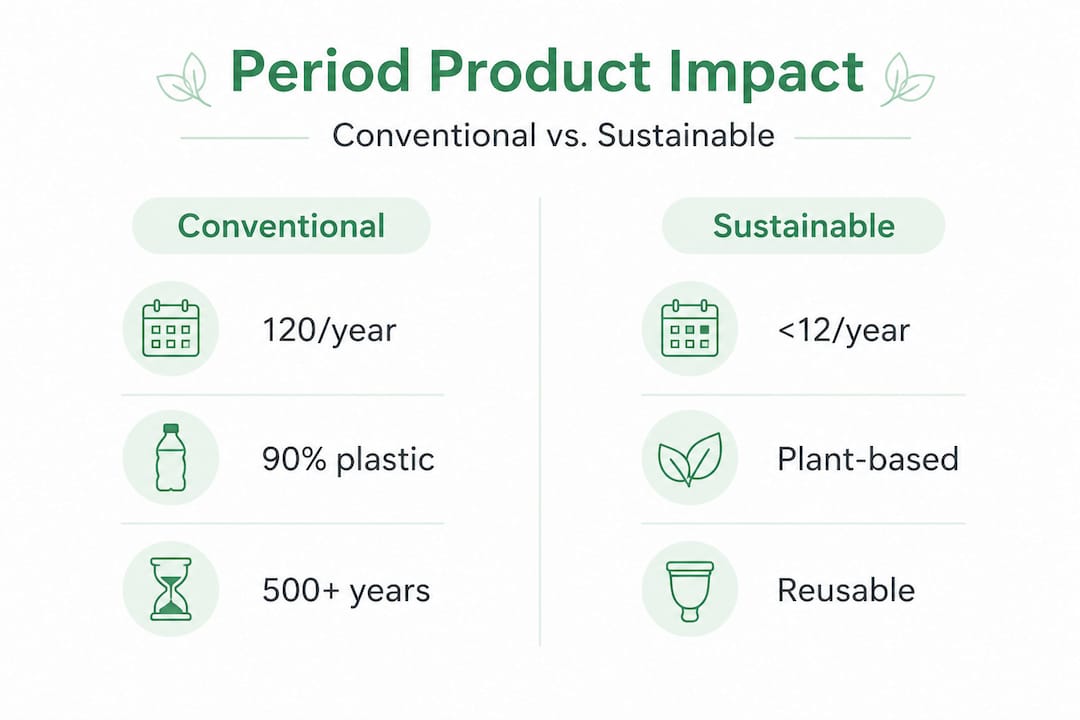
Research confirms that sustainable period brands significantly reduce environmental impact compared to disposables, with menstrual cups showing the lowest scores across multiple life cycle assessment indicators including global warming potential. A life cycle assessment (LCA) measures the environmental cost of a product from raw material extraction all the way to disposal.
Key environmental facts worth knowing:
- Conventional pads contain more plastic by weight than a typical plastic bag
- Tampon applicators frequently bypass sewage filters and end up in oceans
- Fragranced products release volatile organic compounds during disposal
- Organic cotton tampons without plastic applicators decompose significantly faster than conventional ones
- Reusable products cut lifetime emissions by a wide margin compared to any disposable option
Understanding the menstrual products and the environment connection is the first step toward making better choices. The good news is that switching even one product category, say, moving from a plastic pad to a bamboo option, creates meaningful change over time. You don’t need to do everything at once. That said, the more you know about the full scope of period products’ environmental impact, the harder it becomes to look away.
The health case: What’s really in disposable period products?
Here is something the packaging never tells you: conventional disposable period products have been found to contain some genuinely alarming chemicals. Independent lab testing and peer-reviewed research have identified phthalates, PFAS (often called “forever chemicals”), heavy metals including lead and arsenic, dioxins from chlorine bleaching, and synthetic fragrances in various disposable products on the market.
The health impact of period products is not a fringe concern. Your vaginal mucosa, the tissue lining the vaginal wall, is highly permeable. It absorbs substances faster and more directly than skin does. Unlike your digestive tract, there is no liver filtration step between vaginal absorption and your bloodstream. That means toxic chemicals in period products like phthalates, PFAS, and heavy metals are potentially absorbed directly into your system, where research has linked them to hormonal disruption and reproductive health risks.
Chemicals commonly detected in conventional disposables include:
- Phthalates: plasticizers linked to endocrine (hormone) disruption
- PFAS: water-resistant “forever chemicals” associated with hormonal and immune effects
- Dioxins: formed during chlorine bleaching of conventional cotton and pulp
- Fragrances: synthetic blends that can trigger contact dermatitis and irritation
- Pesticide residue: from conventionally grown, non-organic cotton
Organic and sustainable period products take a completely different approach. Organic options for health are certified free from pesticides, bleaches, fragrances, and synthetic chemical treatments. Research shows that switching to organic or sustainable period products reduces the risk of irritation, allergic reactions, and infections because the body is no longer in repeated contact with these irritants each cycle.
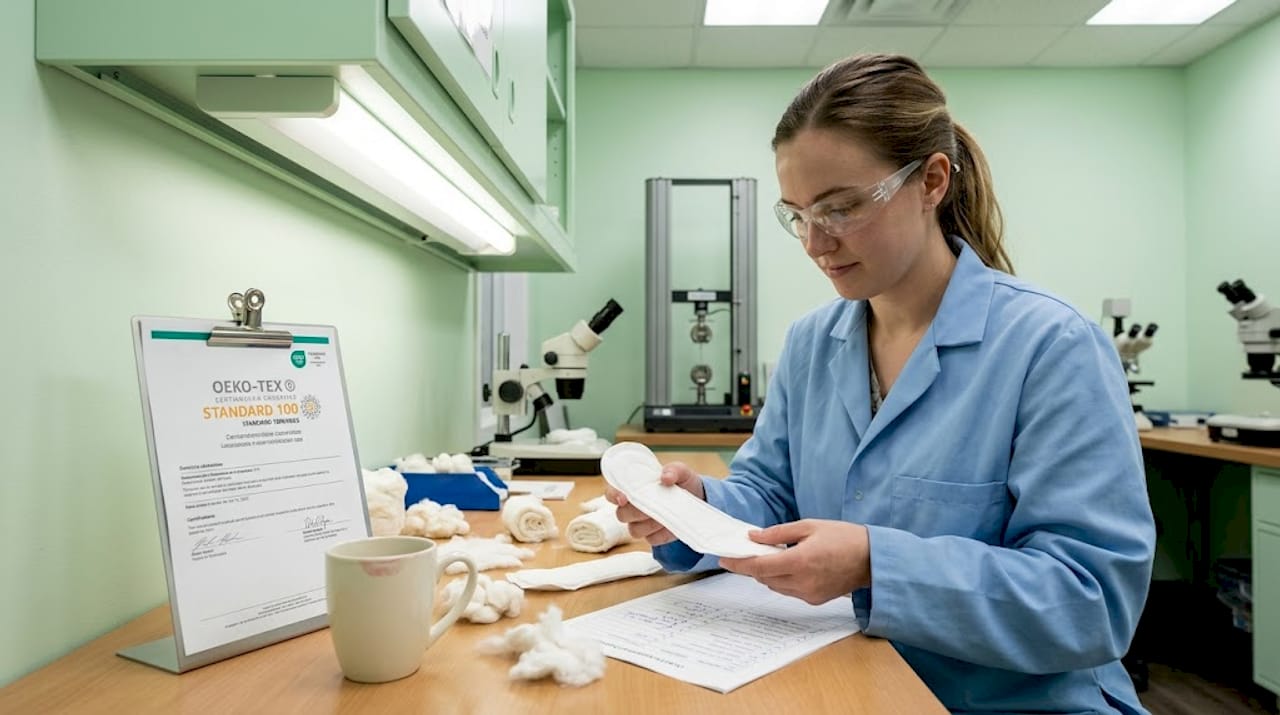
Pro Tip: Look for certifications like GOTS (Global Organic Textile Standard) or OEKO-TEX on any organic period product. These certifications mean the product has been independently tested and verified to be free from harmful substances, not just marketed that way.
The difference in feel is often immediate. People who switch from conventional to organic tampons frequently report less itching, less odor, and less overall irritation, especially those who previously assumed these symptoms were just “normal” parts of their period. They weren’t normal. They were reactions.
How sustainable period brands make a difference
The measurable benefits of switching to sustainable period brands are impressive, and the numbers back it up. Reusable period products reduce waste by up to 91% and can save around 60kg of plastic per user per year. A single menstrual cup can last up to 10 years. That replaces approximately 1,200 to 1,500 disposable tampons or pads.
From a sustainable menstruation choices standpoint, even plant-based disposables make a serious dent. Research comparing life cycle assessments of plant-based pads, like those made from bamboo, found they have significantly lower global warming potential and acidification scores than conventional plastic or bleached pulp pads.
Here is a side-by-side comparison of key metrics:
| Category | Conventional disposable | Organic/plant-based disposable | Reusable (cup or pad) |
|---|---|---|---|
| Plastic waste per year | High (3 to 5 kg) | Very low to none | Near zero |
| Chemical exposure | Present | Minimal to none | Minimal to none |
| Carbon footprint | High | Lower | Lowest (over time) |
| Annual cost | $100 to $200+ | $80 to $150 | $20 to $50 (amortized) |
| Landfill contribution | Very high | Low to zero | Near zero |
The cost savings of reusables are significant too. A menstrual cup costs roughly $25 to $40 upfront and lasts a decade. Compare that to spending $10 to $15 per month on disposables, which adds up to $1,200 to $1,800 over the same period. The financial math strongly favors reusables for most people, especially when you factor in consistent access.
Benefits of switching to sustainable brands include:
- Drastically reduced plastic waste and landfill contribution
- Lower lifetime carbon footprint per menstrual cycle
- Significant long-term cost savings with reusables
- Reduced exposure to synthetic chemicals each cycle
- Support for brands actively committed to zero-plastic or biodegradable packaging
Pro Tip: If you are switching to a reusable cup or disc for the first time, plan to try it during a weekend at home when you can troubleshoot without pressure. Most people get comfortable with placement and removal within two to three cycles. Proper cleaning with a pH-balanced, fragrance-free wash extends the life of silicone cups significantly.
Checking out an eco period product checklist before you shop can also help you sort through the greenwashing, because yes, some products marketed as “eco” still contain plastic or synthetic materials. Knowing what to look for keeps you from being misled by vague claims like “natural” or “green” on packaging that hasn’t been independently certified.
Real-life considerations: Finding your sustainable match
The honest truth is that no single sustainable period product works perfectly for everyone. Reusable products require access to clean water for rinsing, which isn’t always available in every setting, whether that’s a public restroom, a camping trip, or a rural community without reliable water access. For some people, there are also cultural factors that affect comfort with internal products like cups or discs.
This is why a hybrid or stepwise approach works so well for most people. Combining reusables with organic disposables on heavy flow days, during travel, or in situations where water access is limited is widely recognized as a practical and still highly sustainable approach. You don’t have to go all-in on cups to make a meaningful difference.
“Sustainability in menstrual care is not about choosing the ‘perfect’ product. It’s about making thoughtful choices that align with your real life, then improving them over time as you learn what works for you.”
Here is a simple framework for finding your best fit:
- Assess your flow. Do you have a light, moderate, or heavy cycle? Heavier flows may benefit from higher-capacity cups, period underwear with organic disposable backup, or absorbent reusable pads.
- Consider your lifestyle. Are you often traveling, using public restrooms, or in athletic environments? Organic tampons without plastic applicators are discreet and easy for on-the-go use.
- Think about your comfort level. If internal products feel uncomfortable or unfamiliar, reusable cloth pads or period underwear offer a gentle starting point.
- Factor in your budget. Start with one reusable item alongside organic disposables if a full switch feels financially overwhelming.
- Check access. If clean water is not reliably available for rinsing reusables, organic biodegradable disposables are a genuinely responsible choice.
Exploring natural menstrual care tips can also open your eyes to options you may not have considered, from period discs to bamboo pads to certified organic period underwear. The sustainable menstrual care space has grown enormously in recent years, and there is now something that genuinely fits most lifestyles and budgets.
What most eco guides miss about sustainable period care
Most eco guides about period products operate from a place of idealism: cups are best, everything reusable is perfect, and the solution is simple. We think that framing misses something important, and it can actually discourage people from switching at all.
The reality is that menstrual cups do top nearly every life cycle analysis for lowest environmental impact. That is well-documented. But cup sustainability depends heavily on how you wash them. Rinsing a cup under hot running water for several minutes multiple times a day can offset much of its environmental benefit compared to a cold, efficient wash. The same goes for reusable pads washed on hot cycles with low load sizes. The product’s footprint is only part of the story. How you use it matters enormously.
We also think the conversation often leaves behind the people for whom cups simply don’t work. People with certain anatomies, conditions like vaginismus, or strong cultural discomfort with internal products shouldn’t feel like they’ve failed at sustainability because a cup isn’t their answer. Choosing certified organic tampons or biodegradable bamboo pads is still a meaningful, thoughtful decision that moves the needle.
The best sustainable period practice is one you will actually maintain long-term. A perfect cup sitting unused in a drawer because it never felt right is less sustainable in practice than an organic, compostable tampon used every month for ten years. Progress beats purity every time.
Exploring health-conscious menstrual options means finding what consistently works for your body and your life, then making the most environmentally responsible choice within those real constraints. That is not settling. That is smart, sustainable thinking.
Ready to choose a better period? Find your eco-friendly match
Making the switch to sustainable period care doesn’t have to be complicated or overwhelming. Whether you are ready to go all-in on reusables or you simply want to stop putting chemicals near your body every month, there is a genuinely good option waiting for you.
At Tampon Tribe, every product is designed with both your health and the planet in mind. From certified organic tampons with zero plastic packaging to fully compostable options, the goal is simple: give you a product you can trust completely. If you are ready to switch to natural tampons and ditch the synthetic chemicals for good, the process is straightforward and the difference is something you will feel. Browse the full range of organic tampon options and find the absorbency, style, and format that fits your body and your values. Your period is a monthly constant. It should be one of the easiest things you make sustainable.
Frequently asked questions
How much waste do I save by switching to reusable period products?
Switching to reusables can cut menstrual waste by up to 91%, saving around 60kg of plastic per user per year. Over a lifetime, that is a dramatic reduction in what ends up in landfills and oceans.
Are organic period products really safer for my health?
Organic period products are free from pesticides, synthetic fragrances, and harsh chemical treatments that can cause irritation, allergic reactions, and recurring infections. For many people, switching to organic is the first time their period stops feeling itchy or uncomfortable.
Can sustainable period products handle heavy flow days?
Many sustainable options, including high-capacity menstrual cups, absorbent reusable pads, and organic period underwear, are designed for heavier flow. For extra heavy days, a hybrid approach combining reusables with organic disposables offers reliable protection without compromising your sustainability values.
Are reusable products practical for travel and busy lifestyles?
Reusables work well in many travel scenarios, but when clean water is limited, reusables can become impractical. Certified organic, biodegradable disposables are an excellent travel companion that keeps you sustainable even when rinsing isn’t an option.