


Most of us never think twice about what’s actually inside a tampon or pad before using it. But conventional period products may contain pesticides, plastics, and synthetic fragrances that go unmentioned on the label. These products sit against some of the most absorbent tissue in your body, yet the industry isn’t required to disclose every ingredient. If you care about what you put in and on your body, and about the world you live in, understanding the difference between conventional and clean period care isn’t just interesting. It’s genuinely important.
Table of Contents
- What makes a period product ‘clean’?
- Hidden risks of conventional menstrual products
- Benefits of choosing clean and organic period products
- How to transition to cleaner period care
- Why mainstream period care advice falls short
- Ready to make the switch? Safer choices at your fingertips
- Frequently asked questions
Key Takeaways
| Point | Details |
|---|---|
| Hidden Ingredients in Products | Many common period products contain chemicals and plastics that can affect health and the planet. |
| Benefits of Organic Options | Switching to clean, organic products offers safer, more comfortable, and eco-friendly periods. |
| Making the Switch Simple | Transitioning to cleaner period care is accessible with ingredient knowledge and step-by-step guidance. |
| Watch for Greenwashing | Verify transparency in branding and certifications to avoid misleading ‘natural’ claims. |
What makes a period product ‘clean’?
The word “clean” gets tossed around a lot in wellness spaces, but in the context of period products, it has a specific meaning. A clean product is free of synthetic fragrances, harmful dyes, chlorine bleaching agents, plastic components, and undisclosed chemical additives. Organic menstrual products avoid harmful chemicals and synthetic materials entirely, relying instead on certified organic cotton and minimal, transparent ingredients.
Certifications are your best friend here. The GOTS (Global Organic Textile Standard) certification is one of the most rigorous in the world. It requires that at least 70% of fibers be organic, and it restricts the use of toxic substances at every stage of production. When you see GOTS on a package, you know the product has been independently verified, not just self-labeled as “natural.”
Here’s a quick comparison of what separates clean products from conventional ones:
| Feature | Conventional products | Clean/organic products |
|---|---|---|
| Cotton source | Often non-organic, pesticide-treated | Certified organic cotton |
| Bleaching method | Chlorine bleaching (may create dioxins) | Peroxide or unbleached |
| Fragrance | Synthetic added fragrances | Fragrance-free |
| Plastic content | High (especially in pads) | Minimal to zero |
| Ingredient disclosure | Often incomplete | Fully transparent |
When checking labels, watch out for these ingredients:
- Synthetic fragrances or “perfume” (can mask dozens of undisclosed chemicals)
- Rayon or viscose fibers (synthetic, may carry residual solvents)
- Chlorine-bleached materials
- Plastic mesh or polyethylene top sheets
- Dyes or colorants of any kind
Exploring health-conscious menstrual options gives you a solid foundation for making informed choices without feeling overwhelmed.
Pro Tip: Don’t just read the front of the package. Flip it over and look for a full ingredient list. If a brand won’t share what’s in their product, that tells you something important.
Hidden risks of conventional menstrual products
Knowing what “clean” means makes it easier to understand what we’re actually trying to avoid. Conventional pads and tampons have been linked to a range of concerning ingredients, and the exposure risk is real because these products are used in direct contact with sensitive mucous membranes.
The most commonly flagged substances include:
- Dioxins — A byproduct of chlorine bleaching, dioxins are known endocrine disruptors. Even low-level, repeated exposure raises concern among health researchers.
- Synthetic fragrances — These are chemical cocktails that can trigger irritation, allergic reactions, and hormonal interference.
- Pesticide residues — Non-organic cotton is one of the most heavily sprayed crops in the world. Residues can remain in the finished fiber.
- Phthalates and plasticizers — Found in plastic applicators and pad backings, these chemicals are associated with hormone disruption.
- Rayon fibers — A synthetic material that can leave residue in vaginal tissue.
On the environmental side, period products’ environmental impact is staggering. Menstrual products can release microplastics and chemicals into bodies and the earth. A single conventional pad can contain the equivalent of four plastic bags. Multiply that across billions of periods globally and you start to see the scale of the problem.
Did you know? Conventional pads may contain up to 90% plastic in their construction, including the absorbent core, leak-proof backing, and packaging.
Microplastic contamination is now found in ocean sediment, agricultural soil, and even the human bloodstream. The period products you use every month contribute to that contamination cycle when made from conventional materials.
Health-wise, the risks of conventional products include the potential for Toxic Shock Syndrome (TSS), which has been linked to certain types of tampons, particularly those made with synthetic fibers that create an environment more favorable for bacterial growth. While TSS is rare, using 100% organic cotton significantly reduces that risk.

Think of it this way: you wouldn’t knowingly use a skincare product full of undisclosed chemicals. Period products deserve the same scrutiny, especially given how long they’re in contact with your body each month.
Benefits of choosing clean and organic period products
Once you understand the risks, the benefits of going clean start to feel less like a wellness trend and more like a logical, necessary upgrade.
The most immediate benefit most people notice is reduced irritation. Synthetic fragrances and dyes are among the most common triggers of vulvar dermatitis and vaginal imbalance. Switching to fragrance-free, dye-free organic products can calm recurring irritation that many people have simply accepted as normal.
Beyond comfort, here’s what clean period products actually deliver:
- Lower chemical exposure: Organic products reduce exposure to pesticides and support comfort without compromising safety.
- Better breathability: Natural fibers allow more airflow, which supports a healthy vaginal environment.
- Reduced allergy risk: Without synthetic additives, there’s far less to react to, especially important if you have sensitive skin.
- Smaller ecological footprint: Certified organic cotton is grown without synthetic pesticides, and clean products typically use biodegradable or compostable packaging.
- Values alignment: Buying from brands that prioritize transparency lets you put your money where your values are.
The environmental win compounds over time. One person switching to organic period products and plastic-free packaging over a decade makes a real, measurable difference in plastic waste and chemical runoff.
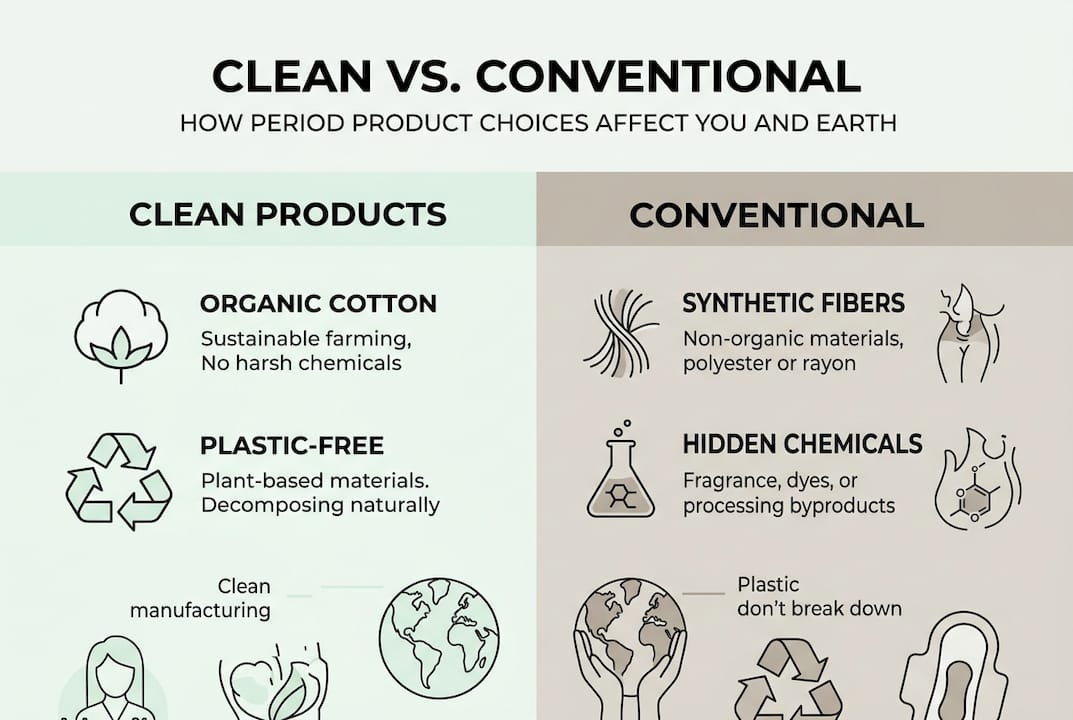
Exploring eco-friendly period choices also opens the door to reusable options like menstrual cups, which dramatically reduce waste compared to any single-use product.
Pro Tip: If you’re worried about cost, try a subscription model. Many clean period brands offer discounted subscriptions that make organic products more affordable than buying individual packs each month.
The health and sustainability benefits of going clean aren’t just personal. They ripple outward into the environment and into broader consumer markets, signaling to brands that transparency and safety are non-negotiable.
How to transition to cleaner period care
Going clean doesn’t have to mean overhauling your entire routine overnight. A thoughtful, step-by-step approach makes the process comfortable and sustainable.
Here’s a practical roadmap:
- Audit your current products. Look at what you’re using now. Read ingredient labels and note any synthetic fragrances, rayon, or undisclosed additives.
- Research certifications. Look for GOTS, OEKO-TEX, or similar third-party certifications on new products. These guarantee independent verification, not just brand claims.
- Start with one product type. Swap out your most frequently used product first, whether that’s tampons, pads, or panty liners. Get comfortable before changing everything at once.
- Read real reviews. Other users with similar needs are your best resource for practical comfort feedback.
- Trial different formats. Some people find organic tampons feel different from conventional ones. Give yourself a full cycle or two before deciding if something works.
- Explore reusables when ready. A menstrual cup beginner’s guide can help ease the learning curve and make the switch feel approachable.
When evaluating brands, look for these things on packaging:
- Full ingredient transparency (every fiber and material disclosed)
- Third-party organic certification
- Plastic-free or biodegradable packaging
- No synthetic fragrances, dyes, or chlorine bleaching
- Clear manufacturing and sourcing information
Transitioning thoughtfully can make clean products accessible and comfortable, and you can find answers to common questions through trusted clean period care FAQs that cover sizing, usage, and brand comparisons. Online communities focused on sustainable living are also great spaces to ask questions and share experiences without judgment.
Why mainstream period care advice falls short
Here’s something most period product guides won’t tell you: a lot of the “green” advice floating around online is shaped, at least in part, by the same brands that profit from vague, feel-good labels.
Words like “natural,” “gentle,” and “pure” carry zero regulatory weight. A brand can print them on packaging without meeting any standard. Many mainstream guides celebrate products for being “BPA-free” or “dermatologist-tested” without asking harder questions about the remaining ingredient list.
True clean period care means demanding full transparency, not just checking one box. The organic product realities are more nuanced than most marketing suggests. Real safety comes from certified organic fibers, plastic-free packaging, and brands that invite scrutiny rather than deflect it. Convenience marketing loves to frame sustainability as a sacrifice. But in our experience, clean products are more comfortable, not less. When you stop exposing sensitive tissue to synthetic chemicals, your body tends to respond well. That’s not a wellness trend. It’s just biology.
Ready to make the switch? Safer choices at your fingertips
You now know what to look for, what to avoid, and how to make the switch on your own terms. The next step is finding products that actually live up to their claims.
At Tampon Tribe, every product is made with certified organic cotton, zero plastic packaging, and complete ingredient transparency. Whether you need organic panty liners for everyday freshness, organic teen pads for a younger body just starting out, or want to take the leap with menstrual cups for a reusable, low-waste option, there’s a clean choice ready for you. Because protecting your body and the planet shouldn’t require a compromise.
Frequently asked questions
What ingredients should I avoid in period products?
Avoid fragrances, dioxins, and plastics, along with synthetic fibers and any undisclosed chemical additives for truly safer menstrual care.
How do clean period products help the environment?
Clean period products reduce plastic waste and limit chemical pollutants, since organic and sustainable options have a measurably lower environmental footprint than conventional alternatives.
Are organic period products better for sensitive skin?
Yes. Organic products reduce irritation by removing synthetic dyes, fragrances, and chemical finishes that are common triggers for sensitive and allergy-prone skin.
How do I know if a product is truly organic or clean?
Look for GOTS or OEKO-TEX certifications and a fully disclosed ingredient list. Certifications ensure products avoid harmful chemicals rather than relying on unverified brand claims.
Is it hard to switch to clean period care?
Not at all. Careful gradual transition using research, brand comparisons, and one-product-at-a-time trials makes the process accessible and easy to adapt to your preferences.
Recommended
- How period products affect the environment: what you need to know – Tampon Tribe
- How menstrual products impact the environment: greener choices – Tampon Tribe
- How organic period products impact health & sustainability – Tampon Tribe
- Top health-conscious menstrual options for safer periods – Tampon Tribe