


Most people assume that if a pad is sold in a pharmacy, it’s been thoroughly vetted for safety. That assumption leaves out a lot. The materials used in conventional menstrual pads, including the bleaching chemicals used to make pulp white, have drawn increasing scrutiny from researchers and health-conscious consumers alike. Switching pad materials measurably reduces life-cycle environmental impacts, and the health picture is just as compelling. This article breaks down what “chlorine-free” actually means, what the science really says, and how to make a smarter choice at checkout.
Table of Contents
- What does ‘chlorine-free’ really mean?
- Key health considerations: Is chlorine-free always safer?
- Environmental impact: Chlorine-free versus conventional pads
- How to choose: Practical checklist for making the switch
- The real story: Why ‘chlorine-free’ is only the starting point
- Ready to switch? Explore safer, greener period options
- Frequently asked questions
Key Takeaways
| Point | Details |
|---|---|
| Not all pads are equal | Chlorine-free pads reduce specific chemicals but you should still check for other additives. |
| Environment impact varies | Plant-based, chlorine-free pads often leave a smaller footprint, but waste disposal systems matter. |
| Label reading is vital | Choosing the best pad requires understanding terms and reading the full ingredient list. |
| One step in safer care | Going chlorine-free is valuable but consider fragrance, plastics, and overall transparency too. |
What does ‘chlorine-free’ really mean?
The phrase “chlorine-free” sounds simple, but the reality behind it involves a few different manufacturing processes worth knowing. When pulp (the absorbent core of most pads) is produced, it typically gets bleached to achieve that clean, bright white appearance. Traditional bleaching uses elemental chlorine gas, a process that can generate dioxins and other chlorinated byproducts in the final product and in wastewater.
Two alternative labels have emerged as alternatives to elemental chlorine bleaching:
- ECF (Elemental Chlorine Free): The pulp is bleached with chlorine dioxide instead of raw chlorine gas. This significantly reduces dioxin formation but does not eliminate chlorine chemistry entirely.
- TCF (Totally Chlorine Free): No chlorine compounds are used at all. Oxygen, ozone, or hydrogen peroxide are used instead, making this the cleanest bleaching method available.
When you see “chlorine-free” on a product, it most commonly refers to ECF processing. That’s still a meaningful improvement over conventional bleaching, but it’s not the same as TCF. The label you choose determines what chemicals you’re actually avoiding, and irritation outcomes are often tied to other factors entirely.
It’s also important to understand what “chlorine-free” does not cover. It says nothing about:
- Synthetic top layers (often polyester or polypropylene plastic)
- Adhesive strips and their chemical composition
- Added fragrances or odor-neutralizing compounds
- Dyes and colorants in the pad material
- The overall biodegradability of the product
A pad can be ECF-bleached and still contain a plastic-heavy construction, synthetic fragrances, and no commitment to environmental packaging. Reading beyond the front label is where the real information lives. For a broader look at what ingredient transparency actually looks like, BPA-free period care offers a useful parallel comparison.
“Irritation during your period is rarely caused by just one thing. Moisture, friction, synthetic materials, and fragrance all play a role, sometimes more so than the bleaching process used on the pulp.”
What to look for on labels:
- ECF or TCF designation (TCF is preferable)
- Organic cotton or plant-based materials
- Fragrance-free and dye-free claims
- No mention of “odor protection” ingredients (often a sign of added chemicals)
- Recyclable or compostable packaging
Key health considerations: Is chlorine-free always safer?
Understanding the bleaching process is helpful, but it’s only one piece of the health picture. Research increasingly shows that chemical exposure from menstrual pads is a multi-source issue, and chlorine is just one variable among several.
Risk is multi-chemical and multi-pathway, meaning plastic additives and other materials contribute to overall exposure as much as chlorine compounds do. Here are the four main chemical concerns to know about:
-
Chlorine and dioxins. Dioxins are persistent organic pollutants generated during chlorine-based bleaching. They accumulate in body fat and have been linked to hormonal disruption in long-term exposure studies. ECF bleaching dramatically reduces (but does not zero out) dioxin content compared to conventional bleaching.
-
Plasticizers and other additives. Many conventional pads use plastic-based components that can contain phthalates or other plasticizers. These chemicals may leach during use, especially in warm, moist conditions. The vulvar area has relatively high skin permeability, meaning chemical absorption through this tissue is a legitimate consideration.
-
Moisture and friction effects. Even with a chemically benign pad, the physical interaction between skin and pad material matters. Occlusion (trapping moisture and heat) can disrupt the vulvar microbiome and cause irritation completely independent of chemical content. Breathable, plant-based top layers reduce this effect significantly.
-
Fragrance. This is consistently one of the top causes of contact dermatitis in the genital area. “Fresh scent” or “odor control” features on pads almost always mean added synthetic fragrance compounds. Clinically, irritation may be caused by many factors, not just chlorine derivatives, with fragrance being among the most common triggers.
Pro Tip: Always choose fragrance-free pads, regardless of any other claims on the packaging. Fragrance is a blanket term that can cover hundreds of undisclosed chemical compounds, and it’s the easiest risk to eliminate.
For a fuller view of how these concerns fit into the landscape of safer menstrual options, the evidence consistently points toward cotton-based, fragrance-free, minimal-additive products as the safest bet. The goal isn’t to find a “perfect” pad but to systematically reduce unnecessary chemical exposure with every period. Choosing products that prioritize safety means looking at the whole ingredient picture, not just one label claim.
Environmental impact: Chlorine-free versus conventional pads
When health isn’t the only thing you care about, the environmental footprint of your period products deserves equal attention. This is where chlorine-free pads, especially plant-based ones, show some of the most impressive and measurable differences.
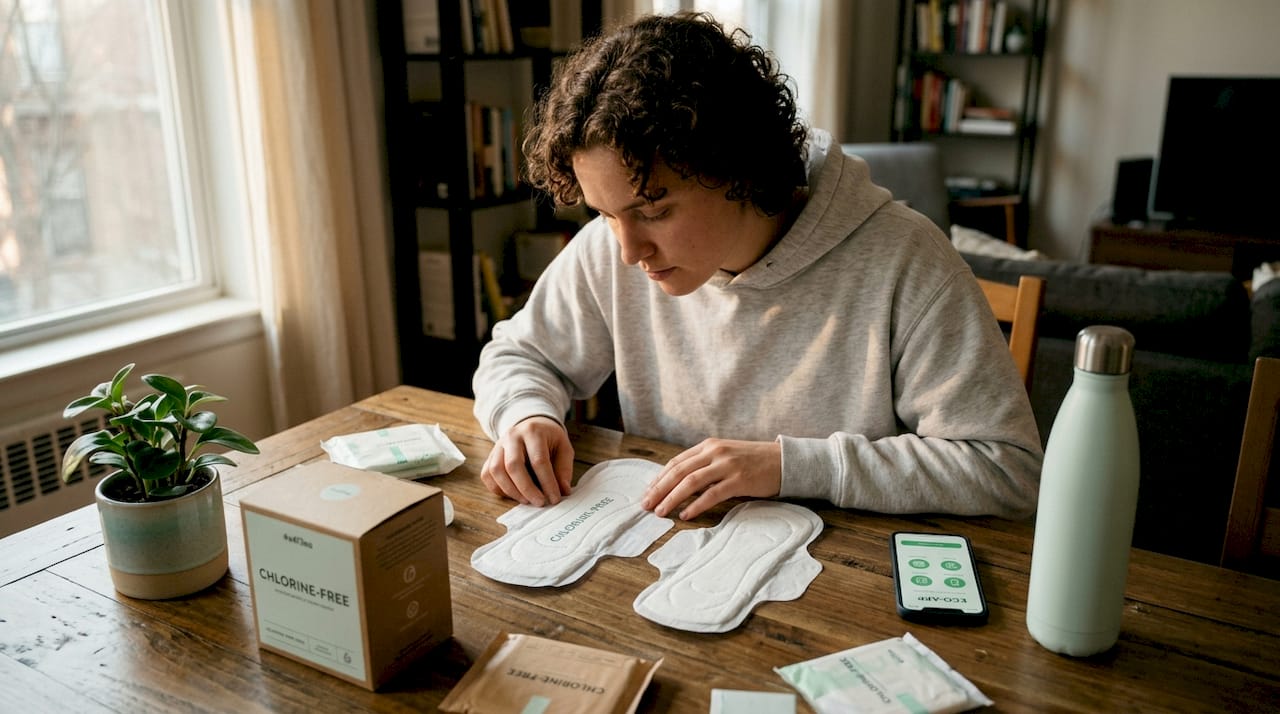
Life-cycle analysis (LCA) is the scientific method used to track a product’s total environmental impact from raw material extraction through to disposal. A major comparison found that bamboo pulp pads (chlorine-free and plant-based) showed 2.1 to 2.3 times lower environmental impacts across water scarcity, fossil fuel use, and air quality categories compared to conventional pads. That’s not a marginal difference. It’s a structural one rooted in how the raw materials are grown and processed.
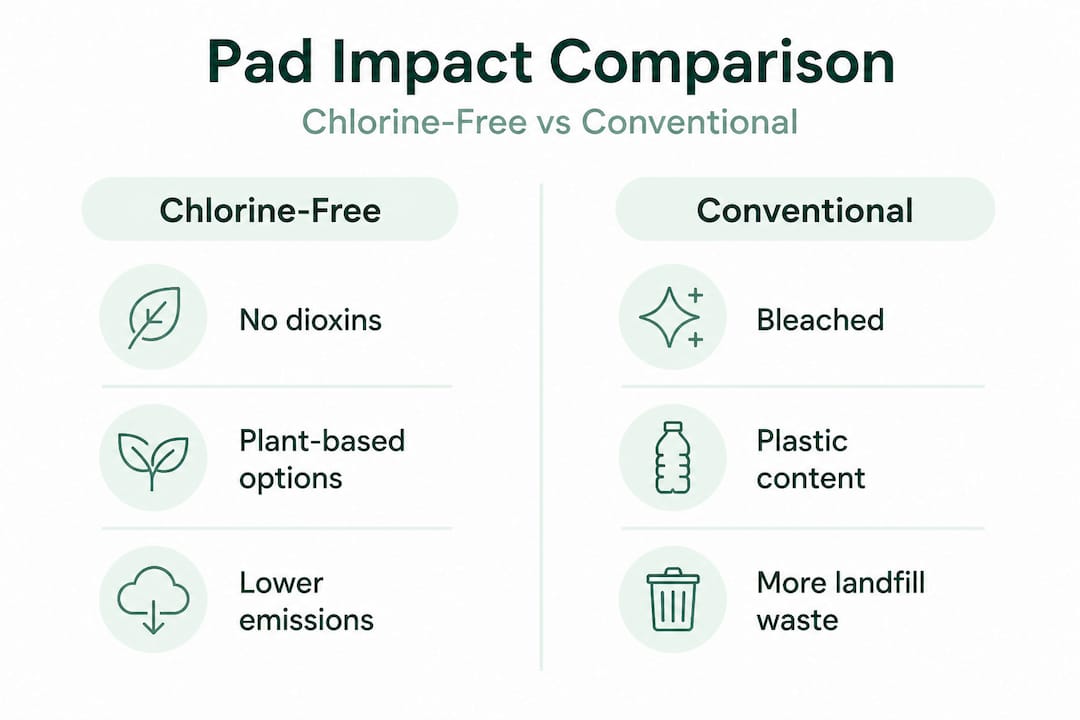
| Environmental category | Conventional pad | Plant-based, chlorine-free pad |
|---|---|---|
| Water scarcity impact | High | 2x+ lower |
| Fossil fuel consumption | High | 2x+ lower |
| Air quality / emissions | Higher dioxin output | Significantly reduced |
| Solid waste (landfill) | Mostly plastic, non-degradable | Partially biodegradable (materials dependent) |
| Wastewater from bleaching | Chlorinated byproducts present | Minimal or none (TCF) |
Additional green features worth looking for beyond the chlorine-free label:
- Plant-based top layers (bamboo or organic cotton) instead of polyester
- Compostable or home-compostable certifications for the pad body
- Zero plastic packaging from the brand
- Carbon offset programs or verified sustainability claims from the manufacturer
- Transparent ingredient disclosure on both product and packaging
One important nuance: waste disposal context matters quite a bit. A compostable pad only delivers its environmental benefit if it actually gets composted. In areas without industrial composting infrastructure, even the greenest pad may end up in a landfill where degradation is extremely slow. This doesn’t diminish the value of choosing better materials, but it’s honest context to have.
Pro Tip: Seek pads that are both chlorine-free and plant-based for the strongest environmental outcome. A chlorine-free label on a pad made primarily of plastic is only doing half the work.
For more on how your eco-friendly period choices connect to real planetary impact, the full picture of menstrual products and the environment is worth exploring.
How to choose: Practical checklist for making the switch
Now that you have the health and sustainability facts, here’s a simple process to confidently pick the best chlorine-free menstrual pad for your needs. The goal is to move beyond front-of-pack buzzwords and actually evaluate what’s inside the product.
Numbered checklist for evaluating pad labels:
-
Confirm the chlorine-free claim. Look specifically for ECF or TCF designation. “Natural” or “gentle” language does not substitute for this. TCF is the stronger of the two.
-
Check for plant-based or organic materials. Certified organic cotton or bamboo pulp are the cleanest core materials available. Organic certification (GOTS or OEKO-TEX) provides third-party verification that what’s on the label is what’s in the product.
-
Look for fragrance-free and dye-free labeling. If you see words like “fresh,” “clean scent,” or “odor protection,” those are red flags. These almost always signal synthetic fragrance or chemical additives.
-
Review packaging and recycling info. A brand that’s genuinely committed to sustainability will be transparent about packaging. Look for plastic-free wrappers, paper-based packaging, and clear disposal guidance.
-
Assess company transparency. Does the brand publish a full ingredient or materials list? Do they have third-party certifications? Are they clear about where and how their products are made? Transparency is a strong signal of integrity.
The sustainability advantage in period products often depends on broader material choices, not just the chlorine-free claim alone.
Common pitfalls to avoid:
- Not all chlorine-free pads are plastic-free. Many still use plastic backing layers and individual plastic wrappers.
- “Eco” or “natural” claims are not regulated in most markets. They can mean almost anything.
- A product might be organic in its cotton layer but use a synthetic adhesive or polyethylene backing.
- Some brands use vague language like “sustainably sourced” without any certification to back it up.
- Compostable claims without specific composting instructions are often misleading in practice.
Label reading takes a little practice, but it gets faster. No single product will be perfect for every person or every situation. The key is understanding which trade-offs you’re making and choosing based on your own priorities. For a more thorough walkthrough, these natural menstrual care tips and this eco period checklist are genuinely useful starting points.
The real story: Why ‘chlorine-free’ is only the starting point
Here’s a perspective that most product marketing won’t give you: the “chlorine-free” label, as important as it is, has become a convenient shortcut for brands to signal wellness without doing the harder work of full transparency.
Think about it. A brand can meet the ECF standard, slap “chlorine-free” on the front of the box, and still include a polyethylene plastic backing, synthetic polymer top sheet, fragrance compounds, and packaging wrapped in single-use plastic. Every one of those elements carries its own health and environmental implications. Some researchers emphasize that risk is multi-chemical and multi-pathway, and that plastic additives and other materials matter just as much as chlorine compounds. Yet those concerns rarely make it to the front of the box.
The women who tend to be most satisfied with their period product choices over time are not the ones who found the single “perfect” product. They’re the ones who learned to read between the labels. They know that organic cotton costs more for a reason, that TCF is genuinely better than ECF, and that a brand willing to be completely transparent about everything in their product is a brand worth supporting.
We’ve seen this pattern clearly through years of feedback and research: comfort, skin health, and peace of mind all improve together when people stop chasing individual claims and start looking at the full product picture. What does the top layer feel like against skin? What’s in the absorbent core? What happens to the packaging after use? These are the questions that lead to genuinely better choices. A chemical-free workflow isn’t about achieving perfection. It’s about systematically removing unnecessary exposures one decision at a time.
The “chlorine-free” label is a good starting point. But demanding the full story is what separates a smart switch from a marketing win for a brand that’s done the bare minimum.
Ready to switch? Explore safer, greener period options
Choosing chlorine-free period products is one of the most meaningful upgrades you can make for your body and the environment. When you pair that with organic materials, plastic-free packaging, and a brand that’s fully transparent about what’s in its products, you get something genuinely different from what most conventional options offer.
At Tampon Tribe, we believe you deserve to know exactly what’s touching your body during your period. Every product we offer is designed with that principle at the center: no unnecessary chemicals, no plastic packaging, and no vague ingredient lists. If you’re ready to make the move, exploring your options to switch to natural tampons is a great first step. Or browse our full range of organic cotton tampons to find what works best for you. Your period care should feel as clean and intentional as the rest of your wellness routine.
Frequently asked questions
Are chlorine-free pads better for sensitive skin?
Chlorine-free pads may reduce contact with certain bleaching-related chemicals, but irritation is often due to fragrances, synthetic materials, moisture, and friction as much as the bleaching process. Choosing fragrance-free, organic cotton options addresses more of the most common irritation triggers.
Do chlorine-free pads help the environment?
Yes, particularly when plant-based materials are also used. Plant-based, chlorine-free pads show significantly lower environmental impacts in life-cycle studies, though the actual benefit also depends on local waste disposal infrastructure in your area.
What is the difference between ‘ECF’ and ‘TCF’ on pad labels?
ECF (elemental chlorine free) means no chlorine gas was used in bleaching, while TCF (totally chlorine free) means no chlorine compounds at all were used. The label you choose determines exactly which chemicals you’re avoiding, with TCF being the more thorough option.
Do chlorine-free pads eliminate all chemical risks?
No. Risk is multi-chemical and multi-pathway, so plastic additives, fragrances, and other materials can also pose health concerns that the chlorine-free label does not address.
Are all chlorine-free pads biodegradable?
No. Some chlorine-free pads still contain plastic backing layers, synthetic top sheets, and plastic wrappers that are not biodegradable. Always check the full materials list and look for specific compostability certifications rather than relying on the chlorine-free claim alone.