


You’ve spotted the “BPA-free” label on your tampons or pads and felt a small wave of relief. That’s a completely understandable reaction. But here’s what most period product marketing won’t tell you: that label is only the beginning of the chemical safety conversation, not the end of it. There are dozens of other compounds that can show up in feminine hygiene products, and many of them are just as concerning as bisphenol A. Understanding what “BPA-free” actually covers, and what it leaves wide open, is one of the most important things you can do for your long-term health.
Table of Contents
- What does BPA-free mean in feminine hygiene?
- Beyond BPA: Other chemicals found in period care products
- How safe are BPA substitutes and alternatives?
- Choosing safer, sustainable feminine hygiene: What to look for
- Why ‘BPA-free’ is just the first step: A perspective on true period product safety
- Explore certified BPA-free and organic period care options
- Frequently asked questions
Key Takeaways
| Point | Details |
|---|---|
| BPA-free isn’t risk-free | Products labeled ‘BPA-free’ may still contain other potentially harmful chemicals such as BPS or phthalates. |
| Know your ingredients | Always check for detailed material lists and favor unscented, chemical-minimal menstrual products. |
| Prioritize material safety | Choose organic cotton, medical-grade silicone, and brands transparent about all tested chemicals. |
| Sustainability requires scrutiny | Eco-friendly, reusable period care should also meet high standards for chemical safety and transparency. |
What does BPA-free mean in feminine hygiene?
Bisphenol A, commonly known as BPA, is an industrial chemical used to make certain plastics and epoxy resins harder and more durable. It became a household concern when researchers identified it as an endocrine disruptor, meaning it can mimic estrogen in the body and interfere with hormonal signaling. This is particularly relevant for reproductive health, and for obvious reasons, women started asking hard questions about which period products contained it.
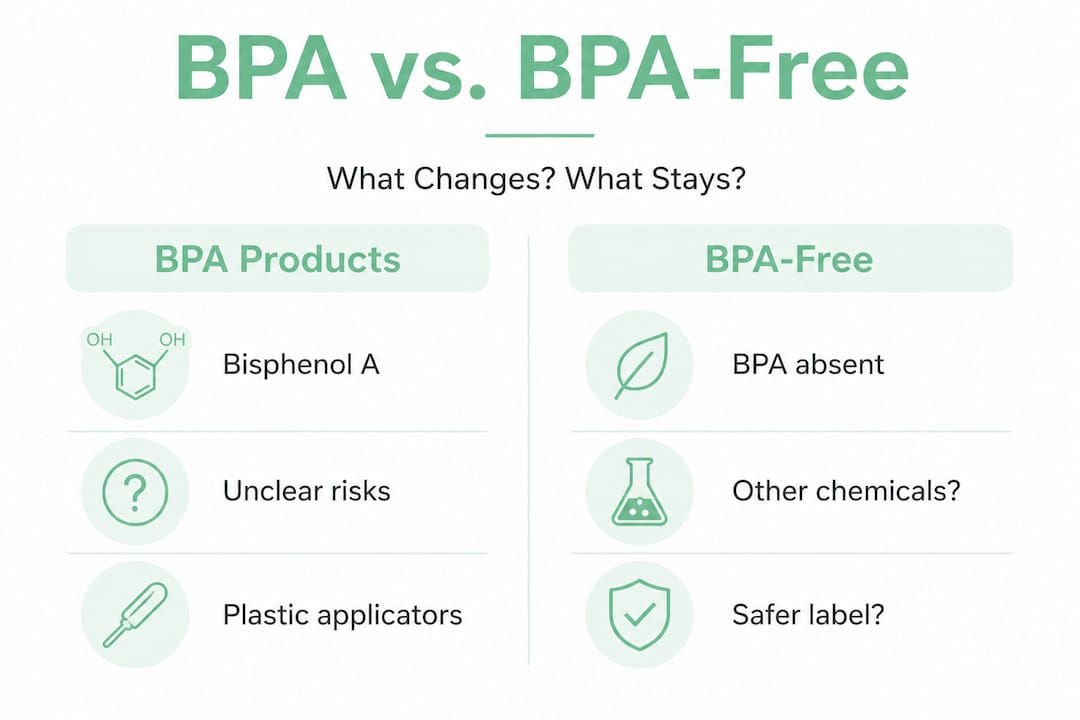
So what does “BPA-free” actually mean on a label? In simple terms, it tells you that bisphenol A was not used in manufacturing that product. That’s it. Nothing more. The label makes no promises about the dozens of other chemicals that may have been used instead or alongside BPA’s absence.
Here’s why that matters for clean period products: research from McGill University, summarized by ScienceDaily, confirms that “BPA-free” does not automatically guarantee the absence of other bisphenols like BPS or BPF, or other chemical classes. These substitutes may still carry endocrine activity concerns in general consumer products. In other words, switching from BPA to BPS might be trading one problem for a slightly different one.
Potential health concerns linked to BPA exposure include:
- Hormonal disruption, particularly around estrogen mimicry
- Fertility concerns from long-term low-level exposure
- Developmental risks for fetuses and young children
- Metabolic effects, including links to insulin resistance in some studies
Because BPA found its way into hard plastics, food can linings, and yes, certain applicators and packaging in feminine care, regulators and consumers alike pushed back hard. Brands responded with “BPA-free” claims. But the regulatory definition of that label is loose. There’s no universal standard requiring brands to disclose what replaced BPA or to test for a full spectrum of related chemicals.
Beyond BPA: Other chemicals found in period care products
While “BPA-free” is a starting point, it doesn’t ensure a product is free from all potentially harmful chemicals. Here’s a look at what else might be hiding in feminine hygiene products.
Research published through the National Institutes of Health shows that multiple chemical classes including bisphenols, phthalates, parabens, and microplastics have been detected in period products like pads, liners, and tampons. The repeated close contact that these products have with vaginal and vulvar tissue makes this an especially relevant exposure pathway. Your vaginal lining is highly permeable, meaning chemicals can pass through it into systemic circulation more efficiently than through your skin.
“The vulvovaginal mucosa represents one of the most absorptive surfaces in the body. Repeated exposure through menstrual products warrants serious scientific scrutiny.” This framing from researchers studying health and safety of menstrual products underlines why ingredient transparency is not optional.
There’s also the concept of regrettable substitution at play here. This is when a manufacturer removes a known harmful chemical, say BPA, and replaces it with a structural analog that hasn’t been as thoroughly studied. BPS (bisphenol S) is the classic example: it became the go-to BPA replacement in many products, but accumulating evidence suggests it may have similar hormonal effects.
Here’s a snapshot of what researchers have found across common product categories:
| Product type | Chemicals detected |
|---|---|
| Conventional pads | Phthalates, parabens, BPA, BPS, microplastics |
| Scented tampons | Fragrances, phthalates, volatile organic compounds |
| Applicator tampons | BPA or BPS in plastic applicators |
| Pantyliners | Adhesive chemicals, synthetic fragrance compounds |
| Reusable cloth pads | Dye chemicals, finishing agents (varies by brand) |
The presence of these chemicals doesn’t automatically mean every user will experience harm. Dose, duration, and individual sensitivity all factor in. But given that menstruation happens every month for roughly 40 years of a person’s life, cumulative low-level exposure deserves real consideration. Choosing natural menstrual care tips as your baseline is a genuinely practical step toward reducing that cumulative burden.
How safe are BPA substitutes and alternatives?
Now that you know “BPA-free” isn’t the whole story, let’s look at the chemicals that often replace BPA and what research says about their safety.
A recent Nature article on bisphenol analogs highlights that even if a brand is certified BPA-free, bisphenol analogs such as BPS and BPF may still be present. Users who are strictly avoiding bisphenol chemistry should seek documentation about the absence of specific bisphenols, not only BPA. That’s a meaningful distinction worth memorizing before your next shopping trip.
Here’s how the main bisphenol compounds compare:
| Chemical | Common use | Research status | Endocrine concern |
|---|---|---|---|
| BPA (bisphenol A) | Hard plastics, epoxy coatings | Extensively studied | High, well-documented |
| BPS (bisphenol S) | BPA replacement in receipts, plastics | Growing body of evidence | Moderate to high |
| BPF (bisphenol F) | Another BPA alternative | Less studied than BPS | Emerging concern |
| BPZ, BPAF | Specialty applications | Minimal public data | Unknown |
The takeaway is uncomfortable but important: BPA-free labeling does not automatically guarantee that alternatives are 100% safe. Some experts now describe the BPA-free movement as “label chasing” when it’s not backed by full ingredient disclosure. A product can be technically BPA-free while still containing a cocktail of structurally similar chemicals.
Pro Tip: Instead of stopping at “BPA-free,” look for brands that explicitly list every material used in the product, including applicators, wrappers, and adhesives. If a brand can’t or won’t tell you what’s in their product beyond the single BPA-free claim, that itself is useful information.
Here’s a numbered checklist for evaluating product transparency before you buy:
- Look up the brand’s full materials list, not just their marketing claims. Check the website’s FAQ or ingredient pages.
- Search for third-party certifications like GOTS (Global Organic Textile Standard) or OEKO-TEX, which test for a broader range of chemicals.
- Contact customer service directly and ask whether the product is free of BPS, BPF, phthalates, and synthetic fragrances. A reputable brand will answer clearly.
- Read the actual product description, not just the front-of-pack label. Claims buried in small print or vague language are red flags.
- Use the safer period checklist as a practical guide when comparing options side by side.
Choosing safer, sustainable feminine hygiene: What to look for
With an understanding of what “BPA-free” covers and doesn’t, let’s get specific about what you should look for to keep your period routine both safe and planet-friendly.
Gynecologists at Brigham and Women’s Hospital emphasize that for vaginal and vulvar health, women should prefer unscented, chemical-minimal products. For menstrual cups specifically, medical-grade silicone is widely discussed as a BPA-free and low-reactivity choice. This is a meaningful distinction: medical-grade silicone is manufactured under far stricter controls than consumer-grade alternatives, reducing the likelihood of chemical leaching under body-temperature conditions.
At the same time, peer-reviewed testing shows that reusable products aren’t automatically safer than disposables. Plastic additives have been found in both single-use and reusable menstrual products across multiple studies. The sustainability case for reusables remains strong, but the material and manufacturing quality of those reusables matters enormously for your health.
When making sustainable period choices, here’s what to prioritize:
- Organic cotton: Look for GOTS-certified organic cotton in tampons and pads. This certification limits pesticide residue and prohibits a range of harmful chemicals during processing.
- No synthetic fragrance: Scented products are among the most concerning because fragrance compounds are rarely disclosed and often include phthalates.
- Medical-grade silicone for cups: If you’re exploring menstrual cup usage, the material certification matters more than the brand name.
- Minimal packaging: Plastic-free packaging signals a brand that has thought carefully about its environmental commitment at every level.
- Full ingredient transparency: The gold standard is a brand that lists every single component, including applicator material, string coating, and wrapper film.
Pro Tip: Beware of brands that only state “BPA-free” without listing the other chemicals they’ve eliminated. Transparency should go in both directions: what’s left out AND what’s left in.
Here are the key questions to ask and labels to look for when shopping:
- Is the cotton certified organic (GOTS or equivalent)?
- Is the product free of synthetic fragrance and added scent?
- Does the applicator (if applicable) disclose its full material composition?
- Is the product certified by a recognized third-party body beyond just BPA testing?
- Does the brand publish a safety data sheet or ingredient glossary?
Why ‘BPA-free’ is just the first step: A perspective on true period product safety
Here’s an honest take that comes from watching the femcare industry evolve over years of eco-product research: the “BPA-free” label was a genuine win when it arrived, but it was quickly co-opted by brands who understood that consumers would stop asking questions once they saw the magic phrase on the box.
We’ve seen this pattern before in food, skincare, and cleaning products. A single ingredient gets called out publicly, regulators and consumers push back, brands remove that ingredient and plaster a new claim on the front. But the underlying lack of regulatory oversight doesn’t change. The FDA doesn’t require feminine hygiene products to disclose all ingredients. That’s not a conspiracy; it’s a regulatory gap that benefits manufacturers more than users.
The real issue isn’t BPA specifically. It’s that period products have historically been treated as low-stakes consumer goods rather than the intimate health products they actually are. You use these products for five to seven days every month, starting in your early teens. The cumulative picture of that exposure, across dozens of potential chemicals, is something that deserves the same attention we give to food labeling or pharmaceutical ingredients.
What actually matters? Full material transparency, third-party testing that covers a broad chemical panel, and a brand culture that welcomes your questions rather than deflects them. If a brand gets defensive when you ask what’s in their applicator, that’s your answer.
Seeking out health-conscious options means looking for companies that treat safety as a value, not a marketing checkbox. The standard should be: organic materials, zero synthetic fragrance, full disclosure, and sustainable packaging that doesn’t create a new environmental problem while solving a personal health one.
Explore certified BPA-free and organic period care options
If you’ve been doing the mental work of evaluating labels and asking harder questions, it makes sense to put that energy toward brands that actually meet a higher bar.
Tampon Tribe was built specifically for this: organic, transparent, and genuinely plastic-free from product to packaging. Every product is designed to give you the full picture, not just a single “BPA-free” sticker. If you’re ready to switch to natural tampons made with certified organic cotton, or if you want to explore options like organic tampons and reusable pads made with safety-verified materials, this is the place to start. You’ve done the research. Now make the swap that actually reflects it.
Frequently asked questions
Does ‘BPA-free’ mean a product is completely non-toxic?
“BPA-free” only confirms the absence of bisphenol A. According to McGill University research, the label does not guarantee freedom from other bisphenols like BPS or BPF, or from chemical classes like phthalates, which may also carry health risks.
What chemicals besides BPA should I look out for in period products?
Watch for other bisphenols such as BPS and BPF, along with phthalates, parabens, synthetic fragrances, and microplastics. Peer-reviewed research has detected multiple chemical classes across pads, liners, and tampons in laboratory testing.
How can I tell if my menstrual product is truly non-toxic?
Look for brands that publish a complete materials list, use GOTS-certified organic cotton or medical-grade silicone, and sell unscented products. Gynecologist guidance consistently points to chemical-minimal, unscented products as the safest baseline for vulvovaginal health.
Are reusable period products always safer than disposables?
Not automatically. Reusable products reduce waste and can be a great choice, but their safety depends entirely on the materials and manufacturing controls used. Scientific assessments have found plastic additives in both single-use and reusable menstrual products, so certifications and material disclosures matter regardless of format.