


Switching to organic pads might feel overwhelming when you’re staring at a wall of products with unfamiliar certifications and wondering if your skin will actually thank you. Many women deal with irritation, rashes, or just a nagging feeling that their conventional pads contain chemicals they’d rather not use every month. Add the growing awareness of plastic waste in landfills, and the case for switching becomes hard to ignore. This guide takes you through every stage of the transition: why it matters, what to look for, how to make the change step by step, and how to troubleshoot common issues so you can feel confident from your very first organic cycle.
Table of Contents
- Why switch to organic pads?
- What you need before switching: organic pad essentials
- Step-by-step guide: how to switch to organic pads
- Troubleshooting and tips: making your transition successful
- Our perspective: what most switching guides miss about organic pads
- Ready to make the switch? Shop organic pads and more
- Frequently asked questions
Key Takeaways
| Point | Details |
|---|---|
| Lower irritation risk | Organic pads use safer materials, reducing irritation and allergic reactions for most users. |
| Better for the environment | Switching to organic or plant-based pads helps reduce plastic waste and environmental footprint. |
| Stepwise transition helps | Making the switch in stages—starting with lighter days and trial packs—ensures greater comfort and success. |
| Not all ‘organic’ is equal | Check for trusted certifications like GOTS, ICEA, or USDA Organic to ensure authenticity. |
Why switch to organic pads?
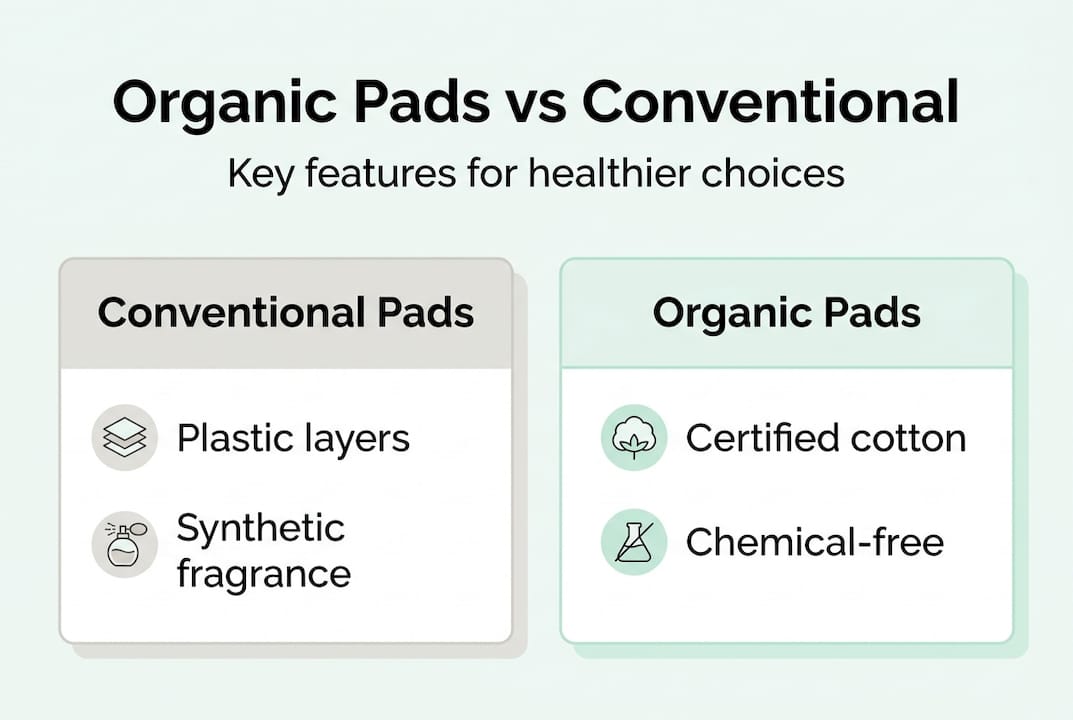
Most conventional pads are more plastic than you think. The outer layers, leak guards, and adhesive strips in standard pads are largely made from petroleum-based synthetic materials. Some also release volatile organic compounds, or VOCs, which are airborne chemicals that can interact with sensitive skin and mucous membranes during use. That’s not a minor concern given how close these products sit to your body for hours at a time.
Organic pads, by contrast, use certified cotton or plant-based fibers with far fewer processing chemicals. The difference shows up in real research. Studies confirm that organic pads reduce skin irritation and have lower cytotoxicity, meaning they’re less likely to damage or stress skin cells. Cytotoxicity is just a technical way of saying “toxic to cells,” and lower levels mean less chance of irritation or allergic response.
The environmental story is equally striking. Conventional pads shed microplastics and VOCs throughout their lifecycle, both during use and after disposal. Organic pads avoid most of this contamination. And when you look at the full production-to-disposal picture, plant-based pads show 1.1 to 2.3 times lower environmental impacts compared to traditional options.
Here’s a quick breakdown of why the switch makes sense:
- No synthetic fragrances or dyes that can disrupt vaginal pH
- No chlorine bleaching byproducts (like dioxins) from conventional cotton processing
- Breathable, natural fibers that reduce heat and moisture buildup
- Biodegradable materials that break down faster in landfills
- Reduced plastic packaging from eco-conscious brands
“The move away from synthetic materials in menstrual products is not just a wellness trend. It’s a response to growing evidence that what touches your most sensitive skin matters for both your body and the planet.”
If you want to dig deeper into how this stacks up across products, the organic period product benefits and menstrual products environmental impact resources are worth reading before you shop.
What you need before switching: organic pad essentials
Before you add anything to your cart, you need to know what you’re actually looking for. The word “organic” on packaging doesn’t always mean what you think. Brands can use it loosely without third-party verification. That’s why certifications matter so much.
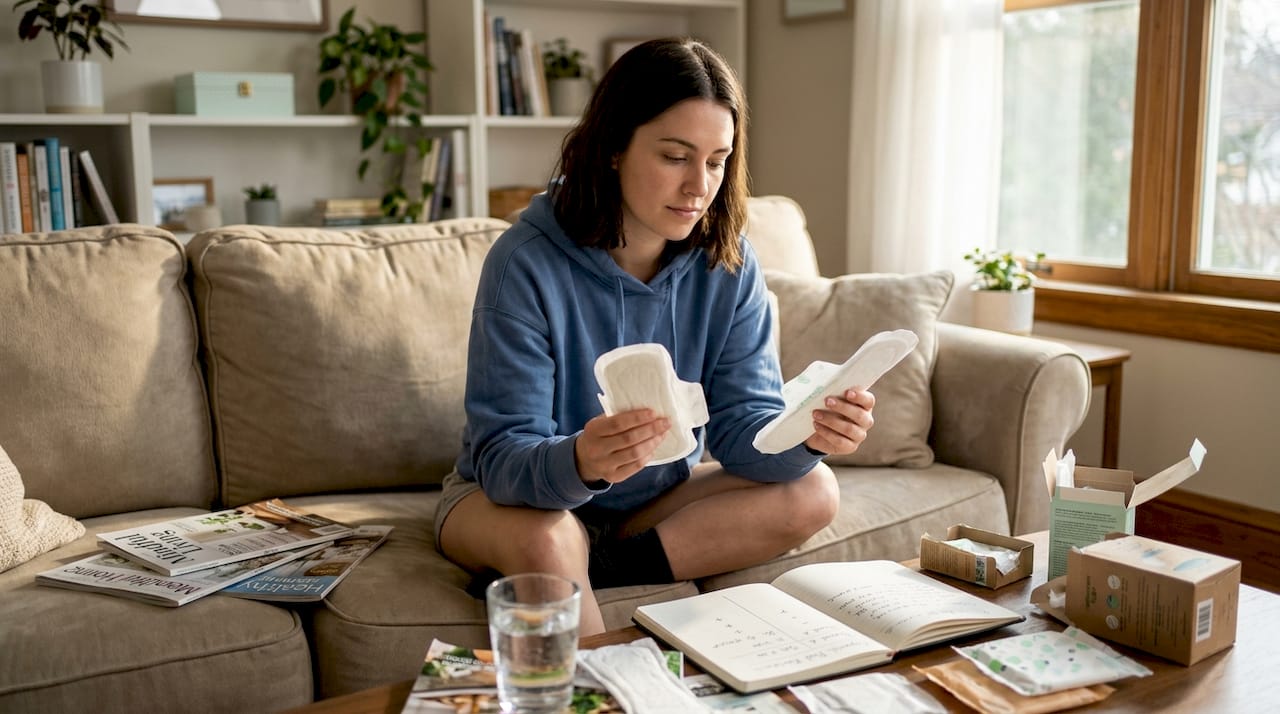
Key certification steps to look for include GOTS, ICEA, and USDA Organic. GOTS stands for Global Organic Textile Standard, and it covers both the farming and manufacturing process for organic fibers. ICEA is a European certification that evaluates environmental and ethical production. USDA Organic focuses primarily on agricultural inputs, confirming pesticide-free cotton. Any one of these on a product label is a real signal, not just marketing.
Once you know what certifications to check, gather a few essentials before your next cycle:
- Sample packs or trial sizes so you can test without committing to a bulk order
- Multiple absorbency levels (light, regular, heavy) to match your actual flow
- A tracking method, even just notes on your phone, to log comfort and fit
- A backup option like period underwear or a reusable cloth pad while you experiment
For extra-sensitive skin, look for pads that are fragrance-free and unbleached. If you have a heavy flow, check whether the brand offers overnight or maxi options with higher absorbency. Cost is also a real factor. GOTS-certified brands like Rael and Cora are well-regarded options, though reusable cloth pads may be a more affordable long-term investment.
| Feature | Conventional pads | Organic disposable pads | Reusable cloth pads |
|---|---|---|---|
| Certifications available | Rarely | GOTS, USDA Organic | GOTS, OEKO-TEX |
| Skin irritation risk | Higher | Lower | Lowest |
| Plastic content | High | Low to none | None |
| Cost per cycle | Low upfront | Moderate | High upfront, low long-term |
| Environmental impact | High | Moderate | Very low |
Pro Tip: Don’t buy a large supply of one brand before trying it. A small sample pack first tells you far more than any review can about how your skin and body respond.
If you’re not sure where to start, exploring safer menstrual options can help you narrow down your priorities before spending anything.
Step-by-step guide: how to switch to organic pads
Having gathered what you need, follow these steps to make your switch smooth and stress-free.
- Check certifications first. Before purchasing, confirm the product carries GOTS, ICEA, or USDA Organic labeling. Don’t trust “natural” or “pure” claims without a recognized third-party certification badge.
- Start with a small or trial pack. Buy the smallest available size before committing to a monthly subscription or bulk order. One pack lets you test fit, absorbency, and comfort with zero risk.
- Use organic pads on lighter flow days. Your lightest cycle days are the best starting point. There’s less pressure on absorbency, so you can focus on how the materials feel against your skin.
- Change every 4 to 6 hours. Some organic pads without SAP (super absorbent polymer, a synthetic gel used in conventional pads) may absorb differently. Sticking to a consistent changing schedule prevents leaks and keeps you comfortable.
- Track your experience each cycle. Note what worked, what didn’t, and whether comfort improved. Most women find the adjustment period lasts one to three cycles.
- Expand your absorbency range. Once you’re comfortable on light days, try the regular or heavy options for busier days in your cycle.
These practical switching steps reflect what real users report as the most effective approach to transitioning without frustration.
| Step | Action | Tool or resource needed |
|---|---|---|
| 1 | Verify certifications | Product packaging or brand website |
| 2 | Buy a small pack | Online shop or pharmacy |
| 3 | Test on light days | Cycle tracking app |
| 4 | Change on a schedule | Phone alarm or reminder |
| 5 | Log your comfort | Notes app or journal |
| 6 | Try full-range absorbency | Second or third pack |
Pro Tip: Use a period-tracking app to match your flow intensity to the right absorbency level. This removes the guesswork and makes choosing the correct pad much easier from month to month.
For a broader look at sustainable period practices, the eco-friendly period choices guide is a useful companion read.
Troubleshooting and tips: making your transition successful
Even with the right steps, you may face a few bumps. Here’s how to navigate them confidently.
The most common mistake is judging too quickly. Many women try one brand for a few days, notice a slight difference in feel, and assume organic pads don’t work for them. In reality, your skin and body need time to adjust, especially if you’ve used heavily processed synthetic pads for years. Give it at least two full cycles before drawing conclusions.
Here are the pitfalls to watch for:
- Choosing the wrong absorbency for your flow stage, which causes leaks or unnecessary waste
- Not changing pads frequently enough, especially since some organic options without SAP hold liquid differently than conventional pads
- Expecting instant perfection instead of allowing a gradual adjustment window
- Buying a large supply of one brand before testing whether it suits your anatomy and flow
For heavy flow users, advice for edge cases confirms that organic pads may contain less SAP than conventional ones, so you might need to test multiple brands or combine overnight pads with more frequent changes. Sensitive skin users, on the other hand, tend to benefit most from the switch. The absence of synthetic fragrances and chlorine-processed fibers alone can significantly reduce irritation within the first cycle.
“Don’t push through severe or worsening discomfort. That’s a signal to revisit the product, not to abandon organic pads altogether. Try a different brand, absorbency, or fiber type before deciding it’s not for you.”
Cost concerns are valid. If price is a barrier, start with one pack per cycle and keep your conventional pads as backup. Over time, exploring cruelty-free hygiene options that include reusable cloth pads can actually reduce your monthly spend significantly.
Pro Tip: If irritation continues beyond three cycles, check whether your laundry detergent (for reusables) or a secondary product like a liner adhesive is the actual source, not the pad material itself.
Our perspective: what most switching guides miss about organic pads
Here’s the honest truth most guides skip over: organic pads are not a uniform category, and not every “organic” claim delivers equal benefit. Many women abandon the switch too soon because they expect instant, total comfort and instead get a learning curve. That’s a messaging failure, not a product failure.
The real shift is incremental. You’re not swapping one perfect product for another. You’re reducing cumulative exposure to irritants over months and cycles. The benefit builds.
Also worth knowing: bamboo alternatives are promising, but organic cotton farming still carries environmental costs in water use and land management. So the organic period myths that frame any organic product as automatically eco-perfect need a reality check. The most sustainable option is often reusable. The healthiest option depends on your specific body and skin chemistry. The smartest move is testing multiple products across multiple cycles, not chasing a trending label.
Trust the process. Trust your body’s feedback. That combination will serve you far better than any single product claim.
Ready to make the switch? Shop organic pads and more
Now that you know what to look for and what to expect, finding the right products becomes much simpler. Tampon Tribe carries a curated selection of certified organic options designed specifically for women who are making this transition for the first time or fine-tuning what already works.
If you’re just starting out, the organic teen pads are a gentle, well-fitting option for lighter flows. For everyday freshness between periods, organic panty liners are a low-commitment way to test organic materials. And if you’re ready to reduce waste further, the reusable cotton pads offer long-term savings with the lowest environmental footprint. Every product is plastic-free, chemical-free, and built for your health and the planet’s.
Frequently asked questions
What certifications ensure a pad is truly organic?
Look for GOTS, ICEA, or USDA Organic certifications on packaging to verify organic status. These are third-party verified standards, not self-reported marketing claims.
Are organic pads better for sensitive skin?
Yes, research shows organic pads reduce skin irritation compared to conventional options due to chemical-free, breathable materials. Women with chronic irritation or contact dermatitis often notice improvement within the first one to two cycles.
How do I handle heavy flow when switching to organic pads?
Test higher-absorbency organic pads and change them more frequently since organic pads can have less SAP, meaning less synthetic absorbent gel, than conventional options. Trying two or three brands helps you find the best fit.
What environmental impact reduction can I expect with organic pads?
Plant-based pads lower environmental impacts 1.1 to 2.3 times compared to traditional pads, particularly in plastic waste and resource use. Reusable options reduce impact even further over time.
Recommended
- Certified Organic Cotton Pads | Sustainable Period Care - Plastic Free – Tampon Tribe
- Certified Organic Cotton Pads | Sustainable Period Care - Plastic Free – Tampon Tribe
- How organic period products impact health & sustainability – Tampon Tribe
- Best Plastic Free Certified Organic Cotton Pads Online – Tampon Tribe