


The word “hypoallergenic” on a tampon box feels reassuring, especially when you have sensitive skin or you’re trying to make healthier choices about what goes into your body. But here’s the part most people don’t know: the term “hypoallergenic” is not regulated by the FDA, which means any brand can print it on their packaging without meeting a defined legal standard. That’s not meant to scare you. It’s meant to help you shop smarter, so you can find products that actually deliver on comfort, safety, and sustainability rather than just a label that sounds good.
Table of Contents
- What does ‘hypoallergenic’ actually mean for tampons?
- Organic vs. hypoallergenic tampons: Safety, absorption, and risks
- How to choose a hypoallergenic tampon: What matters most
- Who benefits most from hypoallergenic tampons and when to be cautious
- Why ‘hypoallergenic’ matters less than informed shopping for your period
- Ready to try safe, sustainable tampons?
- Frequently asked questions
Key Takeaways
| Point | Details |
|---|---|
| Label regulation | The ‘hypoallergenic’ label on tampons is not FDA-regulated and relies on brand substantiation. |
| Actual safety | There’s no strong evidence hypoallergenic or organic tampons lower TSS risk compared to regular options. |
| Choosing wisely | Look for certifications, ingredient lists, and transparent brands to make the safest picks for your needs. |
| Sensitive skin benefit | Those with sensitive skin or allergies benefit most from fragrance- and dye-free hypoallergenic and organic tampons. |
| Smart habits win | Proper usage—right absorbency, frequent changes, and awareness—matters most for safe, healthy periods. |
What does ‘hypoallergenic’ actually mean for tampons?
Now that you know confusion is common, let’s dig into what this label really means and what it doesn’t.
When a tampon company calls their product “hypoallergenic,” they’re essentially making a self-directed promise. There is no federal checklist they have to pass. No government agency signs off. As noted above, the FDA doesn’t regulate “hypoallergenic” claims, so brands rely on their own substantiation. Some conduct third-party dermatological testing, like Dermatest patch tests that measure skin irritation in a controlled group. Those results can be meaningful. But they’re not mandatory, and they’re not standardized across the industry.
“Hypoallergenic” literally translates to “below average allergenic potential.” It doesn’t mean allergen-free. It doesn’t mean zero-reaction-guaranteed. It means the product is formulated to be less likely to cause a reaction than a conventional alternative.
This matters for tampon shoppers because vaginal tissue is highly absorptive and sensitive. Using a product with synthetic fragrances, chlorine bleaching residues, or artificial dyes introduces potential irritants into one of the most sensitive areas of your body. For people who already experience itching, redness, or unusual discharge after using conventional tampons, switching to a product marketed as hypoallergenic often does help. But the reason it helps isn’t the label. It’s the removal of specific ingredients like fragrance and synthetic additives.
What to look for instead of the label alone:
- Fragrance-free and dye-free: These two features meaningfully reduce common irritants for sensitive users
- GOTS certification: The Global Organic Textile Standard (GOTS) is a rigorous third-party certification that verifies organic fiber content and restricts harmful chemical inputs throughout the supply chain
- Chlorine-free bleaching: Elemental chlorine-free or totally chlorine-free processing reduces byproduct residues
- Minimal ingredient list: Fewer ingredients means fewer potential triggers
Label claims compared at a glance:
| Label | Regulated? | Meaning | Best for |
|---|---|---|---|
| Hypoallergenic | No (FDA) | Reduced irritation potential, self-certified | General sensitive skin |
| GOTS-certified organic | Yes (third-party) | Verified organic fiber and processing standards | Eco-conscious and sensitive users |
| Fragrance-free | No specific standard | No added fragrance compounds | Fragrance-sensitive users |
| Dermatest certified | Yes (third-party) | Tested for zero skin irritation in patch tests | Clinically sensitive users |
Pro Tip: Look for GOTS-certified organic cotton tampons as a more reliable benchmark than the hypoallergenic label alone. GOTS certification is independently audited and covers fiber origin, processing, and chemical inputs from field to finished product.
For a broader overview of what makes a truly clean tampon, the best types of eco-friendly tampons guide breaks down construction, materials, and what those materials mean for your body and the planet.
Organic vs. hypoallergenic tampons: Safety, absorption, and risks
Understanding what the labels do and don’t mean sets the stage for looking at how different tampon types stack up when it comes to health and performance.
One of the most persistent myths in the tampon aisle is that organic or hypoallergenic tampons are dramatically safer when it comes to serious risks like Toxic Shock Syndrome (TSS). The reality, based on current evidence, is more nuanced. TSS incidence is approximately 0.07 per 100,000 US females annually, and the best-supported ways to reduce that risk are choosing the lowest absorbency that meets your needs and changing your tampon every four to eight hours. No specific tampon material type has been shown to significantly lower TSS risk compared to another.
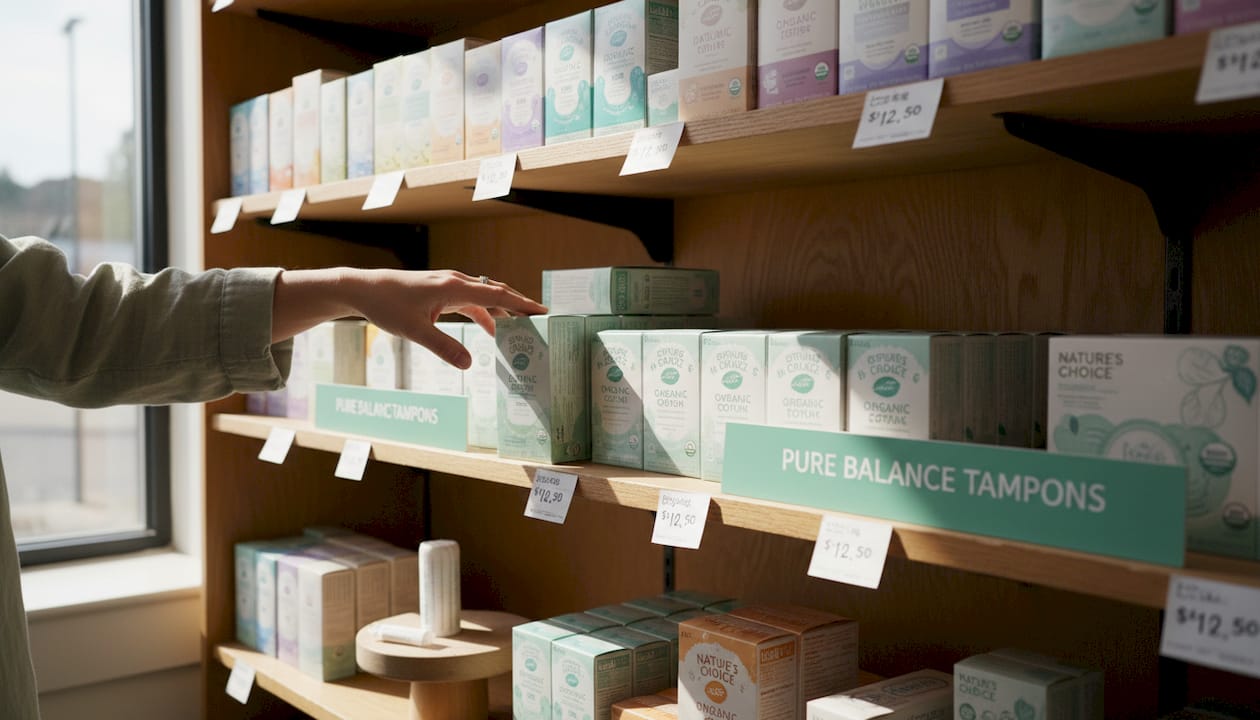
A 2024 study that made headlines found trace amounts of metals, including lead and arsenic, in various tampon products. Importantly, non-organic tampons showed higher lead levels while some organic tampons had slightly elevated arsenic. However, an FDA review in 2025 found no safety concerns because absorption and leaching of these trace metals through tampon use has not been demonstrated. Metals like arsenic occur naturally in soil and water and can be taken up by cotton plants, which is why organic tampons aren’t automatically metal-free.
Key safety comparison: Organic vs. hypoallergenic vs. conventional
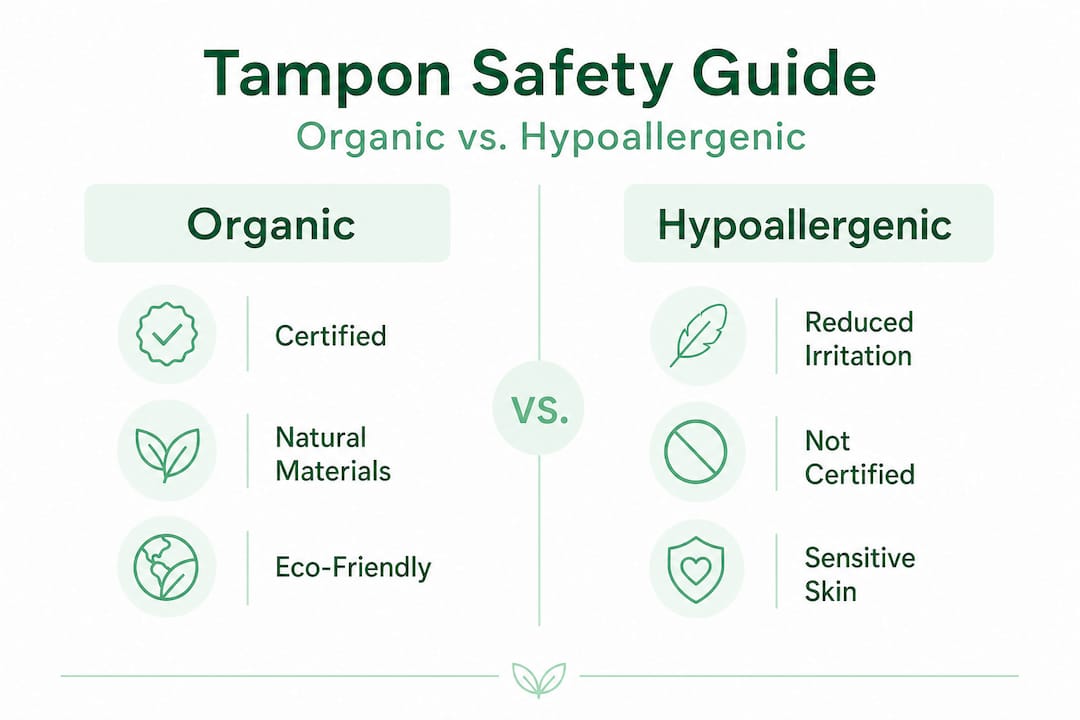
| Feature | Organic cotton | Hypoallergenic claim | Conventional |
|---|---|---|---|
| Pesticide residues | Low to none (if GOTS-certified) | Varies | Possible |
| Fragrance added | No | Usually no | Sometimes |
| Bleaching process | Chlorine-free typical | Varies | Often elemental chlorine |
| TSS risk | Same as conventional | Same as conventional | Standard baseline |
| Trace metals | Low lead, possible arsenic | Depends on cotton source | Possible lead traces |
| Eco impact | Lower, especially with certified packaging | Varies | Typically higher |
Five practical steps to reduce tampon-related health risks:
- Choose the right absorbency. Use the lowest absorbency that handles your flow. Heavy tampons used on light days increase dryness and friction.
- Change every four to eight hours. This is the single most evidence-backed behavior for reducing TSS risk, regardless of product type.
- Avoid fragranced products. Fragrance is the top driver of contact irritation in menstrual products.
- Read full ingredient disclosures. Brands committed to transparency list every material, including applicator components.
- Don’t rely solely on “hypoallergenic” or “organic” for safety assurance. Use them as positive indicators, but combine them with smart usage habits.
For a detailed guide to removing unnecessary chemicals from your entire period routine, the chemical-free tampon workflow is a great starting point. And if you’re new to making the switch, learning about using natural tampons can help the transition feel seamless. There’s also solid research on the broader impact of organic products on both your body and the environment worth reading through.
How to choose a hypoallergenic tampon: What matters most
Now that you know how claims and real-world protection differ, let’s get practical about what to actually look for at the store.
When you’re standing in the tampon aisle or browsing online, marketing language can feel overwhelming. “Pure,” “natural,” “gentle,” “clean.” None of those terms carry legal weight either. What does carry weight is third-party certification and full ingredient disclosure.
GOTS-certified organic cotton tampons are a strong choice for women aged 15 to 45 who care about both health and environmental impact. GOTS certification verifies that the cotton was grown without synthetic pesticides and processed without restricted chemicals. It also covers social compliance in the supply chain. That’s a meaningful difference from a product that simply uses the word “natural” on its label.
What to prioritize when shopping:
- Certification first: GOTS, Dermatest, OEKO-TEX, or similar third-party verification
- No added fragrance or dye: Even “light scent” can be an irritant for sensitive users
- No synthetic fibers: Look for 100% cotton construction, not cotton-polyester blends
- Applicator material: Cardboard or no applicator is preferable over plastic for eco-conscious shoppers
- Absorbency range: A brand that offers regular, super, and light absorbencies helps you match the right product to each day of your cycle
- Packaging transparency: Brands that list every ingredient, including applicator materials, demonstrate a commitment to honesty
Absorbency benchmarks from independent lab testing:
| Product type | Absorbency range (grams) | Cord strength | Notes |
|---|---|---|---|
| Super organic cotton | ~14g | High | Good for heavy days |
| Regular organic cotton | ~11g | High | Everyday mid-cycle use |
| Light organic cotton | ~6-8g | Standard | Light flow or end of cycle |
Lab-tested absorbency data shows that certified organic tampons can perform comparably to conventional options in terms of absorption capacity and cord strength. Performance isn’t sacrificed by going organic or hypoallergenic.
Pro Tip: When you’re comparing products, check whether the brand lists all materials including the string, overwrap, and any applicator. A truly transparent brand leaves nothing out.
For more guidance on evaluating your options, explore period product smart choices, which walks through how to assess the full picture from safety to sustainability. You’ll also find practical advice in natural menstrual care tips and a breakdown of health-conscious menstrual options for those looking at the bigger picture.
Who benefits most from hypoallergenic tampons and when to be cautious
While most shoppers want the safest option, individual needs and sensitivities matter a lot. Here’s who should pay closest attention and why.
Not every person who switches to hypoallergenic tampons does so for the same reason. For some, it’s about managing a diagnosed skin sensitivity or eczema. For others, it’s a response to recurring irritation or discomfort that conventional tampons were making worse. And for a growing number of people, it’s simply about making cleaner, more intentional choices for both body and environment.
People who tend to benefit most from hypoallergenic and organic tampons:
- Those with diagnosed contact dermatitis or vulvar irritation
- People with PCOS, endometriosis, or other conditions that increase tissue sensitivity
- Anyone who has noticed itching, redness, or discomfort with conventional products
- Those who prefer fragrance-free and dye-free products as a general health precaution
- Eco-conscious individuals who want their period care to reflect their values
However, there are some important caveats. Even organic tampons are not allergen-free. Cotton is a plant protein, and rare cotton protein allergies do exist. If you’ve ever reacted to cotton clothing or cotton-based topical products, that’s worth noting before assuming an organic tampon is automatically your best fit. Sensitive skin and PCOS users benefit from fragrance and dye-free options, but the “hypoallergenic” label itself is not a guarantee of safety for every individual.
Bottom line: Hypoallergenic tampons benefit a wide range of users, but the smartest move is to check certifications and ingredient lists rather than trusting any label alone. If you have a known latex or cotton sensitivity, consult a healthcare provider before switching to any new menstrual product.
Some organic tampons also test with slightly higher levels of naturally occurring arsenic due to soil uptake in cotton plants. That’s not a reason to avoid organic, given that the FDA has found no demonstrated safety risk from tampon use. But it is a reason to look beyond the word “organic” and choose a brand that conducts and publishes independent testing.
For a deeper look at how your period choices affect both your body and the planet, eco-friendly period choices connects the dots between ingredient awareness and environmental responsibility in a way that makes the trade-offs clear.
Why ‘hypoallergenic’ matters less than informed shopping for your period
Here’s the perspective we’d push back on: the idea that finding the right label solves your period health concerns. Labels are marketing tools first. Some of them reflect real quality. Many don’t. The contrasting views on tampon safety tell the same story again and again: brands emphasize reduced irritation and sustainability (which are real benefits), while independent experts and the FDA consistently point out that no tampon type has shown proven superiority for TSS prevention or cancer risk reduction, and that usage habits matter far more than material claims.
What actually protects you? Choosing the right absorbency for your flow. Changing every four to eight hours. Reading actual ingredient lists rather than label claims. Choosing brands that are transparent enough to list every component, including what the string is made of and how the applicator was processed. That kind of radical transparency is rarer than it should be, and it’s what you should demand.
Certifications like GOTS and Dermatest are genuinely useful because they represent auditable standards, not just marketing decisions. But even those certifications don’t replace your own awareness as a consumer. A GOTS-certified tampon is a better starting point than a self-labeled “natural” tampon. But using it on a heavy flow day with a light absorbency tampon for 10 hours is still not a smart health choice.
The most informed shoppers we see aren’t the ones who found the perfect label. They’re the ones who understand what’s in their products, use them correctly, and choose brands that treat transparency as a core value rather than an afterthought. That’s what sustainable, safe period care actually looks like. For a connected look at how material choices ripple out, BPA-free period care is worth reading for context on how ingredient transparency applies beyond cotton.
Ready to try safe, sustainable tampons?
You’ve done the hard work of understanding what’s actually behind the labels. Now it’s time to find products that match your values without compromise.
At Tampon Tribe, we believe your period care should be as clean as your intentions. Our tampons are made from certified organic cotton, free from synthetic fragrances, dyes, chlorine bleaching, and plastic. Every ingredient is disclosed. Every package is plastic-free. If you’re ready to switch to natural tampons or simply want to explore your options, our full range of certified organic hypoallergenic tampons makes it easy to compare absorbencies, read full ingredient disclosures, and start a period routine you can actually feel good about. Save the Turtles. Protect your body. Start here.
Frequently asked questions
Are hypoallergenic tampons safer than regular tampons?
Hypoallergenic tampons may reduce the risk of irritation for sensitive users, but no evidence shows they lower the risk of TSS or are universally safer than conventional tampons. Usage habits remain the most important safety factor.
What should I look for when choosing a hypoallergenic tampon?
Prioritize tampons made from GOTS-certified organic cotton with full ingredient transparency and third-party testing, rather than relying on the hypoallergenic label alone.
Do organic or hypoallergenic tampons have safety issues with trace metals?
Trace levels of metals exist in some tampons, but FDA reviews found no safety concerns because absorption and leaching of those metals through tampon use has not been demonstrated.
Are there people who should avoid even hypoallergenic tampons?
People with rare cotton allergies or known reactions to natural plant fibers should consult a healthcare provider before use, even with hypoallergenic or organic products.