

Most women never think to check a tampon’s ingredient list. Yet that small cotton cylinder you trust every month may contain animal-derived glycerin, gelatin, synthetic fibers, or chlorine-bleached rayon — ingredients that would raise eyebrows anywhere else. If you live consciously, read food labels, and check your skincare for animal byproducts, it’s time your period products got the same level of attention. Vegan tampons offer a plant-based, ethical, and often safer alternative to conventional options, and understanding what actually goes into them gives you real power over your menstrual health.
Table of Contents
- What is a vegan tampon? The basics explained
- Vegan vs. conventional tampons: Health, safety, and eco impact
- Do vegan tampons really work? Performance, absorbency, and TSS explained
- Beyond vegan: Ethical, sustainable, and plastic-free period choices
- Our take: Why truly sustainable periods start with transparency
- Ready to make the switch? Explore organic and vegan period care
- Frequently asked questions
Key Takeaways
| Point | Details |
|---|---|
| Vegan tampons basics | They are made with plant-based materials and avoid animal products and harsh chemicals. |
| Health and eco benefits | Vegan options lower chemical exposure, support sensitive skin, and biodegrade faster than regular tampons. |
| Performance and safety | Vegan tampons work as well as traditional ones; follow usage guidelines to minimize TSS risk. |
| Go beyond vegan | Choose ethical brands with plastic-free packaging and transparent ingredient lists for truly sustainable period care. |
What is a vegan tampon? The basics explained
Not all tampons are created equal, and the word “cotton” on a package doesn’t automatically mean clean, plant-based, or cruelty-free. Let’s break down exactly what makes a tampon vegan — and why so many mainstream products fall short.
A vegan tampon is made entirely from plant-based materials, free from any animal-derived ingredients or byproducts such as animal glycerin, gelatin, or other animal-sourced components commonly found in conventional tampons. That means every component — the absorbent core, the string, the applicator, and any coatings — must come from non-animal sources.
So why are animal products in tampons at all? Conventional tampon manufacturers often use animal-derived glycerin as a lubricant on the applicator or as a processing aid in fiber treatments. Gelatin can appear as a binding agent. Some wax coatings used in packaging originate from animal sources like beeswax or lanolin. Most consumers have no idea these ingredients exist because period products aren’t required to carry full ingredient disclosure in the same way that food products are.
Conventional tampons may contain animal-derived glycerin, while vegan tampons use synthetic or plant-based alternatives and 100% organic cotton. Organic cotton is a cornerstone of truly vegan period care because it’s grown without synthetic pesticides or animal-based fertilizers, and processed without chlorine bleaching or added fragrances.
Here’s a simple look at what separates vegan tampons from conventional ones:
| Ingredient or feature | Conventional tampon | Vegan tampon |
|---|---|---|
| Core material | Rayon, cotton blend | 100% organic cotton |
| Glycerin source | Animal-derived | Plant-based or synthetic |
| Bleaching method | Chlorine or chlorine dioxide | Peroxide or unbleached |
| Binders/coatings | May include gelatin or animal wax | Plant-based or none |
| Animal testing | Possible | Cruelty-free certified |
| Applicator | Plastic (BPA potential) | Cardboard or none |
When shopping, look for these certifications that signal a product is genuinely vegan and free from harmful ingredients:
- GOTS (Global Organic Textile Standard): Certifies that cotton is grown and processed without toxic chemicals or animal-based inputs
- USDA Organic: Verifies the absence of synthetic pesticides in cotton cultivation
- Leaping Bunny or PETA Cruelty-Free: Confirms no animal testing at any stage
- Vegan Society Certified: Guarantees no animal-derived ingredients or byproducts
- Oeko-Tex Standard 100: Tests the finished product for harmful substances
You can also explore natural menstrual care tips for a broader picture of what a truly clean period routine looks like.
Vegan vs. conventional tampons: Health, safety, and eco impact
Knowing what ingredients set vegan tampons apart is one thing. Understanding how those differences actually affect your body and the planet is another. The gap between vegan and conventional is bigger than most people expect.
The health case is compelling. Organic and vegan tampons reduce chemical exposure significantly, eliminating dioxins from chlorine bleaching and residual pesticides from conventional cotton farming. This matters because the vaginal mucosa is one of the most absorbent tissues in the human body. Whatever touches it is absorbed quickly and directly into the bloodstream without going through the digestive system’s filtering process first.

Conventional rayon and synthetic fiber tampons can also leave microscopic fibers behind in vaginal tissue. Fragrances and chemical dyes — added to make tampons look or smell more “fresh” — are common irritants linked to inflammation, allergic reactions, and disrupted vaginal pH. For women with sensitive skin or conditions like vulvodynia or eczema, switching to unbleached, organic cotton can make a noticeable difference.
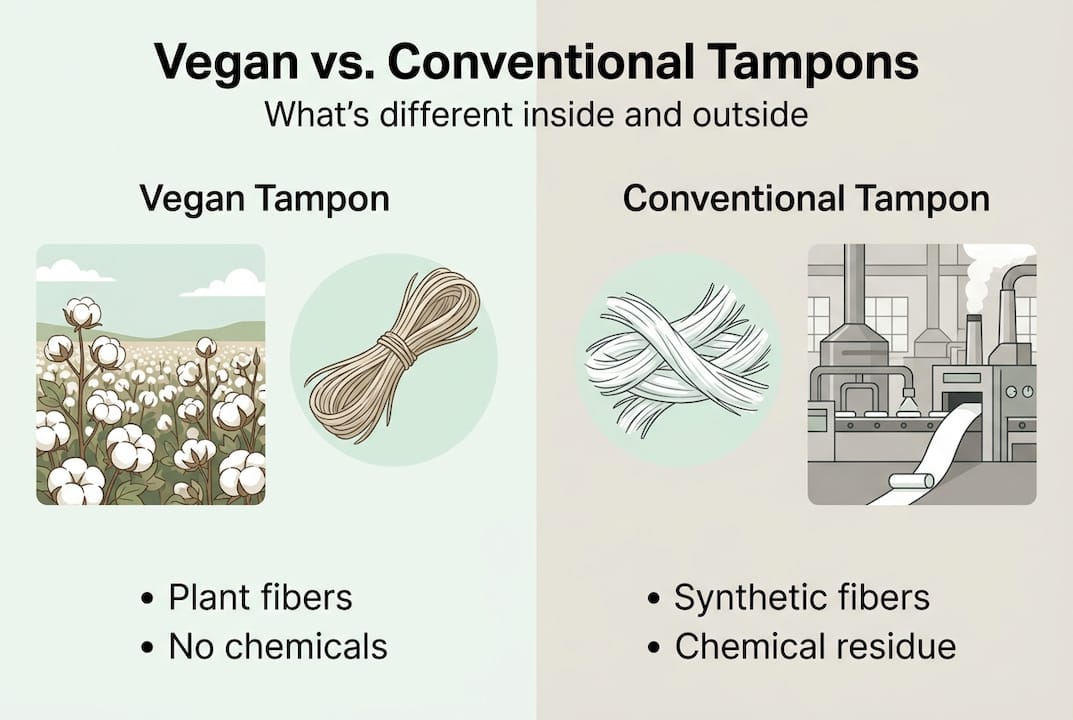
Here’s how the two options compare across several key dimensions:
| Factor | Conventional tampon | Vegan organic tampon |
|---|---|---|
| Chemical exposure | Dioxins, pesticides, synthetic fragrances | Minimal to none |
| Skin sensitivity risk | Higher | Lower, hypoallergenic |
| Biodegradability | 500+ years (plastic components) | Months (compostable) |
| Carbon footprint | Higher | Lower |
| Packaging waste | Heavy plastic | Biodegradable or recycled |
The environmental picture is equally stark. Billions of menstrual products end up in landfills and waterways every year. A single conventional tampon with a plastic applicator can persist in the environment for over 500 years, outlasting every living person on the planet today. Vegan organic tampons made from 100% cotton and cardboard or applicator-free designs decompose in a matter of months.
Statistic: A person who menstruates uses between 5,000 and 15,000 tampons or pads in a lifetime. Switching to biodegradable, vegan options dramatically shrinks that waste footprint.
There’s also the issue of conventional cotton farming. It’s one of the most pesticide-intensive crops in the world. Those chemicals contaminate soil, waterways, and the health of farmworkers. Choosing organic cotton supports cleaner agriculture and eco-friendly tampon types that are better for every link in the supply chain.
Understanding clean period products is key to making an informed switch that benefits both your body and the environment you care about.
Pro Tip: If you have sensitive skin or experience recurring irritation during your period, switch to an unbleached, fragrance-free, organic cotton tampon first. Many women see improvement within just one or two cycles.
Do vegan tampons really work? Performance, absorbency, and TSS explained
Beyond ingredients and environmental impact, performance matters. How do vegan tampons actually stack up when it’s your period on the line?
The straightforward answer: they work just as well. The tampon industry uses a standardized absorbency rating system regardless of whether a tampon is made from conventional or organic cotton. Absorbency is rated as Regular (absorbs 6 to 9 grams), Super (9 to 12 grams), and Super Plus (12 to 15 grams), and vegan tampons follow the exact same scale. So when you see “Super” on a Tampon Tribe organic tampon, it means the same thing as “Super” on a conventional brand.
That said, 100% cotton does have some differences from rayon blends. Pure cotton is a natural fiber without the added synthetic polymers that can increase liquid retention in some conventional tampons. On very heavy flow days, you might find that organic cotton options require a slightly more frequent change. This isn’t a flaw — it’s actually a feature. You’re avoiding synthetic fibers in exchange for a brief extra bathroom break.
Here’s a practical guide to matching the right vegan tampon to your flow:
- Light days: Regular absorbency (6 to 9g) works well and reduces the risk of over-drying.
- Moderate flow: Regular or Super depending on how your flow fluctuates throughout the day.
- Heavy days: Super or Super Plus absorbency, and check every 4 to 6 hours rather than waiting the full 8.
- Unpredictable flow: Pair a Super with an organic cotton liner for backup protection without leaks.
- Overnight: Many menstruators prefer an organic cotton pad overnight to avoid extended tampon wear.
Now let’s address toxic shock syndrome (TSS), because it comes up every time tampons are discussed. TSS is a rare but serious bacterial infection. It’s caused by toxins from Staphylococcus aureus bacteria, not by the cotton itself. TSS risk is tied to tampon use and behavior, not the presence or absence of animal ingredients or synthetic fibers.
“TSS risk is related to usage duration and absorbency level, not to whether a tampon is organic or conventional. Change every 4 to 8 hours and use the lowest absorbency that meets your needs.” — Health.com, Best Organic Tampons
Vegan tampons don’t eliminate TSS risk entirely, but they may reduce irritation and inflammation that can compromise vaginal tissue integrity. That’s not a small thing. Healthy, intact tissue is your body’s first line of defense against all kinds of bacterial issues.
Pro Tip: Always use the lowest absorbency level that handles your flow. “Bigger is better” is a myth with tampons — higher absorbency than you need increases dryness and discomfort without adding protection.
You’ll find clear, honest guidance on this in our menstrual safety tips for anyone who wants to look deeper at safe period practices.
Beyond vegan: Ethical, sustainable, and plastic-free period choices
Performance matters, but so do the values behind your period product. Let’s look at how to go beyond just “vegan” for a truly ethical choice.
Choosing a vegan tampon is a meaningful first step, but it’s only part of the picture. A tampon can be technically vegan while still using conventionally farmed cotton, individually wrapped in single-use plastic, shipped in non-recyclable packaging, and made by a company with no transparency or ethical practices. “Vegan” is a floor, not a ceiling.
The most sustainable period benchmarks include biodegradable packaging that decomposes in months rather than centuries, support for ethical cotton farming with lower pesticide use, and brands that actively donate products to people who lack menstrual care access. Choosing those brands sends a clear market signal about what women actually want.
Here’s what to look for beyond the vegan label:
- Plastic-free applicators: Cardboard or applicator-free options are compostable and far less damaging than plastic
- Biodegradable wrappers: Individual wrappers made from plant-based film or paper instead of polyethylene plastic
- Organic certification: GOTS or USDA Organic confirms ethical cotton sourcing at the farm level
- Fair trade or ethical labor practices: Look for brands that publish their supply chain information openly
- Zero-waste or minimal packaging: Outer boxes made from recycled cardboard without plastic windows or lamination
- Donation programs: Some brands donate a portion of products or profits to period poverty initiatives, which multiplies the impact of every purchase
- Refillable or subscription models: Reduce individual packaging and shipping waste compared to buying single packs repeatedly
The social dimension of period care is often overlooked. Period poverty is real and widespread, affecting millions of people who cannot afford consistent access to menstrual products. Brands that tie purchases to donation programs are doing more than selling tampons — they’re participating in a larger movement toward menstrual equity.
When a company is genuinely committed to eco-friendly menstruation, it shows up in every part of their operation: their ingredients, their packaging, their supply chain, their transparency, and their community engagement. That’s the standard worth holding out for.
The good news is that these brands exist and are growing. The shift toward truly sustainable period care is accelerating, driven by exactly the kind of consumer awareness that you’re building right now by reading this.
Our take: Why truly sustainable periods start with transparency
So after covering all these angles, what’s the bigger truth most articles leave out?
It’s this: the term “vegan” on a tampon box is better than nothing, but it can still be used as a marketing shortcut. We’ve seen brands slap eco-friendly language on a product with conventional cotton, plastic packaging, and zero supply chain transparency. That’s greenwashing, and it’s more common than it should be.
The real standard isn’t just “no animal products.” It’s full ingredient disclosure. Menstrual products in the United States are still not legally required to list all ingredients on the label. That’s a gap that empowers vague marketing claims. The brands worth trusting are the ones that voluntarily go further, listing every component, from the cotton to the string to the cardboard applicator, and getting third-party certified.
We believe the same scrutiny you give your food and your skincare belongs on your period products. Your body absorbs what touches it. You deserve to know what that is. Check out clean period products and look for brands that lead with full transparency, not just appealing labels.
Ready to make the switch? Explore organic and vegan period care
If this article has made you want to rethink what goes into your body every month, you’re in the right place. Switching to vegan, organic tampons means fewer chemicals against your most sensitive skin, a dramatically smaller plastic footprint, and the confidence of knowing your products align with your values.
Tampon Tribe makes it easy to start. Browse organic vegan tampons made with 100% certified organic cotton, zero plastic packaging, and full ingredient transparency. Not sure where to begin? The switch to natural tampons guide walks you through choosing the right size and style for your body. Or set up organic tampon subscription boxes so you never run out and get to skip the single-pack plastic waste for good.
Frequently asked questions
What ingredients are NOT in vegan tampons?
Vegan tampons are free from animal-derived glycerin, gelatin, conventionally farmed cotton, chlorine bleach, synthetic fibers, and added fragrances or dyes that can irritate sensitive tissue.
Do vegan tampons lower the risk of toxic shock syndrome (TSS)?
No. TSS risk is tied to tampon use habits and absorbency level, not to whether the tampon is organic or conventional; always change tampons every 4 to 8 hours for safety.
Are vegan tampons more biodegradable than conventional ones?
Yes. Organic and vegan tampons decompose in a matter of months, while plastic-based conventional tampons and applicators can persist in landfills and waterways for hundreds of years.
Can I use vegan tampons for a heavy flow?
Absolutely. Choose a Super or Super Plus absorbency size to match your flow, and change more frequently since 100% cotton may hold slightly less liquid than synthetic fiber blends.